Climate and Weather in Bwindi Impenetrable Forest
The Bwindi Impenetrable National Park experiences a classic equatorial montane rainforest climate shaped by altitude, dense forest cover, and its position along the Albertine Rift. Weather in Bwindi is generally cool to mild rather than hot, with frequent rainfall throughout the year. Unlike savannah parks with sharply defined seasons, Bwindi remains green, humid, and biologically active in all months.
Altitude plays a major role in moderating temperatures. Bwindi sits between roughly 1,160 and 2,600 meters above sea level, which means mornings and evenings can feel cool, especially in higher sectors such as Nkuringo and Ruhija. Mist is common, particularly at dawn and after rainfall, giving the forest its iconic atmosphere and contributing to its extraordinary biodiversity.
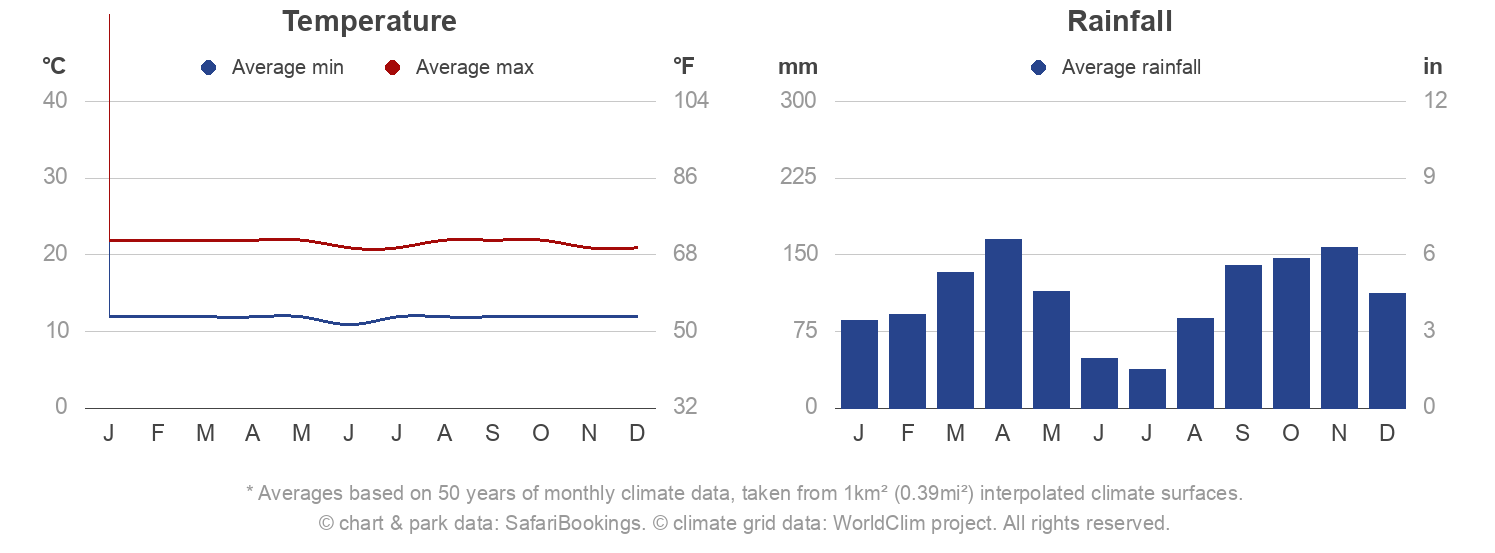
Bwindi Impenetrable Forest climate chart.
Rainfall Patterns in Bwindi Forest
Rainfall in Bwindi is spread across the year, but there are two main wetter periods. The heavier rains typically occur from March to May and again from September to November. During these months, rainfall can be frequent and intense, often arriving in short but heavy bursts rather than continuous downpours. The forest canopy retains moisture, keeping trails damp even between rain events.
Despite being labeled “rainy seasons,” these months do not mean constant rain. Clear spells are common, and gorilla trekking continues without interruption. The rainfall keeps vegetation lush and food sources abundant for gorillas, which helps stabilize their movements. However, wet conditions can make forest trails muddy and more physically demanding, especially on steep slopes.
Dry Season Conditions in Bwindi
Bwindi’s relatively drier periods fall between June and August and from December to February. During these months, rainfall decreases but does not disappear entirely. Short showers still occur, especially in the afternoons, but trails are generally firmer and trekking conditions more predictable.
Dry season weather is often preferred by travelers concerned about hiking difficulty. Visibility in the forest improves slightly, and mist tends to clear more quickly in the mornings. Temperatures remain moderate, with daytime conditions comfortable for trekking and cooler evenings that suit restful nights in forest lodges.
Temperature Ranges Throughout the Year
Temperatures in Bwindi remain fairly stable across seasons due to its equatorial location. Daytime temperatures typically range between 18°C and 26°C, depending on altitude and cloud cover. Lower elevations tend to be slightly warmer, while higher ridges experience cooler air and stronger breezes.
Nighttime temperatures can drop significantly, particularly in elevated sectors. Early mornings often feel cold and damp, especially after rain. This temperature variation is one of the defining features of Bwindi’s climate and explains why layered clothing is essential regardless of the month of travel.
Humidity and Forest Conditions
Humidity in Bwindi is consistently high due to dense vegetation and frequent rainfall. The forest retains moisture, creating a cool but damp environment under the canopy. This humidity supports the rich plant life that defines Bwindi’s ecosystem, from towering hardwoods to thick undergrowth and moss-covered trees.
For trekkers, humidity increases physical exertion, especially during uphill sections. Sweating is common even on cool days, and clothing rarely dries quickly in the forest. Understanding this aspect of Bwindi’s climate helps travelers prepare mentally and physically for the trekking experience.
How Weather Affects Gorilla Trekking
Weather directly influences the trekking experience but rarely affects gorilla sightings. Gorillas remain in the forest year-round and do not migrate based on seasons. In wetter months, gorillas often stay closer to food-rich areas, which can sometimes shorten trekking distances despite tougher trail conditions.
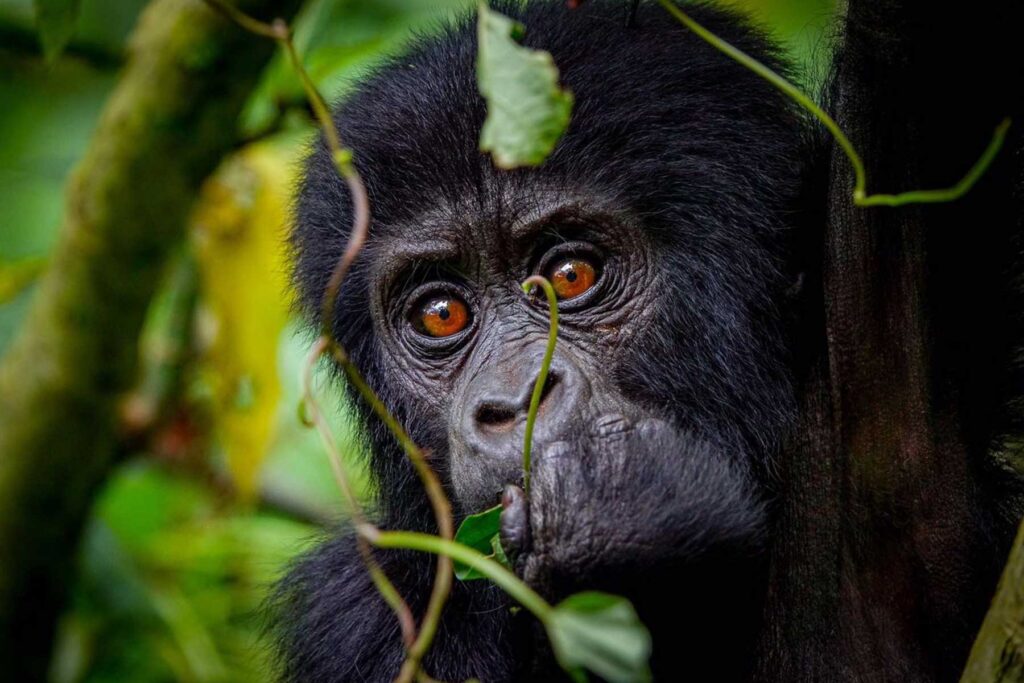
In drier months, trails are easier to navigate, but gorillas may range slightly farther in search of food. Rangers and trackers adapt daily routes based on weather and gorilla movements, ensuring safety and successful encounters regardless of conditions.
Seasonal Differences Across Bwindi Sectors
While all sectors of Bwindi share the same general climate, higher-altitude areas such as Nkuringo and Ruhija tend to be cooler and receive slightly more rainfall. Northern sectors like Buhoma experience marginally warmer conditions and gentler terrain, though rain remains common across the park.
These microclimatic differences can influence comfort levels rather than overall experience. Travelers sensitive to cold may notice greater temperature drops in southern and eastern sectors, especially in the evenings and early mornings.
Best Months Weather-Wise for Visiting Bwindi
From a purely weather-focused perspective, June to August and December to February offer the most balanced conditions. These months combine lower rainfall with manageable humidity and stable temperatures. They are often considered ideal for first-time gorilla trekkers or travelers seeking easier hiking conditions.
That said, many experienced travelers deliberately choose wetter months to avoid crowds and enjoy the forest at its most vibrant. Bwindi’s climate ensures that gorilla trekking remains rewarding in every season, with weather shaping the character of the experience rather than limiting it.
Plan Your Safari
Understanding Bwindi’s climate allows travelers to plan realistically and pack appropriately. Rain, mist, and cool temperatures are part of the forest’s identity and should be embraced rather than avoided. With proper preparation and flexible expectations, Bwindi Impenetrable Forest delivers exceptional gorilla trekking experiences in all weather conditions.