info@africanwildtrekkers.com

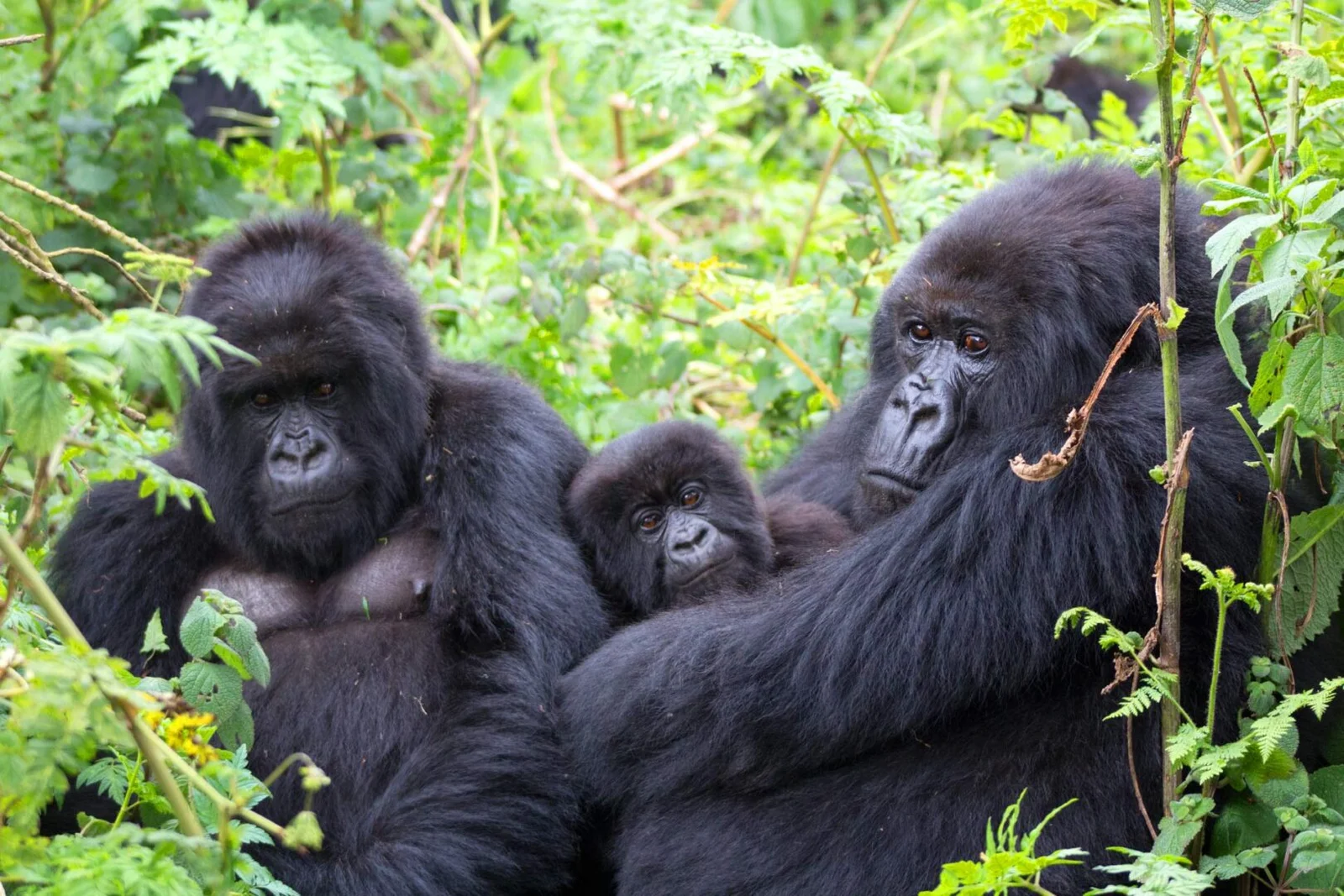
Gorilla Trekking Guide: Everything You Need to Know Before You Go
Gorilla trekking ranks among the most sought-after wildlife experiences on earth. A single hour spent near a wild mountain gorilla family leaves most visitors changed in some way. Few other encounters bring a person this close to an animal this powerful, and this gentle, at the same time.
Only three countries offer this experience today: Uganda, Rwanda, and DR Congo. Each shares the same Virunga and Bwindi gorilla populations across its borders. Choosing between them, and preparing properly for the day itself, makes all the difference in how the experience unfolds.
This guide walks through everything a first-time trekker needs. It covers where to go, what a trek actually involves, permit costs, fitness requirements, and how to prepare.
What Gorilla Trekking Actually Involves
Gorilla trekking means hiking through forest in search of a habituated gorilla family, guided by rangers and trackers who know the group’s likely location. Trackers set out ahead of visitors each morning, following signs left by the gorillas the previous evening. Radio updates guide the visiting group toward wherever the trackers make contact.
The hike itself varies enormously from one day to the next. Some groups find their gorillas within an hour of gentle walking. Others spend most of a day pushing through dense, sometimes steep vegetation before making contact.
Once the gorillas are found, a strict one-hour limit begins. Visitors stay a fixed distance away and speak quietly, if at all. Watching a silverback move through his own territory, or juveniles play nearby, tends to make that hour pass far faster than expected.
Afterward, the group hikes back out, often quieter and more reflective than on the way in. Many trekkers describe this return walk as the moment the experience really sinks in. It is common to see visitors emerge from the forest visibly moved by what they just witnessed.
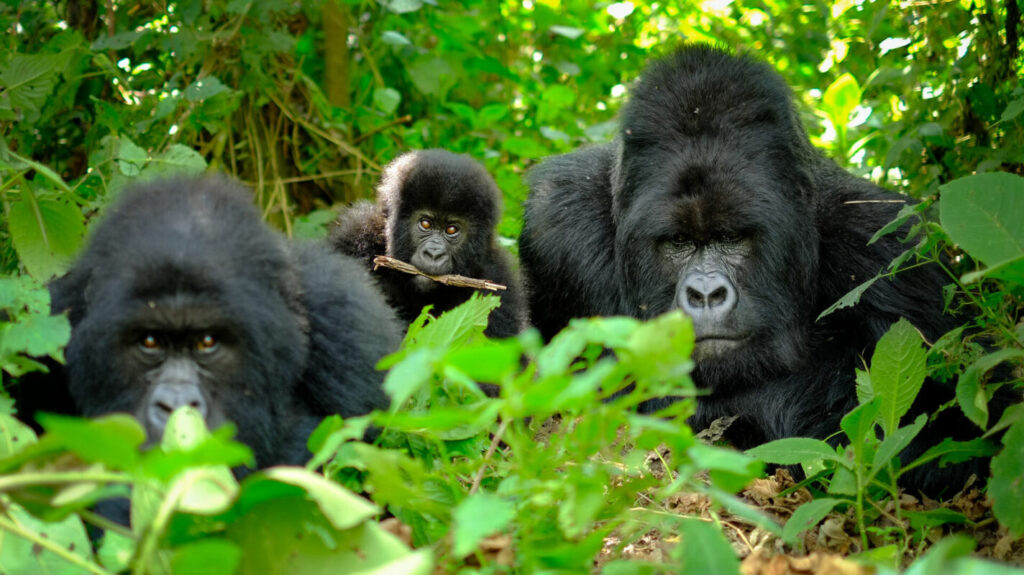
Where to Go: Uganda, Rwanda, or DR Congo
Uganda
As Uganda offers gorilla trekking in two parks: Bwindi Impenetrable National Park and the smaller Mgahinga Gorilla National Park. Bwindi holds the largest number of habituated gorilla families of any single destination, spread across four separate trekking sectors. This gives Uganda the widest range of permit availability in the region.
Treks in Bwindi can run longer and more physically demanding than in Rwanda, since the forest here is thicker and the terrain often steeper. Permit costs sit below Rwanda’s, making Uganda a common choice for budget-conscious trekkers. Combining a Bwindi trek with Uganda’s savannah parks is also straightforward, since several sit within a reasonable drive.
Rwanda
In Rwanda, gorilla trekking is exclusively in Volcanoes National Park, close to the town of Musanze. The park sits only two to three hours from Kigali, making Rwanda the most convenient option for anyone short on time. Trails here tend to run somewhat shorter on average than in Bwindi, though the difficulty still depends heavily on where the assigned family is found.
Rwanda’s permit price sits above both Uganda and DR Congo, reflecting its efficient infrastructure and shorter travel logistics. Golden monkey trekking is available as an easy add-on in the same park. Many travelers pair Rwanda with Uganda in a single trip, given how close the two gorilla circuits sit to one another.
DR Congo
Congo offers gorilla trekking in Virunga National Park, generally at the lowest permit price of the three countries. Virunga is also the only place where mountain gorillas, eastern lowland gorillas, and chimpanzees all live within one protected area. Kahuzi-Biega National Park further south adds a separate opportunity to trek eastern lowland gorillas specifically.
Security conditions in eastern DR Congo affect Virunga’s operating status more than in either neighboring country, so current status should always be confirmed directly with the park before booking. When open, treks here draw fewer visitors than Rwanda or Uganda, giving a quieter feel to the experience. Anyone considering DR Congo should build flexibility into their itinerary given how often conditions there can shift.
Gorilla Permit Costs and What They Include
A gorilla permit covers entry to the park, the guided trek itself, and the one-hour visit with the gorillas once found. It does not cover porter fees, tips for guides and trackers, transport, or accommodation. Each of these needs to be budgeted separately.
Permit prices differ by country and can change from year to year, so checking current rates directly with each country’s wildlife authority or a licensed operator is the only reliable way to know exact figures. As a general pattern, Uganda and DR Congo tend to price below Rwanda. This reflects differences in overall trekking infrastructure and demand rather than any difference in the animals themselves.
Permits are capped daily in every country to limit stress on the gorilla families. This makes early booking essential, particularly for peak dry season dates. Three to six months ahead is a reasonable target for anyone with a fixed travel window.
Cancellations and rescheduling policies vary by country and operator. Most allow some flexibility if a specific date needs to shift, though refunds are rarely automatic. Reading the fine print before paying in full helps avoid surprises later.
Fitness and Physical Demands
Gorilla trekking asks more of the body than a standard game drive, though it does not require technical climbing skill. Trails can be steep, muddy, and thick with vegetation, sometimes crossing streams or working through dense undergrowth. A reasonable level of everyday fitness is enough for most healthy adults to manage.
Altitude adds a factor worth considering, since several trekking sectors sit at significant elevation. Trekkers arriving from sea level may notice some effect on their breathing during steeper sections. Taking the pace slowly and staying well hydrated helps considerably.
Porters are available for hire at every trekking start point and can carry day bags or offer a supporting hand on difficult sections. Hiring a porter is worth considering even for reasonably fit trekkers, since it also directly supports the local community. Age limits apply across all three countries, with a minimum age of fifteen strictly enforced.
Trekkers with mobility concerns should discuss their situation honestly with their operator well before the trip. Some parks offer sedan-chair options, carried by a small team of porters, for visitors unable to complete the hike unassisted. Planning this in advance makes for a smoother, safer day.
Best Time of Year for Gorilla Trekking
Gorilla trekking runs year-round in all three countries, since the gorillas live in the forest permanently rather than migrating with the seasons. The main variable across the calendar is trail condition rather than gorilla availability. Dry season simply makes the hike itself more comfortable.
The main dry season across the region runs from June to September. Trails are firmer, and this period draws the largest number of visitors and the highest permit demand. A second, shorter dry spell falls between December and February, offering a quieter alternative to the mid-year peak.
The wetter months, running roughly from March to May and October to November, bring muddier trails and a more physically demanding hike. Fewer visitors trek during these months, and permit availability tends to open up. Lodge rates across the region also tend to drop during the rainy season.
What to Pack for a Gorilla Trek
Neutral-colored, long-sleeved clothing works best on trekking day, since bright colors stand out in the forest and can attract insects. Sturdy, broken-in hiking boots with good ankle support matter more than any other single item. Gardening-style gloves help considerably when gripping stinging nettles and thick vegetation along the trail.
A rain jacket is worth packing regardless of season, since forest weather can shift quickly at any time of year. Insect repellent and sun protection round out the basics. Trekking poles help on steep or muddy sections, particularly for trekkers less used to hiking.
A daypack should carry water, snacks, and a rain cover for any camera equipment. Flash photography is prohibited around the gorillas, so a camera with reasonable low-light performance works better than relying on flash. Cash in small denominations covers tipping for guides, trackers, and porters at the end of the day.
Trekking Etiquette and Rules
Every country enforces a similar set of rules to protect both gorillas and visitors. A minimum distance, usually around seven meters, must be kept from the gorillas at all times, even if a curious youngster approaches closer on its own. Visitors are asked to keep their voices low and avoid sudden movements throughout the encounter.
Anyone with a cold, flu, or other contagious illness is generally asked not to trek, given how closely gorillas share genetic and immune similarities with humans. This is a serious rule rather than a formality, since human illness can spread to gorilla populations with real consequences. Being honest about symptoms before a trek protects the animals as much as it protects other guests.
Eating, drinking, and smoking are not permitted during the hour with the gorillas. Guides brief every group beforehand on these rules and enforce them throughout the encounter. Following their instructions without hesitation keeps both the visit and the gorillas safe.
Safety Considerations
Gorilla trekking is safe overall, provided visitors follow ranger instructions throughout the day. Mountain gorillas are calm by nature once habituated, and years of daily contact with rangers and researchers have made them comfortable around quiet, well-behaved groups. Genuine danger from the gorillas themselves is rare.
Most of the real risk on a trek comes from the terrain rather than the wildlife. Steep, slippery slopes and thick undergrowth demand careful footing, particularly after rain. Moving slowly and watching each step matters more than moving quickly toward the gorillas.
Occasionally a gorilla, usually a silverback, will bluff charge if it feels startled or crowded. This is almost always a defensive display rather than a real attack. Staying still, avoiding direct eye contact, and following the ranger’s lead in that moment is the correct response, and rangers are trained specifically to manage these situations calmly.
Trekkers should always defer to ranger judgment if conditions change partway through a hike. Weather, animal behavior, and terrain can all shift a plan on short notice. A ranger’s decision to pause, reroute, or end an encounter early should never be second-guessed in the moment.
Health and Safety Requirements
Gorilla trekking comes with health rules built specifically to protect the gorillas rather than the visitors. Mountain gorillas share close genetic similarity with humans, which means human illnesses, even a mild cold, can pose a real threat to them. Anyone showing symptoms of flu, cough, or other contagious illness is asked not to trek that day.
Some parks now ask visitors to wear a mask during the close portion of the encounter, particularly during periods of heightened respiratory illness elsewhere in the world. Basic hand hygiene before and after the trek is also encouraged. These measures are simple but genuinely protective for a species with so few individuals left.
Being honest about symptoms, even if it means missing a long-planned trek, is part of respecting the experience itself. Most operators will work to reschedule a permit for a trekker who reports feeling unwell rather than risk exposing an entire gorilla family. This flexibility exists precisely because the health rule matters so much.
Accommodation for Gorilla Trekking Safaris
Lodges near each trekking sector range from simple to genuinely luxurious, and most visitors choose based on budget and how much comfort they want after a long day on the trail. Bwindi’s lodges tend to blend into the surrounding forest, often built from natural materials that suit the setting. Several sit right at the edge of a trekking sector, cutting down on early morning travel time.
Rwanda’s Volcanoes National Park has developed a strong luxury lodge scene, with high-end properties offering volcano views, spa facilities, and polished service. Mid-range options sit alongside these luxury properties for travelers who want strong comfort without the premium price tag. DR Congo’s accommodation options are more limited and generally arranged directly through the park or an affiliated operator.
Choosing a lodge close to the specific trekking sector assigned on permit day matters more than it might seem. Start times are early, and a shorter drive to the briefing point means more rest the night before. This is worth discussing with an operator once a specific gorilla family or sector has been assigned.
Cultural Experiences Around Gorilla Parks
All Cultural visits add a further dimension to many gorilla trekking itineraries. Batwa community visits near Bwindi offer insight into forest life before conservation changed it, sharing traditions tied to generations spent living within these forests. Community-run programs near Volcanoes National Park in Rwanda offer a similar window into local life, often including music, dance, and storytelling.
These visits connect tourism directly to local livelihoods rather than keeping it confined to the forest alone. Many of the communities living around Bwindi, Volcanoes, and Virunga now depend in part on tourism-linked income, whether through cultural programs, porter work, or craft sales. Spending an afternoon on one of these visits adds real context to the conservation story behind gorilla trekking.
Combining Gorilla Trekking With Other Activities
Most visitors build a gorilla trek into a longer itinerary rather than treating it as a standalone trip. In Uganda, Bwindi combines naturally with Queen Elizabeth National Park for savannah game viewing, or with Kibale for chimpanzee trekking. In Rwanda, Volcanoes National Park pairs easily with Nyungwe Forest for chimpanzees or Akagera for a Big Five safari.
In DR Congo, a Virunga gorilla trek often combines with a hike up Mount Nyiragongo to see its active lava lake. Cross-border combinations are also common, since the same Virunga range spans Rwanda, Uganda, and DR Congo. A single trip covering two of these three countries is a popular way to see more of the region without adding excessive travel time.
Conservation Impact of Gorilla Trekking
Gorilla trekking plays a direct role in pulling mountain gorillas back from the edge of extinction. Permit fees fund anti-poaching patrols, veterinary care for the gorillas, and ongoing habitat protection across all three countries. Without this funding model, much of the current protection around these forests would simply not exist.
Community programs tied to gorilla tourism also reduce pressure on the forest itself. When local income depends on tourism rather than logging or poaching, communities have a direct stake in keeping the forest and its gorillas intact. This link between economics and conservation is part of why the mountain gorilla population has slowly grown over the past two decades, unlike so many other endangered species.
Every permit purchased, in a very direct sense, contributes to this ongoing recovery. Trekkers often leave with a stronger appreciation for this side of the experience than they expected going in. Understanding the conservation story behind the trek tends to make the encounter itself feel even more significant.
Additional Gorilla Trekking Tips
Booking early gives the best chance at securing both a preferred permit date and a well-located lodge, especially during the June to September peak season. Layered clothing handles the shifting forest temperature better than a single heavy layer, since mornings start cool and warm quickly once the group starts moving. Good, broken-in hiking boots make more difference to overall comfort than almost any other single item packed.
Hiring a porter is worth doing even for fit, experienced hikers, since the small fee goes directly to local community income. Packing light makes the whole day easier, since everything carried has to move through the same dense, sometimes steep terrain as the trekkers themselves. A short trial hike in worn-in boots before the trip helps avoid blisters on the actual trekking day.
Planning Your Gorilla Trekking Safari
Gorilla trekking permits sell out well in advance during peak months, so planning should start as early as possible once travel dates are fixed. Permits, accommodation, and transport all need to line up around the same window, and booking them together through one operator usually keeps logistics simpler. Many travelers build their entire regional itinerary around the confirmed permit date rather than the other way around.
Working with an experienced operator, one with direct, current contact with the relevant park authority, removes much of the uncertainty from the process. This matters most for DR Congo, given how much its operational status can shift, but it helps in every country. Careful planning at this stage is what turns a good gorilla trekking day into a smooth one from arrival to forest encounter.
Frequently Asked Questions
Which country is best for gorilla trekking?
Rwanda offers the shortest travel times and the most polished infrastructure, Uganda offers the largest number of gorilla families and lower permit costs, and DR Congo offers the lowest prices along with a rare chance to see multiple great ape species in one park, though its operational status depends more heavily on the current security situation.
How much does a gorilla permit cost?
Permit prices vary by country and change periodically, so checking current rates directly with each country’s wildlife authority or a licensed tour operator is the most reliable way to get an accurate figure before booking.
How fit do I need to be for gorilla trekking?
A moderate, everyday level of fitness is enough for most healthy adults, since porters are available to assist with bags and difficult sections, though the terrain can be steep, muddy, and physically demanding depending on where the gorilla family is found.
Is gorilla trekking safe?
Uganda and Rwanda both maintain well-established, well-regulated trekking programs with strong safety records, while DR Congo’s Virunga National Park carries additional security considerations tied to the wider conflict in eastern DR Congo, making current advisories worth checking closely before booking there specifically.
What happens if we don’t find the gorillas?
This is rare, but policies vary by country and operator, with many offering a partial refund or a chance to try again the next day if a group treks all day without making contact.
How long does trekking take?
Trekking can take anywhere from one to six hours round trip, depending entirely on where the assigned gorilla family happens to be on that particular day.
What if a gorilla charges?
Stay still, avoid direct eye contact, and follow the ranger’s instructions, since most charges are defensive bluff displays rather than genuine attacks.
Can I take photos during the trek?
Yes, photography is welcome and encouraged, but flash photography is not allowed since it can startle or distress the gorillas.
What happens if it rains during the trek?
Trekking continues as planned unless conditions become genuinely unsafe, since rain is a normal and expected part of trekking through rainforest habitat.