info@africanwildtrekkers.com

Volcanoes National Park: The Complete Guide to Rwanda’s Gorilla Highlands
Volcanoes National Park sits in Rwanda’s far northwest, where five volcanic peaks rise out of dense mountain forest. It’s Rwanda’s flagship destination, and the reason most visitors come to the country at all. Mountain gorillas live on these slopes in numbers found almost nowhere else on earth.
The park’s setting adds real drama to the experience. Bamboo forest gives way to open moorland higher up the volcanoes, and mist tends to hang low over the hills well into the morning. Few gorilla trekking destinations pack this much scenery around the main event.
This guide covers what to see, when to go, and where to stay. It’s built for anyone planning a Volcanoes National Park visit, whether as a standalone trip or part of a wider Rwanda itinerary.
Background and Location
Volcanoes National Park sits in Rwanda’s Northern Province, close to the town of Musanze. It borders both Uganda and the Democratic Republic of Congo, forming one continuous protected area with those countries’ own Mgahinga and Virunga national parks. Together, this cross-border stretch of forest is known as the Virunga Massif.
The park takes its name from the five volcanoes within its boundary: Karisimbi, Bisoke, Sabyinyo, Gahinga, and Muhabura. Karisimbi is the tallest, and Bisoke, with its crater lake, is the most commonly climbed. The park itself covers a relatively small area, but its elevation and volcanic soil support unusually dense vegetation.
Volcanoes National Park was gazetted in 1925, making it one of Africa’s oldest national parks. It later became known internationally through the work of researcher Dian Fossey, who studied the park’s mountain gorillas here for nearly two decades starting in the late 1960s. Her research station, Karisoke, still sits within the park today, and her grave is a visitable site.
Why Visit Volcanoes National Park
Volcanoes National Park offers one of the most reliable gorilla trekking experiences anywhere. Multiple habituated families live within the park, and its closeness to Kigali keeps travel times shorter than in neighboring Uganda or DR Congo. Most visitors reach their trekking start point within a few hours of leaving the capital.
The park’s volcanic scenery adds real variety beyond the gorillas themselves. Golden monkeys move through the bamboo zones in large, playful troops. Volcano hikes up Bisoke or Karisimbi offer a physically demanding but rewarding alternative or addition to a day of trekking.
Rwanda’s broader reputation for order and safety also plays into the park’s appeal. Roads are well maintained, permit logistics run smoothly, and the surrounding lodge scene has grown into one of the strongest in Africa. Few gorilla trekking destinations combine this much comfort with this much wilderness.
Best Time to Visit
Volcanoes National Park sits at high elevation, so it runs noticeably cooler than much of the rest of Rwanda, especially at night. Rainfall, more than temperature, shapes the best time to plan a visit.
The long dry season runs from June to September. Trails are firmer during this period, and it’s the most popular time to trek, meaning permits sell out fastest. A shorter dry season falls between December and February, offering a quieter alternative with a similar chance of good trail conditions.
The wetter months fall between March and May, and again in October and November. Trekking becomes muddier and more physically demanding during these periods. Gorilla trekking still runs year-round regardless of season, since the gorillas live in the park permanently rather than migrating.
Getting There
Kigali International Airport serves as the main gateway for Volcanoes National Park. The drive from Kigali to Musanze, the town closest to the park, takes around two to three hours on a well-paved road. This short distance is one of Rwanda’s clearest advantages over Uganda’s Bwindi or DR Congo’s Virunga.
Most visitors arrange a driver-guide for the transfer rather than self-driving, since a local guide also handles permit logistics and timing for the early morning trekking briefing. A handful of operators offer helicopter transfers from Kigali for travelers short on time, cutting the journey down to around twenty minutes.
What to See and Do
Gorilla Trekking
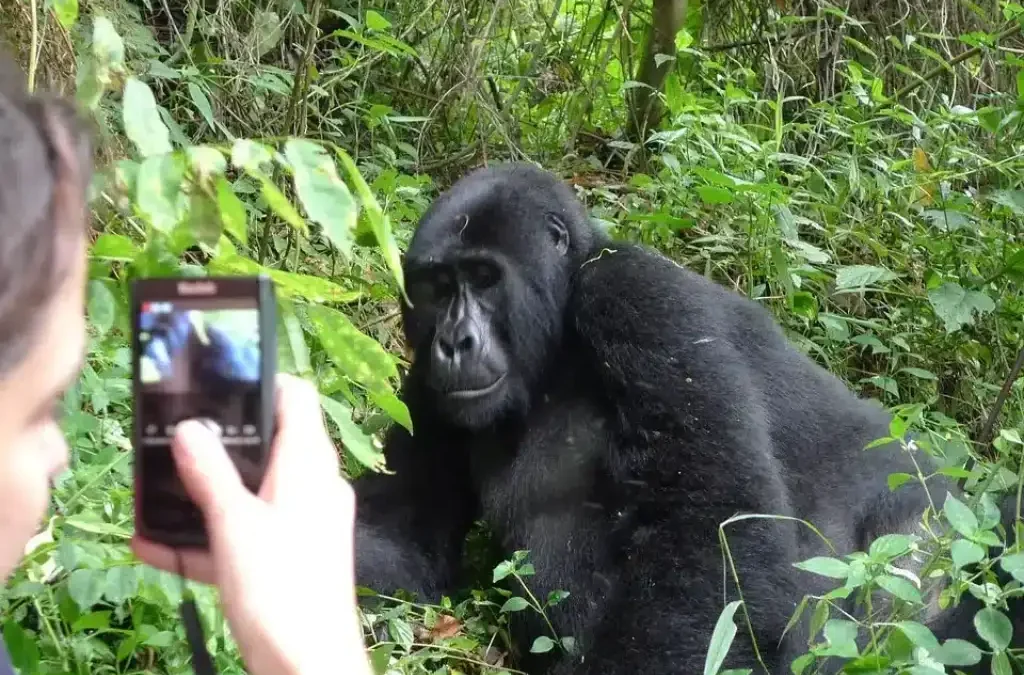
Gorilla trekking is the park’s central activity, with several habituated families available for daily visits. Treks begin with an early morning briefing at Kinigi, the park’s headquarters, before rangers assign each group to a specific family based on fitness level and the family’s last known location. The hike itself can run from under an hour to several hours, followed by a strict one-hour visit once the gorillas are found.
Golden Monkey Tracking
Golden monkeys live in the park’s bamboo zones and offer a shorter, less physically demanding activity than gorilla trekking. These monkeys move in large, energetic troops, making for lively viewing once a group is located. Many visitors pair a golden monkey trek with gorilla trekking on separate days of the same trip.
Volcano Hikes
Mount Bisoke is the most commonly climbed of the park’s five volcanoes, with a crater lake at its summit rewarding the effort. Mount Karisimbi, the tallest in the range, requires an overnight camp partway up and suits experienced, well-prepared hikers. Both routes offer views across the wider Virunga range on a clear day.
Dian Fossey Tomb Hike
A guided hike to the site of Dian Fossey’s former research camp and grave offers a quieter, more reflective activity than trekking. The hike itself is moderately demanding, climbing through forest to reach the site. It appeals particularly to visitors interested in the history of gorilla conservation in the region.
Cultural Visits
The Iby’Iwacu Cultural Village, near the park’s edge, offers visitors a chance to experience Rwandan traditions through dance, craft demonstrations, and storytelling. Many of these programs are run in partnership with former poachers who now work in conservation and tourism instead. It’s a common half-day add-on before or after a trekking day.
Wildlife in Volcanoes National Park
Mountain gorillas are the park’s main draw, with multiple habituated families spread across different areas of the forest. Golden monkeys add a second primate highlight, found in healthy numbers within the bamboo zones. Buffalo and elephant are present in smaller numbers at higher elevations, though sightings are far less common than the primates.
Birdlife is strong throughout the park, with several species found only in the Albertine Rift region. Forest hikes and volcano climbs both offer chances to spot them, alongside the park’s better-known primates.
Accommodation Near the Park
Most lodges cluster around Kinigi and Musanze, close to the park’s headquarters and the morning trekking briefing point. Staying nearby matters, since treks begin early and a shorter transfer means more rest before a demanding day.
At the luxury end, One&Only Gorilla’s Nest sits just outside Kinigi, set among eucalyptus forest with volcano views from many rooms. Bisate Lodge, built into a reforested amphitheater on the park’s edge, offers just six villas and ranks among the most exclusive stays in Rwanda. Singita Kwitonda Lodge and Wilderness Sabyinyo Lodge both add a similar luxury tier nearby, the latter known for its strong community ownership model and consistent conservation focus.
Mid-range options offer solid comfort at a lower price point. Le Bambou Gorilla Lodge sits close to the park headquarters, with cozy cottages and a bamboo garden. Mountain Gorilla View Lodge and Amarembo by Touchdown both offer a similar tier of comfort nearby, with volcano views and a more intimate, low-key atmosphere than the larger luxury properties.
Budget travelers have solid choices too. Kinigi Guest House sits close to park headquarters and offers simple, clean rooms at an affordable rate. Red Rocks Rwanda, a well-known community and cultural hub near Musanze, combines budget accommodation with local activities like basket weaving and cooking classes.
Combining Volcanoes National Park With the Rest of Rwanda
Volcanoes National Park pairs naturally with a stop at Lake Kivu, roughly a couple of hours away, for a slower, more relaxed close to a Rwanda trip. Nyungwe Forest, in the country’s southwest, adds chimpanzee trekking and a very different, denser rainforest environment for travelers wanting a second primate encounter.
Many itineraries also combine Volcanoes with Uganda’s Bwindi Impenetrable National Park, given how close the two sit and how easily the same Virunga gorilla population spans both countries. Kigali itself is worth at least a night, both for the Kigali Genocide Memorial and the city’s growing food and arts scene.
Frequently Asked Questions
How far is Volcanoes National Park from Kigali?
The drive takes around two to three hours on a well-paved road, making it one of the more accessible gorilla trekking destinations in the region compared to Uganda or DR Congo.
Can I do gorilla trekking and a volcano hike on the same trip?
Yes, and many visitors do, though these are usually spread across separate days given how physically demanding both activities can be.
How much does a gorilla permit cost in Volcanoes National Park?
Permit prices are set by the Rwanda Development Board and can change from year to year, so checking current rates directly or through a licensed operator is the most reliable way to get an accurate figure.
Is Volcanoes National Park good for a short trip?
Yes. Its closeness to Kigali makes it possible to trek gorillas on a short trip of just two or three days, though a longer stay allows time for golden monkey tracking or a volcano hike as well.
What is the Dian Fossey connection to Volcanoes National Park?
Dian Fossey studied the park’s mountain gorillas here for nearly two decades starting in the late 1960s, and her former research site and grave can still be visited on a guided hike today.