Bwindi Forest Vegetation – Plants and Trees of an Ancient Rainforest
The vegetation of Bwindi Impenetrable National Park is one of the oldest and most complex rainforest systems in Africa. Bwindi is not a uniform forest but a mosaic of plant communities shaped by altitude, rainfall, soil type, and long-term ecological stability. Its vegetation supports extraordinary biodiversity, forming the foundation for mountain gorillas, birds, insects, and countless other species.
Bwindi’s forest has survived major climatic changes over thousands of years, allowing ancient plant lineages to persist. This ecological continuity explains why the park hosts exceptional plant diversity and why its vegetation structure feels dense, layered, and almost primeval to visitors.
Forest Types and Vegetation Zones
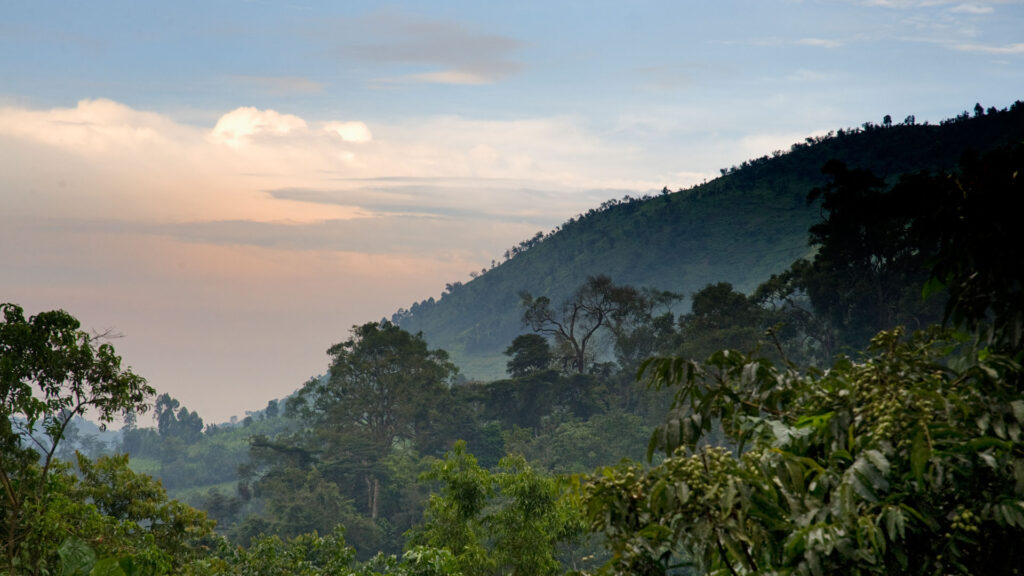
Bwindi’s vegetation is broadly classified as montane and lowland rainforest, but within this classification lie several distinct vegetation zones. Lower elevations support moist evergreen forest with tall trees and thick undergrowth, while higher elevations transition into montane forest characterized by shorter trees, moss-covered branches, and cooler conditions.
These zones blend seamlessly rather than forming sharp boundaries. As altitude increases, tree height gradually reduces, leaf structure changes, and epiphytes become more prominent. This gradual shift allows many plant species to coexist across overlapping ecological niches, contributing to Bwindi’s botanical richness.
Canopy Trees of Bwindi
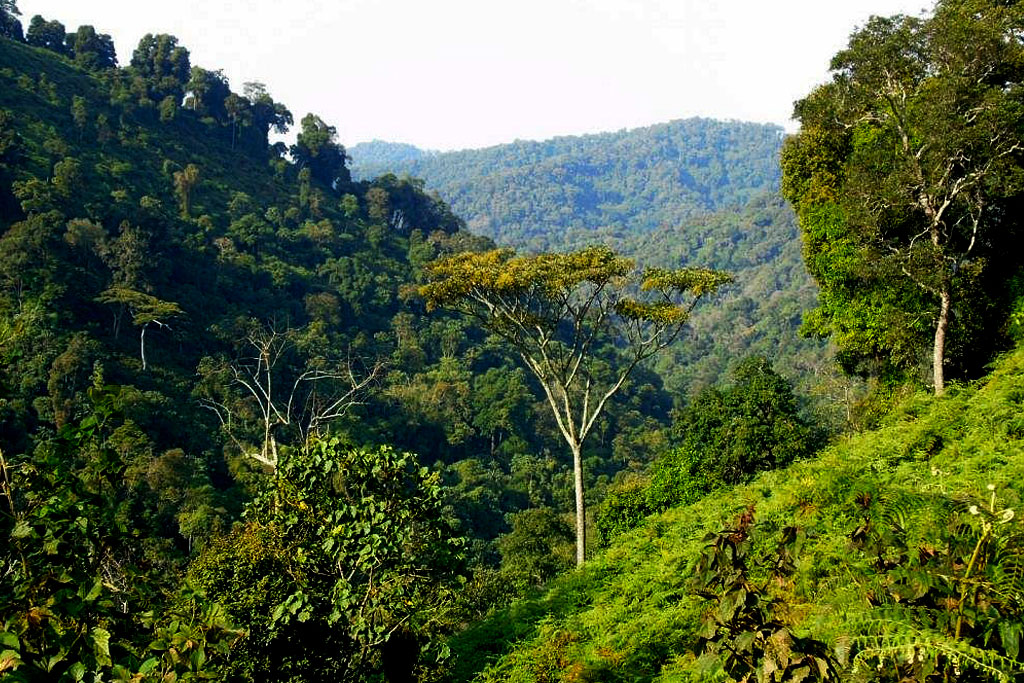
The upper canopy of Bwindi is dominated by towering hardwood trees that form a dense green roof over the forest. Species such as mahogany, fig trees, and ironwood are common, some reaching impressive heights and ages. These trees regulate forest temperature, retain moisture, and provide essential food sources for wildlife.
Fig trees play a particularly important role, producing fruit at different times of the year and acting as keystone species for primates and birds. The dense canopy filters sunlight, creating the shaded conditions that define Bwindi’s interior forest environment.
Understory Vegetation and Shrub Layer
Beneath the canopy lies a thick understory of shrubs, young trees, and climbing plants. This layer gives Bwindi its “impenetrable” character, with tangled vegetation limiting visibility and movement. Many medicinal plants used by local communities grow in this zone, adapted to low light and high humidity.
The understory is critical for gorillas, which feed on leaves, stems, and shoots from these plants. It also provides shelter and nesting sites for small mammals and birds, reinforcing the forest’s layered ecological structure.
Bamboo and Secondary Vegetation
Certain parts of Bwindi contain bamboo stands, particularly in transitional zones between forest types. Bamboo plays a seasonal role in gorilla diets and contributes to soil stability on steep slopes. These areas are especially important during periods when bamboo shoots are available.
Secondary vegetation is found in areas that experienced historical disturbance, either through natural events or past human activity. Over time, these areas regenerate naturally, creating a mix of pioneer species and mature forest plants. This regeneration process demonstrates Bwindi’s resilience as an ecosystem.
Epiphytes, Mosses, and Ferns
One of the most visually striking aspects of Bwindi’s vegetation is the abundance of epiphytes, mosses, and ferns. Tree trunks and branches are often draped in moss, lichens, orchids, and hanging plants that thrive in the forest’s humid conditions.
These plants do not harm host trees but rely on them for support. They play an important role in water retention and nutrient cycling, capturing moisture from mist and rain and slowly releasing it back into the ecosystem. Ferns dominate the forest floor in many areas, especially near streams and shaded valleys.
Medicinal and Indigenous Plants
Bwindi’s vegetation includes numerous plants with medicinal value, traditionally used by local communities for generations. Leaves, bark, roots, and sap are used to treat ailments ranging from fever and stomach issues to wounds and infections. This traditional knowledge highlights the deep relationship between people and forest vegetation.
While access to forest resources is now regulated, cultural knowledge of these plants remains an important part of local heritage. Conservation efforts aim to protect both biodiversity and the cultural significance of Bwindi’s flora.
Vegetation and Gorilla Habitat
The vegetation structure of Bwindi directly supports its population of mountain gorillas. Gorillas depend on a wide variety of plant species for food, particularly leaves, stems, pith, and occasional fruits. The year-round availability of vegetation is one of the reasons Bwindi can sustain multiple gorilla families within a relatively compact area.
Dense vegetation also provides cover and nesting material. Gorillas construct new nests each night using branches and leaves, making forest regeneration and plant diversity essential to their survival.
Seasonal Changes in Vegetation
Although Bwindi remains green throughout the year, vegetation responds subtly to seasonal rainfall patterns. Wet seasons bring rapid leaf growth, flowering, and fruiting, while drier periods see slower growth and increased leaf drop in some species.
These seasonal changes influence wildlife movement and feeding behavior. Rangers track these patterns closely, as vegetation cycles affect where gorilla families range within the forest.
Conservation of Bwindi’s Vegetation
Protecting Bwindi’s vegetation is central to conserving its wildlife. Strict protection limits logging, harvesting, and agricultural encroachment. Restoration efforts focus on maintaining forest integrity and preventing invasive species from disrupting native plant communities.
Community-based conservation initiatives help reduce pressure on forest resources by providing alternative livelihoods. This integrated approach ensures that Bwindi’s vegetation continues to thrive as a functioning ecosystem.
Why Bwindi’s Vegetation Matters
Bwindi’s plants and trees are not simply background scenery but the living framework that supports one of Africa’s most important biodiversity hotspots. The forest’s structure, diversity, and resilience make gorilla trekking possible and sustain countless other species.
For visitors, understanding Bwindi’s vegetation deepens appreciation of the forest as an ancient, interconnected system rather than just a wildlife destination.
Plan Your Safari
Exploring Bwindi with an awareness of its vegetation adds depth to any visit. Guided walks, birding excursions, and gorilla treks all offer opportunities to observe the forest’s plant life up close. When protected and respected, Bwindi’s vegetation will continue to support wildlife, communities, and unforgettable experiences for generations to come.