Why Tree Climbing Lions Uganda Have Become a Safari Legend
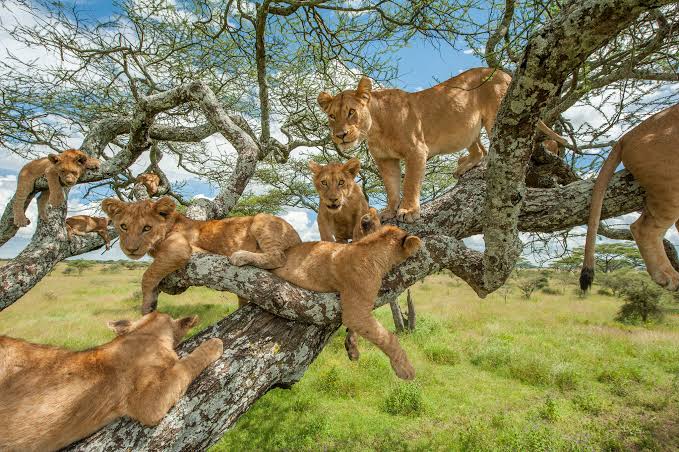
Tree climbing lions in Uganda represent one of Africa’s rarest wildlife spectacles. Travellers journey thousands of kilometres specifically to witness this behaviour. Lions across Africa occasionally rest on low branches after a meal. But the lions of Uganda’s Ishasha sector do something far more deliberate. They climb high into the canopy of large fig and acacia trees. They spend hours, sometimes entire days, draped across branches five to ten metres above the ground. This consistent, well-documented behaviour has made Ishasha one of Africa’s most talked-about safari destinations.
Wildlife biologists have identified only two lion populations in the world that regularly do this. The Ishasha lions of southern Queen Elizabeth National Park form one population. The lions of Lake Manyara National Park in Tanzania form the other. Beyond these two locations, tree-climbing by lions occurs only occasionally and individually. It never becomes a group-wide learned behaviour pattern the way it does in Ishasha.
Where to Find Tree Climbing Lions Uganda: The Ishasha Sector
The Ishasha sector occupies the southern reaches of Queen Elizabeth National Park. It sits close to the border with the Democratic Republic of Congo. The sector lies 120 kilometres south of the Mweya Peninsula by road. The journey takes approximately two and a half hours. The route combines tarmac and dirt tracks. The landscape is open savannah dotted with massive fig trees and stands of acacia.
Three main lion prides call the Ishasha sector home. Each pride typically numbers between five and fifteen individuals. Cubs learn to climb by following adult females into the branches. Rangers and experienced guides know the movement patterns of each pride. They know which specific trees each group favours. On a good morning, you may find two prides resting in separate trees within a kilometre of each other. On quieter days, it may take an hour of searching before you locate any lions. That is part of what makes the experience feel genuinely wild.
The Best Trees for Spotting Tree Climbing Lions in Uganda
The giant Ficus natalensis, the strangler fig, is the most popular climbing tree in Ishasha. These trees grow enormous horizontal branches extending outward at climbable heights. The broad branch surfaces give lions a comfortable flat platform. Dense canopy overhead provides shade during the hottest midday hours. Rangers have named the most heavily used trees across the sector. They monitor them every morning during sweeps before visitors arrive.
Umbrella acacias serve as secondary climbing trees. This is especially true during the dry season when fig trees lose canopy density. Acacia branches are narrower and higher. Lions using them strike more dramatic, precarious-looking poses. Photographers particularly prize shots of lions balanced on thin acacia limbs against an open sky. A small number of wild olive trees and African mahogany trees also see occasional use in the eastern part of the sector.
Why Tree Climbing Lions Uganda Behave This Way
Researchers have proposed several theories to explain this extraordinary behaviour. The most widely cited involves thermoregulation and insect avoidance. The Ishasha floodplain generates intense biting fly and tsetse fly pressure at ground level. This is especially severe during the wet season. Lions that climb above three metres escape the worst insect activity. They also enjoy cooling breezes moving through the upper canopy. Ground temperatures regularly exceed 35 degrees Celsius in this part of Uganda.
A second theory argues that elevated positions give lions a strategic advantage. From five metres up, a lion can see Uganda kob herds at distances ground-level vegetation would block. A third explanation centres on learned behaviour transmitted from mothers to cubs over generations. Whichever mechanism first drove an Ishasha lioness to climb, cubs that watched their mothers learned to replicate it. Over decades it became embedded in the pride’s culture. GPS-collar data confirms that tree-climbing is not a response to prey scarcity. These lions climb even when well-fed and facing no immediate threats.
Best Time to See Tree Climbing Lions Uganda
Early morning gives you the best chance of finding tree climbing lions in rewarding positions. Between 06:00 and 09:00, lions finish any overnight hunting and settle into trees for daytime rest. The light at this hour is warm, low, and golden. It is ideal for photography. The animals are fully alert and active as they climb and adjust their positions. Rangers begin sector sweeps at first light. They radio tree locations to guide vehicles. Early departure from your lodge matters enormously.
Late afternoon, between 16:00 and 18:00, offers a second viewing window. Lions wake from daytime sleep and begin moving toward evening hunting grounds. This sometimes yields sightings of lions descending from trees. You may see group activity such as stalking, play-fighting, and social bonding. These behaviours add narrative depth to a static resting image. Midday between 10:00 and 15:00 can be productive if lions climbed late in the morning. However, the harsh light is unflattering for photography and the heat makes long drives uncomfortable.
Tree Climbing Lions Uganda Safari: Costs and Logistics
Reaching the Ishasha sector requires a four-wheel-drive vehicle. Standard saloon cars cannot manage the dirt tracks during or after rain. Uganda Wildlife Authority assigns a ranger escort to every visitor vehicle entering Ishasha. This escort is mandatory, not optional. The ranger knows the sector intimately. He communicates by radio with colleagues tracking the prides. He provides context on lion behaviour throughout the drive.
| Cost Item | Foreign Non-Resident | Notes |
|---|---|---|
| Park Entry (per person per day) | USD 40 | Paid at Ishasha gate |
| Vehicle Game Drive Fee | USD 150 per vehicle per day | Includes UWA ranger escort |
| Driver-Guide Fee | USD 20-30 per day | If using operator vehicle |
| Lion Tracking Permit | USD 50 per person | Optional dedicated tracking session |
Most visitors reach Ishasha as part of a wider western Uganda circuit. They combine it with a drive from Bwindi Impenetrable Forest, four hours north, or from Mweya Peninsula, two and a half hours north. Operators sequence your nights in Ishasha at the transition point between these areas. This keeps drive times manageable and maximises your hours in the sector during prime morning and evening windows.
Where to Stay Near the Tree Climbing Lions Uganda Territory
Ishasha Wilderness Camp occupies a position directly inside the Ishasha sector. It is the most immersive accommodation option available. The camp runs twelve tented rooms on raised platforms above the Ntungwe River. You are within earshot of the surrounding savannah. Rates fall between USD 350 and USD 500 per person per night on a full-board basis. The camp’s guides hold deep knowledge of pride movements. Staying here means you reach the lions first in the morning.
Enjojo Lodge sits on the sector boundary at a lower price point. Rates run from USD 150 to USD 250 per person per night. The lodge provides comfortable stone-and-thatch cottages and a well-regarded kitchen. Its vehicle fleet covers both Ishasha game drives and transfers to Bwindi or Mweya. Budget-conscious visitors can camp at the UWA Ishasha campsite for USD 20 to USD 40 per person per night. The site provides basic facilities inside the sector. Early morning drives require minimal repositioning. Camping in Ishasha with lion calls audible through the night creates an experience no lodge stay entirely replicates.
Photography travellers should bring a telephoto lens of at least 400mm. A beanbag or window mount provides vehicle stabilisation. Carry spare batteries charged overnight. Shoot with the sun behind you in the morning. Position your vehicle so the tree faces east for optimal light. Instruct your guide to cut the engine the moment you locate a pride. Engine vibration reduces image sharpness at long focal lengths more than most travellers realise.
Plan Your Uganda Safari
How to Start Your Booking
Contact Us With Your Travel Dates
Reach out to African Wild Trekkers with your preferred travel window and group size. We check gorilla permit availability first, then build the full itinerary around your confirmed permit date. Contact us as early as possible for peak season dates.
Tell Us Your Budget and Style
We build Uganda safaris at every budget level — from $150 to $2,000+ per person per day. Share your accommodation preferences, activity interests and any special requirements. We tailor every element to match exactly what you want.
What Every Package Includes
Permits, Fees and Activities
Your quoted price covers all activity permits, park entry fees and ranger guide charges throughout Uganda. There are no hidden costs at park gates or trailheads. What we quote is exactly what you pay.
Transport, Accommodation and Meals
Private 4×4 safari vehicle with driver-guide, all lodge accommodation, full-board meals, Entebbe airport transfers and 24/7 in-country support are included in every African Wild Trekkers package from arrival to departure.
Why Travel With African Wild Trekkers
Local Expertise That Makes a Difference
We are a Uganda-based team with direct knowledge of every national park, lodge and guide in our network. We trek these forests and drive these plains ourselves. Our recommendations come from personal experience, not online research.
Request Your Custom Safari Quote
Visit africanwildtrekkers.com/contact to send us your enquiry. We respond within 24 hours every day of the week and deliver your personalised itinerary within three working days.