info@africanwildtrekkers.com

info@africanwildtrekkers.com

blog

Aberdare National Park Kenya: Tree Hotels, Waterfalls and Secret Wildlife

Aberdare National Park Kenya: Moorland Wildlife, Waterfalls and Kenya’s Famous Tree Hotels

Aberdare National Park Kenya occupies the Aberdare Range mountain forest and moorland above 3,000 meters, and its combination of dense equatorial forest, high-altitude moorland, dramatic waterfalls, and the famous tree hotel tradition makes it one of Kenya’s most distinctive safari destinations despite receiving a fraction of the visitor attention that the Maasai Mara and Amboseli attract. The park’s altitude and forest cover create a cool, misty atmosphere entirely unlike the dry savanna that dominates most Kenya safari imagery, and the wildlife community reflects this highland character — bongo antelope, giant forest hog, black and white colobus, giant forest elephant, and African leopard occupy an ecosystem where the undergrowth is so dense that ground-level wildlife searching requires the elevated perspectives that Kenya’s tree hotels were specifically designed to provide. African Wild Trekkers includes Aberdare in Kenya safari circuits for travelers seeking ecological diversity beyond the Rift Valley grasslands and the intimacy of wildlife observation that the tree hotel waterhole experience uniquely delivers.

The Tree Hotel Experience

Treetops and The Ark: Kenya’s Original Wildlife Lodges

Treetops and The Ark represent the original concept of a wildlife lodge — structures built on stilts or platforms above the forest floor overlooking waterhole clearings where wildlife arrives throughout the night to drink, and guests observe from elevated positions that the animals below accept as part of the natural clearing rather than as a threat. Princess Elizabeth was staying at Treetops in February 1952 when she learned that her father King George VI had died, ascending the tree as a princess and descending as a queen — a historical connection that makes Treetops the most historically significant individual lodge in Africa regardless of wildlife caliber. The Ark, built later and offering a more sophisticated experience, provides multiple observation decks at different elevations above the waterhole, a below-water-level bunker for ground-level photography, and a buzzer system that wakes guests when significant wildlife arrivals occur during the night so no major sighting is missed during sleeping hours. Both tree hotels operate on a half-day visit format — guests are driven from Naivasha or Nyeri hotels in the early afternoon, transferred to the forest by ranger vehicle, and returned the following morning after breakfast — creating a focused nocturnal wildlife experience that functions as a self-contained activity rather than a multi-day park stay.

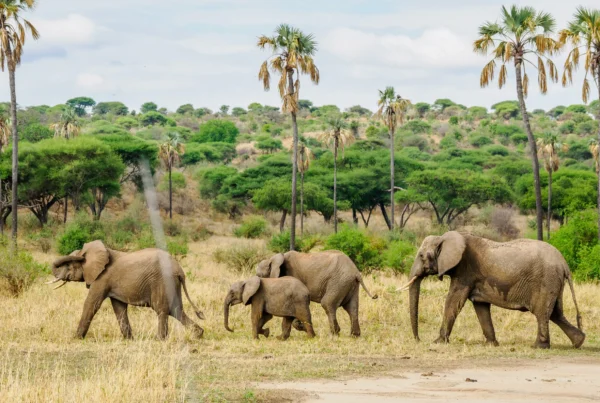
The waterhole at The Ark attracts forest elephants that differ noticeably from their savanna counterparts in build, temperament, and behavior — forest-adapted elephants are typically smaller in body, have smaller, rounder ears, and display more cautious, less assertive behavior around waterhole clearings than the confident open-country elephants of Amboseli or Tsavo. Watching a forest elephant family approach the waterhole in the middle of the night — torch beams off, the sounds of their feeding and drinking filling the dark forest, the occasional rumble carrying clearly in the mountain air — produces an atmosphere of wild night encounter that the savanna’s vehicle-dependent game drive experience cannot replicate in the same intimately confined setting. Buffalo herds arrive throughout the night in large numbers, and their interaction with elephants at the single waterhole creates the kind of multi-species behavioral encounter that animal behaviorists specifically travel to the Aberdare forest to observe. Giant forest hog — the world’s largest suidae species, massively built and predominantly nocturnal — emerges from the forest edge at the waterhole in the hours before dawn, a reliable sighting that most guests who stay awake late enough consistently report as one of their most surprising African wildlife encounters.

The Bongo: Aberdare’s Most Elusive Species

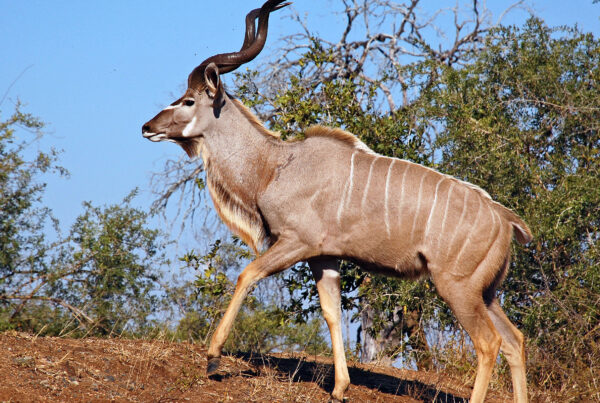
The mountain bongo is Africa’s most magnificently marked forest antelope — a large reddish-brown animal with bright white vertical stripes and long spiraling horns in both males and females — and Aberdare National Park holds the Kenya highlands bongo population that represents one of the last significant wild populations of this critically endangered subspecies. Fewer than 100 mountain bongos survive in Kenya’s highland forests, and the Aberdare population represents a significant proportion of this total within a park that also hosts the Mountain Bongo Breeding Programme at the Aberdare Country Club, where captive-bred animals are maintained as a genetic reserve against the potential collapse of the wild population. Wild bongo sightings require night observation at the tree hotel waterholes or very early morning forest drives along specific trails where the animals move between feeding areas, and the quality of a wild bongo encounter at a Treetops or Ark waterhole carries conservation significance that no other nocturnal wildlife sighting in Kenya quite matches. The bongo’s combination of physical beauty, rarity, and ecological specificity to the highland forest ecosystem makes it Aberdare’s equivalent of the mountain gorilla in terms of conservation iconic status within its specific habitat.

The Ark’s waterhole lighting system allows precise illumination control that enhances bongo photography compared to the unmanaged natural lighting available at most wildlife observation points in Africa, and the lodges’ decades of operational experience with forest species approaching their waterholes has refined the lighting setup to minimize disturbance while maximizing photographic quality. Guests who arrive at The Ark with a specific interest in bongo photography benefit from briefing the lodge manager on arrival — staff who know which nights and what conditions have historically produced the most reliable bongo appearances can adjust waterhole salt and mineral supplementation timing to improve the probability of a bongo visit during your specific stay. This management capacity within the lodge environment — absent from raw wilderness areas — represents one of the distinctive advantages that the Aberdare tree hotel experience offers over conventional game drive wildlife searching.

Aberdare Landscape and Waterfalls

Karuru and Gura Falls

The Aberdare Range contains some of Kenya’s most spectacular waterfall scenery, and the Karuru Falls cascade 272 meters in three stages down a volcanic escarpment within the park — making them one of Africa’s tallest waterfalls and a destination that rewards the approach drive through the moorland with a landscape spectacle of considerable scale. The falls are most impressive during the long rains between March and May and in the short rains of October and November when rainfall volume maximizes the water volume over the drop, but the walk to the viewing platform delivers the full cascade effect even in drier months when the flow reduces from a roaring curtain to a thinner but still visually commanding stream. Gura Falls near the Salient provides a second major waterfall experience within the park’s accessible road network, and the forest surrounding the falls base supports colobus monkey groups that use the spray zone vegetation with a frequency that makes the falls trail one of the park’s most reliable primate viewing routes regardless of the tree hotel nocturnal observation schedule.

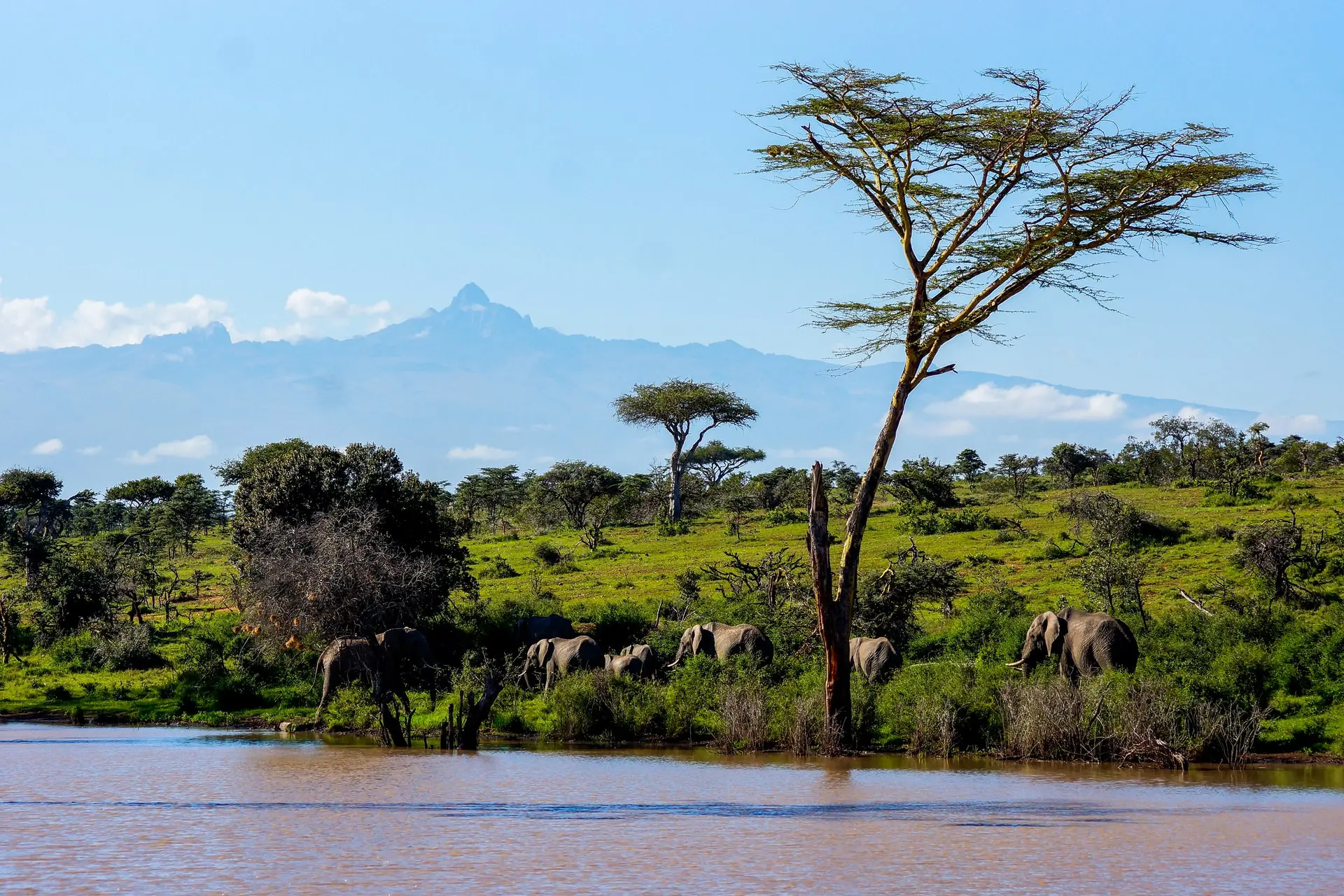
The Aberdare moorland above 3,500 meters offers an entirely different landscape character from the forest below — open rolling heath covered in giant heather and giant lobelia that creates a Jurassic-period visual atmosphere unlike any other East African habitat. Giant forest elephants use the moorland regularly during the dry season when forest food sources diminish, and the sight of African elephants grazing among two-meter-tall lobelia stalks against a backdrop of rolling moorland cloud creates a visual juxtaposition that no other Kenya location produces. Eland, the world’s largest antelope, also use the moorland in groups, and their unexpected presence at high altitude in weather that feels more like Scottish highland than equatorial Africa creates a wildlife encounter that challenges the savanna-focused mental model of Kenya safari that most travelers arrive with. African Wild Trekkers designs Aberdare visits that combine the moorland landscape drive with the tree hotel waterhole experience to cover both the park’s landscape character and its nocturnal wildlife dimension within a single day and night.

Plan Your Safari

Aberdare National Park tree hotel visits require a minimum one-night stay at The Ark or Treetops, with day transfers from adjacent Mount Kenya or Laikipia itineraries making the Aberdare addition logistically straightforward for travelers already in the Central Kenya highlands. African Wild Trekkers books tree hotel nights as part of Mount Kenya circuit programs that combine Aberdare’s nocturnal forest wildlife with Ol Pejeta or Lewa rhino experiences on the Laikipia Plateau within a compact northern Kenya circuit.

Your Aberdare package includes tree hotel accommodation at The Ark or Treetops, full-board meals, all waterhole observation time, morning forest drive, and transfer from your previous Kenya destination. We brief every guest on the bongo and giant forest hog viewing conditions before arrival so expectations and observation strategy are aligned from the moment you step onto the deck.

Contact African Wild Trekkers at africanwildtrekkers.com/contact with your Kenya travel dates and we will design a Central Kenya highlands circuit that includes Aberdare within 24 hours.