Women in Wildlife Conservation Africa: The Female Rangers Leading the Way
A Conservation Revolution Led by Women
Women in wildlife conservation Africa are not a token gesture toward gender balance. They represent a genuine transformation in how the continent protects its natural heritage. From all-female ranger units patrolling the Zambezi Valley to PhD researchers reshaping our understanding of elephant social intelligence, women now occupy leadership positions across African conservation. These are positions that would have been unimaginable a generation ago. This shift is not purely ideological.
Multiple peer-reviewed studies from conservation biology and development economics have found that women rangers, conservationists, and community liaisons achieve measurably better outcomes. They outperform equivalent male-dominated teams in species protection, community engagement, and long-term programme sustainability.
The barriers women have overcome to reach these positions remain substantial and in many cases ongoing. In many African communities, cultural expectations restrict women’s mobility. Legal or social norms limit women’s land ownership. Careers in the bush carry a traditionally masculine coding.
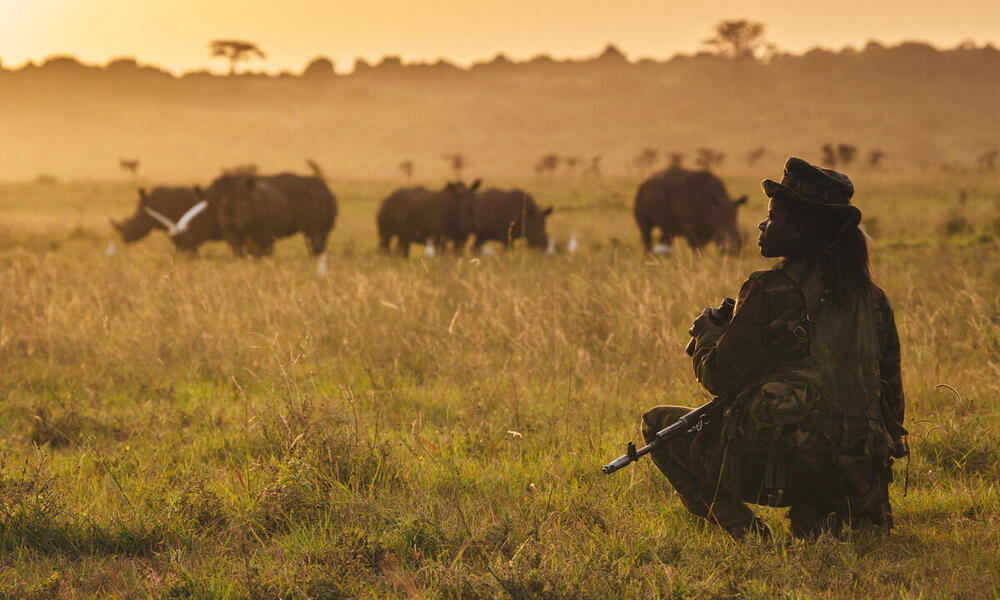
Anti-poaching work specifically carries real physical danger. The perception that women cannot handle armed confrontation or multi-day wilderness patrols has excluded them from ranger forces for decades. What the evidence from units like Akashinga in Zimbabwe and the Black Mambas in South Africa has proven is that these assumptions are both factually wrong and practically counterproductive. Female rangers often achieve better community intelligence networks, lower corruption rates. And comparable or superior field performance to their male counterparts.
Groundbreaking Female Rangers Across Africa
Ranger Units That Changed the Narrative
The Black Mambas of South Africa
The Black Mambas Anti-Poaching Unit launched in 2013 in the Balule Nature Reserve adjacent to the Greater Kruger National Park. This made it one of the first formally constituted all-female ranger units on the continent. Craig Spencer and the More Than A Game foundation founded the unit. They specifically recruited women from the local communities whose villages border the reserve. These communities had complex histories with wildlife authorities.
Some families included members involved in poaching networks. By employing women from within these communities rather than bringing in outside rangers, the Black Mambas transformed the social dynamics around poaching. Mothers and sisters became the people whose jobs depended on wildlife staying alive. This created powerful informal social pressure within villages against poaching cooperation.
The Black Mambas operate unarmed, which was initially controversial in a reserve where armed poachers regularly operated. The decision proved strategically sound. Unarmed female rangers cannot be baited into armed confrontations. The law protects them from accusations of excessive force. Their visible presence as community members rather than military occupiers dramatically improved local cooperation with the unit’s intelligence-gathering operations.
By 2019 the unit had grown to 32 rangers. It had achieved a 75 percent reduction in rhino poaching incidents within their operational area. The unit simultaneously ran school environmental education programmes in six local villages. It created the first wildlife-linked school curriculum available in the area. In 2015 the Black Mambas won the United Nations Champions of the Earth award — the UN’s highest environmental honour. This recognised both their conservation achievements and their community transformation model.
Akashinga: The Brave Ones of Zimbabwe
Akashinga, meaning “the brave ones” in the Shona language, launched in 2017 under Damien Mander and the International Anti-Poaching Foundation. It operates in Zimbabwe’s Zambezi Valley — one of the most heavily poached wildlife areas on the continent.
Unlike the Black Mambas, Akashinga rangers are fully armed and train to the same military combat standard as male ranger units. Recruits come from the most economically disadvantaged women in surrounding communities.
They include survivors of domestic violence, HIV-positive women abandoned by their families, women who have survived trafficking or sexual assault. And single mothers with no viable income source. The selection process deliberately targets women who have experienced extreme adversity. As Mander has explained, these are women with nothing to lose and everything to fight for. A psychological profile that produces exceptional dedication and resilience under field conditions.
By 2024, Akashinga had expanded from its original 16-ranger pilot cohort to more than 200 rangers. They protect over 2,000 square kilometres across five wildlife areas in Zimbabwe. An independent economic assessment published in 2023 found that Akashinga achieved poaching reduction outcomes equivalent to conventional armed male ranger units at 46 percent of the operational cost per square kilometre.
Female rangers showed significantly lower rates of bribery acceptance, lower absenteeism, and stronger community relationships that yielded higher-quality intelligence. The programme has also demonstrated transformative community impacts. Average household incomes for Akashinga rangers’ families increased by over 300 percent compared to their pre-recruitment baselines.
Village-level poaching rates in communities with Akashinga members dropped even in areas outside the rangers’ formal patrol zones. The social stigma around poaching within those communities fundamentally changed once women with conservation authority became respected community figures.
Female Scientists and Conservation Leaders
Researchers Rewriting Wildlife Science
Women have driven the most important long-term wildlife research programmes in Africa. This was often because early female scientists committed to the painstaking multi-decade data collection that male-dominated academic environments initially undervalued. Joyce Poole has studied Amboseli’s elephants since 1975 alongside Cynthia Moss. She produced the foundational research on elephant musth, estrus, and family social structures that now underpins elephant conservation policy globally. Her work with ElephantVoices has created the world’s most comprehensive database of elephant sounds and behaviours.
It directly informs how conservationists assess elephant psychological wellbeing and stress in both wild and captive populations. Francoise Malby-Anthony has managed Thula Thula Private Game Reserve in KwaZulu-Natal since the death of her husband Lawrence Anthony in 2012. She oversees one of South Africa’s most celebrated elephant rehabilitation programmes and has written extensively about the emotional and social complexity of elephant family groups under her care.
In Uganda, Gladys Kalema-Zikusoka founded Conservation Through Public Health in 1999. She recognised that mountain gorilla health and human community health in the Bwindi Impenetrable Forest are inseparably linked. Her programme simultaneously provides healthcare to communities bordering Bwindi while monitoring gorilla health. It now ranks as one of the most effective models of integrated human-wildlife disease management in the world. Kalema-Zikusoka was the first wildlife veterinarian Uganda Wildlife Authority employed.
She has advised governments and conservation organisations across Africa on the one-health approach to wildlife disease management. Her work directly contributed to the mountain gorilla population recovery that took their numbers from approximately 620 individuals in 2003 to over 1,000 by 2021. The most hopeful conservation outcome in modern African wildlife history.
Community-Level Women Driving Conservation
Beyond famous names and formal institutions, countless women at the village level drive conservation outcomes across Africa. They do this through community conservancies, beekeeping cooperatives, and women’s land stewardship programmes.
These programmes link wildlife habitat protection directly to female economic empowerment. The Northern Rangelands Trust in Kenya works with over 43 community conservancies across 10.5 million acres of northern Kenya. Women’s groups within these conservancies manage livestock grazing rotation schemes that reduce pressure on wildlife habitat.
They operate savings groups that fund children’s school fees from conservancy dividends. They also sit on conservancy boards where wildlife management decisions happen. In areas where women hold formal authority within conservancy governance, research by the Northern Rangelands Trust found measurably better wildlife population trends. These areas also showed higher community compliance with conservation agreements than conservancies with exclusively male leadership structures.
The Africa Leadership in Conservation programme is run by the African Wildlife Foundation. It has specifically invested in training women from across the continent for senior conservation leadership roles since 2018.
This recognised that the conservation sector’s leadership pipeline remained heavily male-dominated. This was true even as field evidence mounted that gender diversity improved programme outcomes. Fellows from Uganda, Kenya, Tanzania, Rwanda, Zimbabwe, and Botswana have completed the programme. They have subsequently taken on roles as park managers, national policy advisors.
And directors of wildlife NGOs that were previously almost exclusively occupied by men. This deliberate pipeline investment represents a recognition that the frontline success of Akashinga and the Black Mambas needs replication at institutional leadership levels. Only then will women’s contributions to African conservation become structurally embedded rather than celebrated as exceptional anomalies.
Why Gender-Inclusive Conservation Works Better
The Evidence Behind the Results
Community Trust and Intelligence Networks
One of the most consistently documented advantages of female rangers and conservation officers is their capacity to build trust with local women in surrounding communities. That trust translates directly into intelligence that prevents poaching. In most African communities, women are the primary collectors of firewood, water, and agricultural produce. This means they move through buffer zones and wildlife corridors more frequently than men. They observe animal movements, snare placements, and suspicious human activity that male rangers with their more restricted community access never learn about.
Female rangers can speak informally with women in villages, attend women’s group meetings, and build relationships through shared domestic experiences. Male rangers, often viewed with suspicion as authority figures, cannot replicate this access. Big Life Foundation’s community ranger programme in the Amboseli ecosystem explicitly recognised this intelligence advantage.
It has built female liaison networks alongside its ranger force as a core element of its anti-poaching strategy.
Lower corruption rates in female ranger units have multiple explanations that go beyond gender essentialism. Female rangers in programmes like Akashinga typically serve as primary caregivers for children and OLD parents. Stable employment is therefore not just personally important but existentially critical to their families’ survival. This creates stronger incentives to protect their positions than rangers who have alternative income options.
Female rangers often lack access to the male social networks through which poaching bribes typically flow. This reduces their exposure to corruption offers. And in communities where female rangers have become sources of social status and community respect, the reputational cost of corruption is particularly high. Losing a ranger position means losing not just income but a hard-won identity within the community hierarchy.
The Broader Impact on Conservation Culture
The growing visibility of women in African conservation leadership is changing how young girls in wildlife-adjacent communities conceptualise their futures. In areas around Akashinga’s operational zones in Zimbabwe, surveys of schoolgirls have found that career ambitions in conservation, wildlife management. And environmental science have increased significantly since the unit became established and publicly celebrated.
This cultural shift matters enormously for long-term conservation sustainability. The next generation of rangers, wildlife managers, and community conservancy leaders is currently in primary school in communities that border Africa’s most important wildlife areas. If those communities produce more young people.
Female and male. Who see conservation as a viable and respected profession, the ranger workforce of 2040 will be substantially larger and more locally legitimate than the workforce of today.
Safari operators and conservation organisations that support female ranger units through direct financial contributions make a meaningful difference. So do tour packages that visit women-led conservancies and procurement of goods and services from women’s cooperatives around wildlife areas. These choices invest in what may prove to be the most important conservation multiplier of the coming decade.
The economics of the Akashinga model. Better conservation outcomes at lower cost, combined with transformative community development. Suggest that scaling female ranger programmes across Africa could represent the highest-return conservation investment available to the sector. For safari travellers who want their visit to contribute meaningfully, choosing operators with documented commitments to gender-inclusive conservation programmes is one of the most tangible and evidence-backed choices available.
Plan Your Safari
Several of Africa’s most powerful conservation experiences now revolve specifically around female ranger units and women-led conservancy programmes. Visiting the Black Mambas in the Greater Kruger area, engaging with Akashinga-managed wildlife areas in Zimbabwe, or staying at lodges within Northern Rangelands Trust conservancies in Kenya directly puts your safari spend behind these programmes. These are programmes where women’s conservation leadership is structurally embedded and financially supported.
African Wild Trekkers can design safari itineraries that incorporate community ranger engagement, visits to women’s conservation cooperatives. And stays at lodges whose supply chains support female-run enterprises around wildlife areas. These experiences add genuine depth to safari travel. You leave with an understanding of how local women are transforming conservation in ways that no game drive alone can provide.
Contact African Wild Trekkers at africanwildtrekkers.com/contact with your destination preferences. We will match you with a safari package where women’s conservation leadership is a central part of what you experience and support.