info@africanwildtrekkers.com

Queen Elizabeth National Park: The Complete Guide to Uganda’s Most Diverse Safari Destination
Queen Elizabeth National Park sits in western Uganda, between Lake Edward and Lake George. It’s Uganda’s most visited savannah park, and for good reason. Few parks anywhere pack in this much variety: open plains, crater lakes, a forested gorge, and a channel thick with hippos, all within a single boundary.
The park’s biggest draw is its range. Visitors come for tree-climbing lions in the south, boat cruises along the Kazinga Channel, and chimp trekking in Kyambura Gorge. Few Uganda parks let a traveler pack this much into three or four days.
This guide covers what to see, when to go, and where to stay. It’s built for anyone adding Queen Elizabeth to a Uganda safari circuit.
Why Visit Queen Elizabeth
Queen Elizabeth holds one of Uganda’s richest species counts. Ninety-five mammal species live here, and over 600 bird species have been recorded within the park. Few reserves in East Africa match that kind of density in such a compact area.
The Kazinga Channel is the park’s centerpiece. It links Lake Edward and Lake George, and its banks draw huge numbers of hippos, buffalo, and elephants throughout the day. A boat cruise along the channel is one of the best wildlife-viewing experiences in Uganda.
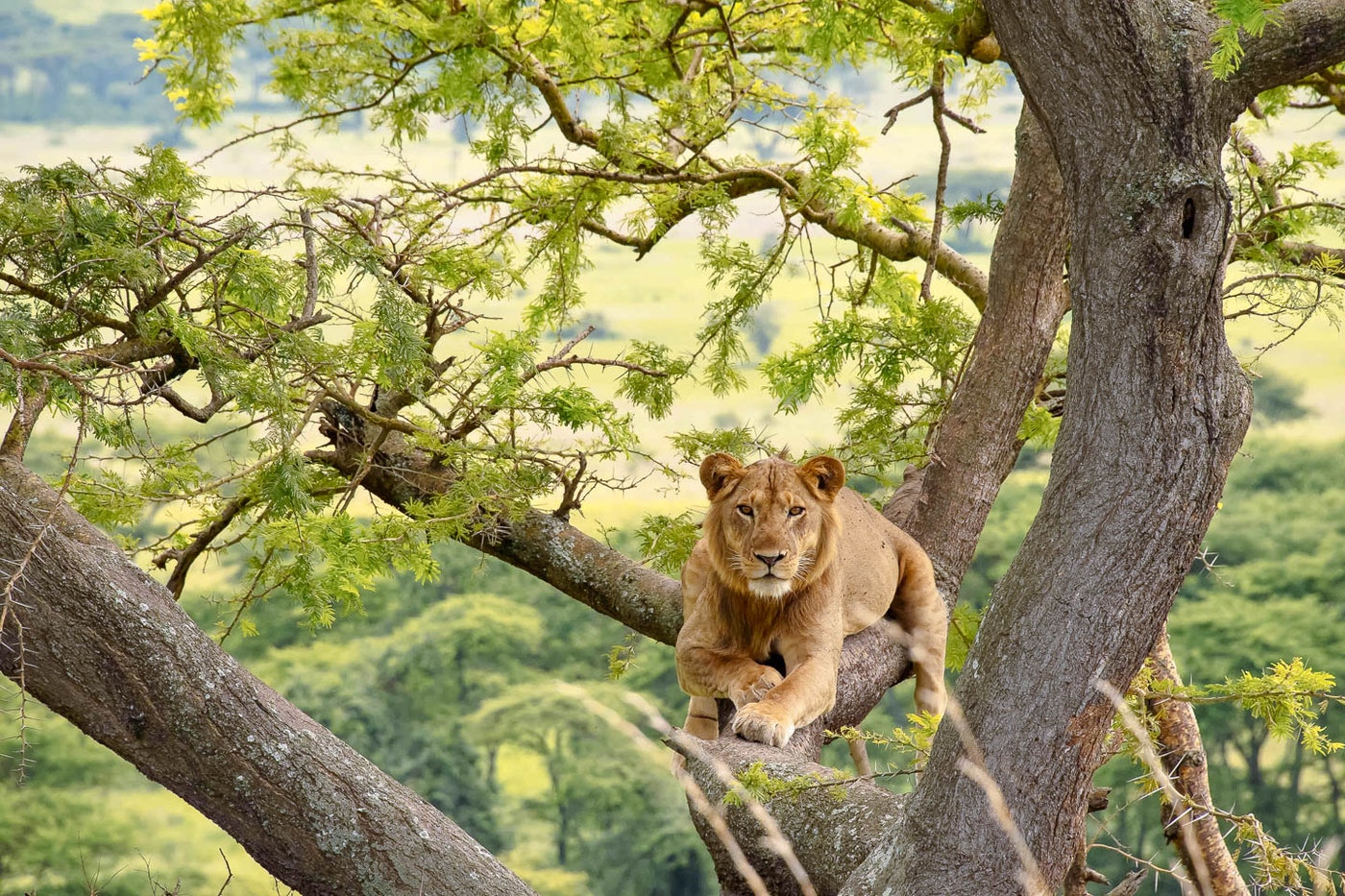
The Ishasha sector adds something rarer still. Its lions climb trees, a behavior seen in only a handful of places in Africa. Spotting a pride draped over the branches of a fig tree is one of the park’s signature sights.
Best Time to Visit
Queen Elizabeth sits near the equator, so temperatures stay warm year-round. Rainfall shapes the best time to visit more than heat does.
The dry season runs from June to September. Roads are firmer, and wildlife gathers more predictably around water sources. A second, shorter dry stretch falls between December and February, offering a quieter alternative to the mid-year peak.
The wetter months fall between March and May, and again in October and November. Roads can turn slippery, and some tracks become harder to navigate. Fewer visitors travel during this period, so the park feels calmer, and lodge rates tend to drop.
Getting There
Most visitors reach Queen Elizabeth by road, either from Kampala directly or as part of a wider southwestern circuit that includes Bwindi. The drive from Kampala takes around five to six hours. Many itineraries instead combine the park with Bwindi or Kibale, given how close all three sit to one another.
A domestic flight is the quicker option from Entebbe. Small aircraft land at an airstrip near Mweya, cutting travel time down significantly. This suits travelers with limited days who still want to fit in the full circuit.
Self-driving is possible on the main routes, though a guided vehicle is more common. Local drivers know where wildlife tends to gather and can navigate the park’s network of tracks more efficiently than a first-time visitor.
What to See and Do
Kazinga Channel Boat Cruise
A boat cruise along the Kazinga Channel is the park’s most popular activity, and it’s easy to see why. Hippos gather in the water in large numbers, often close enough to hear their calls clearly. Elephants, buffalo, and a wide range of birdlife line the banks throughout the cruise.
Game Drives in Kasenyi and Mweya
The Kasenyi Plains offer some of the park’s most reliable game drives, with lions, elephants, and large herds of Uganda kob commonly seen. The Mweya Peninsula, where several lodges cluster, also supports strong wildlife viewing and sits close to the channel for an easy combination with a boat cruise.
Ishasha and the Tree-Climbing Lions
The Ishasha sector sits in the park’s south, a few hours from the main Mweya area. Its lions are known for resting in the branches of large fig trees during the heat of the day, a habit rarely seen elsewhere. The sector is quieter than the rest of the park, adding to its appeal for visitors chasing something different.
Kyambura Gorge Chimp Trekking
Kyambura Gorge, sometimes called the Valley of Apes, cuts through the park’s northeastern edge. Guided chimp treks here move through dense riverine forest, a sharp contrast to the open savannah nearby. Sightings aren’t guaranteed, but the gorge itself is worth the walk regardless.
Crater Lakes and Nature Walks
A cluster of volcanic crater lakes sits near the park’s Kasenyi and Katwe areas, offering a scenic, low-key add-on to a day of game drives. The Maramagambo Forest, further south, adds guided nature walks and a chance to see the park’s smaller, less obvious wildlife.
Wildlife in Queen Elizabeth
Elephants, buffalo, and Uganda kob are common sights across the park’s open plains. Lions are present throughout, though the Ishasha sector’s tree-climbing prides draw the most attention. Leopards also live here, though they’re harder to spot given their solitary, largely nocturnal habits.
The Kazinga Channel adds hippos and Nile crocodiles to the wildlife list in large numbers. Primates round things out, with chimpanzees in Kyambura Gorge and both black-and-white colobus and vervet monkeys found across the park’s forested pockets. Birdlife is exceptional throughout, drawing dedicated birdwatchers on its own merits.
Accommodation Near the Park
Lodges cluster around four main areas, each suited to a different part of the park. Mweya Peninsula works best for boat cruises and central game drives. Kasenyi suits travelers focused on plains game viewing. Ishasha suits anyone prioritizing the tree-climbing lions, and the Kyambura or escarpment area suits chimp trekking and crater lake visits.
Mweya Safari Lodge is the park’s oldest and most central property, set on the peninsula with views over the Kazinga Channel and the Rwenzori Mountains beyond. It’s a large lodge rather than an intimate one, but the location is hard to beat for anyone splitting time between boat cruises and game drives.
Elephant Plains Lodge sits up on the Kasenyi escarpment, with sweeping views across the plains toward Lake George. Katara Lodge occupies a similar ridge position nearby, known for its sustainability focus and views stretching toward the Virunga range. Both suit travelers who want a quieter base with a view, rather than staying right on the peninsula.
Ishasha Wilderness Camp is the main luxury option in the south, set on the banks of the Ntungwe River within reach of the tree-climbing lions. Its tented rooms open onto private verandas, and wildlife often passes directly through camp. Ishasha’s public bandas offer a simpler, budget-friendly alternative in the same area.
Kyambura Gorge Lodge sits on a former coffee plantation at the park’s edge, close to the gorge itself and its resident chimpanzees. Kasenyi Safari Camp, set on the rim of a crater lake, adds a comfortable mid-to-upper-range option with easy access to both game drives and the Kazinga Channel.
Budget travelers have solid choices too. Simba Safari Camp, near the Kasenyi Plains, offers dorm beds, basic cottages, and strong value. Mweya Hostel, run by the Uganda Wildlife Authority, gives budget travelers a base right inside the park, close to all the peninsula’s main activities.
Combining Queen Elizabeth With the Rest of Uganda
Queen Elizabeth sits within easy reach of Uganda’s other major southwestern parks, making it a natural link in a longer circuit. Bwindi Impenetrable National Park and its gorilla trekking lie a few hours south. Kibale National Park, known for chimpanzee trekking, sits a similar distance to the north.
Many multi-park itineraries treat Queen Elizabeth as the middle stop on a circuit running between Bwindi and Kibale, taking advantage of its central location. A few days here breaks up longer drives with strong wildlife viewing and a change of pace from forest trekking.
Frequently Asked Questions
How many days do I need at Queen Elizabeth National Park?
Two to three days covers a Kazinga Channel boat cruise and a couple of game drives, while a fourth day allows time for the Ishasha sector or a Kyambura Gorge chimp trek as well.
Where are the tree-climbing lions found?
The Ishasha sector, in the southern part of the park, is the place to look for them, and sightings tend to be strongest during the hottest hours of the day when lions climb trees to cool off.
Can I combine Queen Elizabeth with gorilla trekking?
Yes. Bwindi Impenetrable National Park sits a few hours south, and many itineraries combine the two parks along with Kibale for chimp trekking in one southwestern Uganda circuit.
Is the Kazinga Channel boat cruise worth doing?
Most visitors rank it among the best activities in the park, given the reliable, close-up wildlife viewing it offers without the need for a long game drive.
What is the best time to see wildlife at Queen Elizabeth?
Early morning and late afternoon during the June to September dry season tend to bring the strongest sightings, though the park supports good wildlife viewing throughout the year.