Hamerkop Nest Facts: Africa’s Most Remarkable Bird Construction
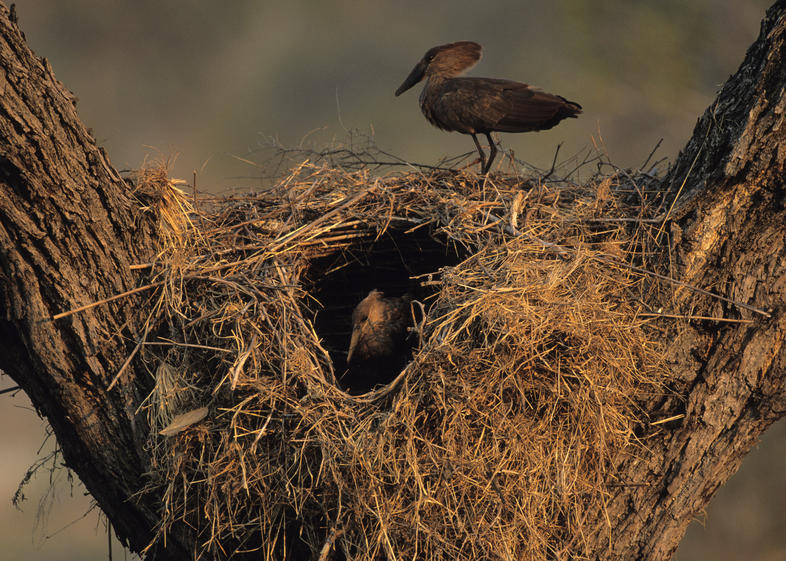
The hamerkop builds the largest nest of any bird in Africa relative to its body size. A single nest can weigh up to 50 kilograms. It measures up to 1.5 metres in diameter and 2 metres in height. The bird itself weighs only around 470 grams, making the nest roughly 100 times the bird’s own body weight.
No other African bird invests more construction effort into a single nesting structure. The hamerkop’s nest is one of the most extraordinary examples of animal architecture found anywhere on earth. It is a landmark feature in the landscapes where this medium-sized wading bird lives and breeds.
How the Hamerkop Builds Its Nest
Hamerkops build their nests over a period of 3 to 6 weeks. Both the male and the female contribute to the construction. They use sticks, grass, reeds, mud, and any available materials from the surrounding environment. They often incorporate human-made objects such as cloth strips, plastic, and wire into the outer structure.
The nest has a specific internal architecture. The outer shell is a dense, interlocked mass of sticks and vegetation. Inside this shell, the birds construct a mud-plastered entrance tunnel that leads to a central nesting chamber. This chamber is lined with soft grass and feathers to cushion the eggs.
The entrance tunnel faces downward. This downward orientation prevents rain from flooding the interior and deters predators from entering. Furthermore, the mud plastering hardens as it dries and creates a remarkably solid, weatherproof structure that can survive multiple seasons.
Nest Reuse and Community Use
Hamerkops often return to the same nest site year after year. They add new material to existing nests across successive breeding seasons. Some nests in regular use grow so large that their weight causes the supporting branch to bend significantly.
Other species actively use abandoned or active hamerkop nests. Barn owls, Egyptian geese, genets, monitor lizards, and various snake species all take up residence in the nest’s outer structure. The nest’s thick outer layer provides shelter and nesting cavities for these secondary occupants without disturbing the hamerkops using the central chamber.
Moreover, some communities in East Africa consider the hamerkop’s nest to be spiritually significant. In certain cultural traditions, disturbing a hamerkop nest brings bad luck. This belief has historically provided an additional layer of protection for the nests in areas where superstition and conservation interests coincidentally align.
Where to See Hamerkops in East Africa
Hamerkops are widespread across East Africa wherever permanent or seasonal water exists. They feed in shallow water on frogs, fish, and invertebrates. Any marsh, lake shore, river bank, or flooded grassland area has the potential to hold foraging hamerkops.
The species is particularly abundant in Uganda’s wetlands, Kenya’s Rift Valley lakes, and Tanzania’s river systems. Queen Elizabeth National Park’s Kazinga Channel provides reliable daily hamerkop sightings. The Murchison Falls river banks support active nesting pairs with accessible nests visible from tourist boats.
In Kenya, the Maasai Mara’s seasonal marshes and the wetlands around Lake Naivasha and Lake Baringo consistently produce hamerkop sightings. The nests are unmistakable once seen. Their large size and distinctive dome shape stand out clearly against the riverine trees and reedbeds where they are most commonly built.
Plan Your Birding Safari
Hamerkop sightings require no specialist birding skill or dedicated search effort in East Africa’s wetland destinations. The species appears on almost every game drive or boat trip that passes water. Uganda’s wetland national parks produce the most consistent hamerkop encounters due to the country’s extraordinary density of permanent water habitat.
Any East Africa safari that includes a boat cruise on the Nile, the Kazinga Channel, or the Rufiji River will encounter hamerkops at close range without requiring any detour from the standard wildlife route.
African Wild Trekkers designs East Africa birding safaris that cover wetland, forest, and savanna habitats across Kenya, Uganda, and Tanzania. Contact us to plan a birding safari that reveals the full diversity of East Africa’s extraordinary waterbird community.