Kivu Fishing Guide: Understanding Lake Kivu’s Fishing Culture and Fish Species
Lake Kivu’s fishing economy supports tens of thousands of families along both the Rwandan and Democratic Republic of Congo shores. Fish from the lake provide an important source of protein and income for communities that have depended on these waters for generations. The fishing boats, early morning fish markets, and returning night-fishing fleets form an important part of the lake’s cultural identity. Understanding Lake Kivu’s fishing culture adds a deeper human connection to any visit.
Lake Kivu’s fish ecosystem has changed significantly over the past century. The introduction of non-native fish species transformed the lake’s original biodiversity and altered traditional fishing patterns. While these changes affected native fish populations, they also created a stronger commercial fishing industry that now supports many lakeside communities. The story of Lake Kivu’s fish is therefore both an ecological story and a social history shaped by changing human needs.
Fish Species in Lake Kivu
The original fish community of Lake Kivu consisted mainly of endemic cichlid species and isambaza, a small sardine-like fish found in the lake. These native cichlids evolved in isolation over thousands of years, and several species existed nowhere else on Earth. However, introduced fish species such as Nile perch and tilapia changed the balance of the lake’s ecosystem. Native fish populations declined while commercially valuable species became more dominant in local fishing activities.
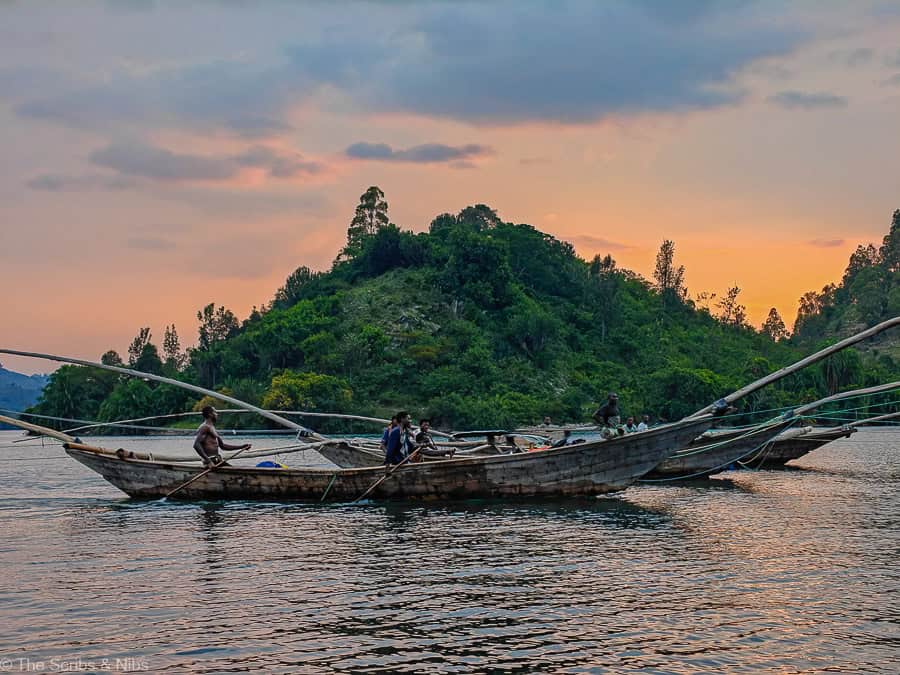
Isambaza remains the most important commercial fish species in Lake Kivu today. These small fish support a large night-fishing industry that operates across the lake. Fishermen use bright lights on wooden boats to attract insects, which in turn attract isambaza closer to the surface. Large circular nets then capture the fish in significant quantities. Successful night-fishing trips can produce hundreds of kilograms of fish, which are sold fresh or processed through drying and smoking.
Tilapia has also become one of the most valuable fish species in Lake Kivu. Several tilapia species were introduced during the colonial and post-independence periods to improve food production. Today, tilapia is widely sold in local markets and restaurants around Gisenyi, Kibuye, and Rusizi. Its firm white flesh and mild flavor make it one of Rwanda’s most popular freshwater fish choices.
Traditional Fishing Methods on Lake Kivu
Night fishing remains the most distinctive fishing tradition on Lake Kivu. As darkness falls, fishing boats move onto the water with bright lamps glowing across the lake surface. These lines of lights create one of the most memorable scenes for visitors staying along the Kivu shoreline. Fishermen work through the night before returning at sunrise with their catch. Watching these boats approach the shore in the early morning provides a unique glimpse into daily life on the lake.
Small-scale line fishing continues along quieter sections of the shoreline. Individual fishermen use simple methods from wooden canoes to catch fish for local consumption and small-scale trade. This traditional approach remains important for many lakeside families. Visitors staying near fishing villages often see fishermen working close to shore during early mornings or late afternoons.
Gillnet fishing is another common method used on Lake Kivu. Fishermen place weighted nets at different depths to capture larger fish species such as tilapia. The nets remain in the water overnight before fishermen return the following morning to collect their catch. These methods demonstrate the close relationship between lake communities and the natural resources that support their livelihoods.
Visiting Lake Kivu Fish Markets
The fish markets of Gisenyi, Kibuye, and Rusizi provide some of the best opportunities to experience Lake Kivu’s fishing culture. Activity begins early in the morning when fishing boats return from overnight trips. Between 5:00 and 8:00 am, fishermen unload fresh catches while traders sort, weigh, and sell fish to local buyers. The movement, sounds, and energy of these markets reveal the importance of fishing in everyday life around Lake Kivu.
Fresh isambaza is one of the best local foods to try during a Lake Kivu visit. Restaurants around Gisenyi and Kibuye prepare the small fish in traditional ways, often serving them with fried plantain, vegetables, or local sauces. Eating freshly caught fish beside the lake where it was harvested creates one of Rwanda’s most authentic culinary experiences. It connects visitors directly with the communities that depend on the lake.
Plan Your Kivu Fishing Experience
The best way to experience Lake Kivu’s fishing culture is through an early morning fish market visit or an evening lakeside viewpoint where you can watch fishing boats depart. These experiences require little planning and fit easily into any western Rwanda itinerary. Adding a lakeside meal featuring fresh isambaza creates a complete cultural experience that combines food, tradition, and the daily rhythm of lake life.
African Wild Trekkers designs Lake Kivu itineraries that include the cultural, ecological, and scenic highlights of the region. Our Rwanda safari programs combine fishing village visits, boat excursions, island experiences, and western Rwanda’s famous attractions into carefully planned journeys.
Contact African Wild Trekkers to include Lake Kivu fishing culture in your Rwanda safari itinerary. We respond within 24 hours and create authentic travel experiences that connect you with Rwanda’s landscapes, wildlife, and local communities.