Lake George Birds: Queen Elizabeth’s Richest Waterbird Lake
Lake George birds in Queen Elizabeth National Park exceed 150 waterbird species across the lake’s open water, papyrus fringes, and grassland shores. The birds include shoebill stork, great white pelican, African skimmer, and occasional flamingo visitors. This shallow, algae-rich lake in the north of Queen Elizabeth National Park is one of Uganda’s most productive waterbird sites. Lake George birds are most accessible from the Kasenyi boat launch on the lake’s north shore. Morning boat trips produce the highest Lake George birds species tallies before the midday wind rises. Lake George birds alone justify a separate half-day activity within any Queen Elizabeth National Park visit.
Lake George covers 250 square kilometres at 914 metres altitude in the floor of the Albertine Rift valley. The lake’s shallow, warm water and productive algae bloom support enormous fish populations. These fish populations in turn support the large Lake George birds waterbird community. The Rwenzori Mountains frame the western horizon above the lake. This visual backdrop makes Lake George birds boat trips among the most scenically dramatic of any Uganda waterbird site. Open water Lake George birds are seen against the Rwenzori ice caps on clear mornings from the boat.
Key Lake George Birds
Shoebill and Pelican Lake George Birds
Shoebill stork inhabits the papyrus fringes of Lake George and is one of the lake’s most celebrated birds. Lake George birds boat trips specifically targeting shoebill depart from the Kasenyi launch into the papyrus edge sections. The shoebill population at Lake George is smaller than at Mabamba but more accessible during Queen Elizabeth park visits. Great white pelican is one of the most abundant large Lake George birds. Flocks of 50 to 200 pelicans fish cooperatively in the open lake sections throughout the day. Pink-backed pelican also occurs at Lake George birds sites but in smaller numbers than the great white.
Pink-backed pelicans often roost in trees along the Lake George papyrus margin edge. These roosting Lake George birds allow very close boat approach for photography. The combination of shoebill in the papyrus fringes and pelicans on the open water creates a remarkably diverse Lake George birds waterbird experience. Occasional flamingo visits to Lake George add a spectacular pink dimension to the waterbird count. These flamingo Lake George birds events are unpredictable but are most frequently reported during the dry season months. A productive Lake George birds morning can produce all three of these flagship species in a single two-hour boat trip.
Wading Lake George Birds
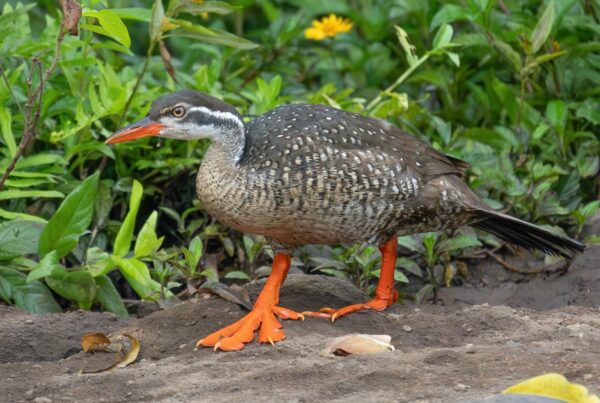
Lake George birds along the shoreline include a rich wading bird community. African spoonbill sweeps the shallow shoreline sections for small fish and invertebrates. Saddle-billed stork stands at the open water edge at known Lake George birds territory points. Yellow-billed stork feeds in mixed groups with open-billed stork at the most productive shallows. Black-headed heron and purple heron stand in the papyrus-grassland transition zone. African jacana walks on floating vegetation near the papyrus edges. These shore Lake George birds add 10 to 15 wading species to the morning boat total beyond the open water species.
Whiskered tern and white-winged tern hunt over the open water of Lake George for small fish at the surface. Both Lake George birds terns are present throughout the year at this site. African skimmer breeds on exposed sandbanks at the lake edge during the dry season months. Watching African skimmer feed by skimming the water surface at dusk is one of Lake George birds’ most spectacular behavioural moments. Marsh harrier quarters the papyrus and grassland margins throughout the Lake George birds morning session. This large raptor regularly disturbs the roosting waterbird flocks and creates dramatic flushing events.
Lake George Birds Boat Trips
Arranging the Lake George Birds Boat
Lake George birds boat trips are arranged through the Uganda Wildlife Authority Kasenyi station. The Kasenyi launch lies 45 minutes by road from the Mweya lodge complex at Queen Elizabeth National Park. Boat trips depart from Kasenyi between 06:30 and 07:30 for the best morning light and lake calm. The Lake George birds boat trip lasts two to three hours on the water. A guide familiar with the current shoebill territory and pelican roosting positions maximises the Lake George birds encounter quality. Advance booking through the Mweya park office or directly at Kasenyi secures boat availability one day ahead.
The Lake George birds boat trip costs less than the Kazinga Channel boat trip per person. The Kazinga Channel boat carries more visitors per trip on a larger vessel. The Lake George birds boat is smaller and carries four to eight passengers maximum. This smaller group size creates a more intimate and quieter Lake George birds experience. The smaller boat also accesses narrower papyrus channels than the larger Kazinga vessel. These narrow channels are the most productive sections for shoebill Lake George birds encounters. The additional effort to arrange the Lake George birds trip separately from the Kazinga Channel visit rewards visitors with a complementary and equally spectacular Uganda waterbird experience.
Lake George Birds Photography
Lake George birds photography from the boat suits a 400 to 500mm telephoto for most species. Shoebill at the papyrus edge allows approach to within 15 metres on a quiet morning session. A 500mm lens at this distance fills the frame with the bird’s extraordinary bill detail. Great white pelican fishing groups require a 200mm wide angle to capture the full cooperative group width. The Rwenzori Mountains are visible behind the pelicans in clear morning conditions. Including the Rwenzori background in Lake George birds pelican images adds a distinctive and remarkable landscape context. Early morning mist lifting from the lake surface adds further atmosphere to Lake George birds landscape photography.
African skimmer at the Lake George birds sandbank is best photographed at dusk from the Kasenyi shore. Setting a tripod at the sandbank edge before sunset captures skimmer in flight against the warm last light. Long exposure Lake George birds photography of skimmer on the water surface creates dramatic motion trails in the reflection. The sandbank light at sunset is the most dramatic lighting available at any Lake George birds photography session. Afternoon Lake George birds visits from 16:00 to 18:00 target this skimmer photography window alongside the general afternoon waterbird feeding activity.
Plan Your Safari
Add a Lake George birds morning boat to every Queen Elizabeth National Park itinerary. Book the Kasenyi launch one day ahead through the park headquarters at Mweya. Depart Kasenyi by 06:30 for the shoebill and pelican morning peak before the midday wind affects the open water conditions.
African Wild Trekkers includes Lake George birds boat trips in all Queen Elizabeth itineraries for birding clients. We arrange the Kasenyi launch, confirm shoebill territory with current guide reports, and time the trip for the best morning light on the open water.
Contact African Wild Trekkers to access Lake George birds on your Queen Elizabeth safari. We respond within 24 hours and design Queen Elizabeth itineraries that cover both Lake George and the Kazinga Channel for the most complete waterbird safari experience in Uganda.