Best Time of Year for Gorilla Trekking
Best time for gorilla trekking. The best time of year for gorilla trekking depends on weather, trail conditions, and personal comfort. Mountain gorillas live in high-altitude forests that receive rain throughout the year, so every season offers strong trekking opportunities. Dry months bring firmer trails and easier movement. Wet months create fresh green landscapes and dramatic mist. Each period shapes the forest differently, but gorilla encounters remain reliable in Rwanda, Uganda, and Congo throughout the year.

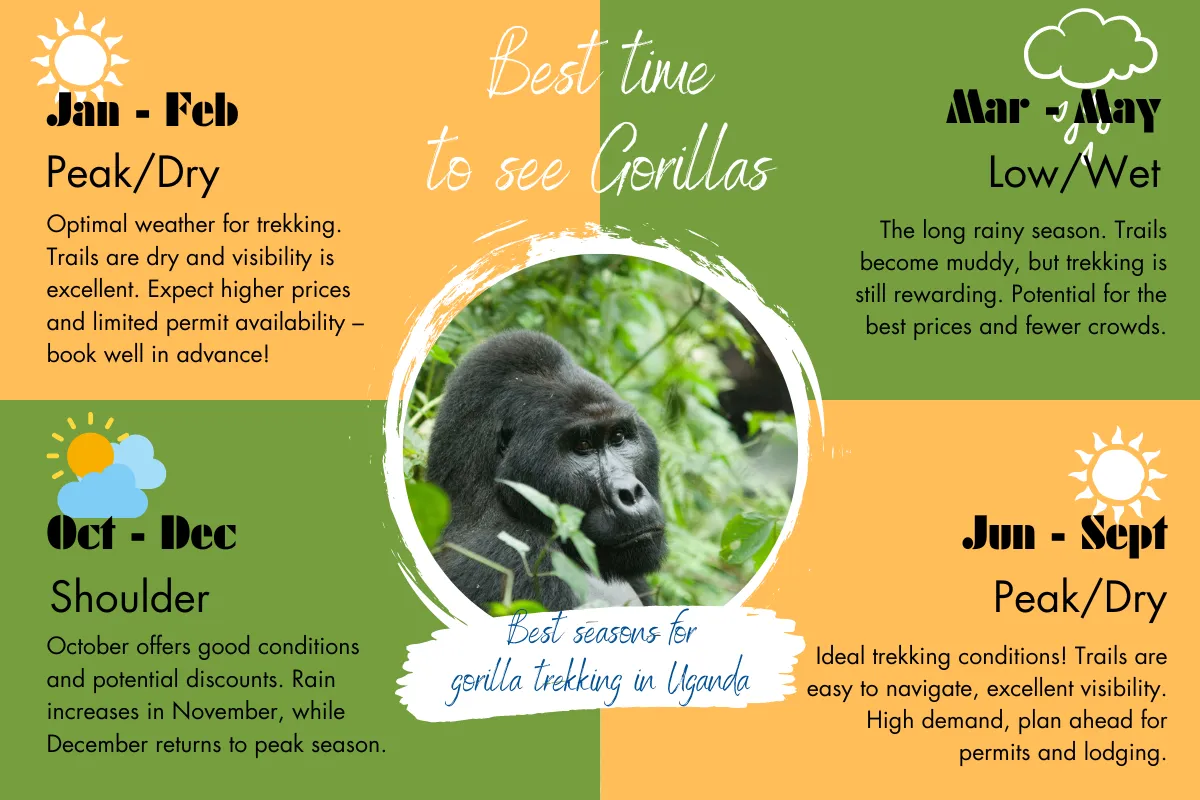
Dry Season: June to August and December to February
The dry season attracts most trekkers. Trails stay firmer, the air feels clearer, and visibility improves inside the forest. The ground holds fewer slippery sections, which helps trekkers who prefer comfort and stability. Rangers locate gorilla families easily because vegetation remains thinner during these months.
Temperatures stay cool in the mornings and warm gently during the day. Photography conditions turn excellent because sunlight filters through the bamboo and montane forest with soft intensity. These months suit first-time trekkers and travellers who value predictable conditions.
Wet Season: March to May and September to November
The wet season transforms the forests into deep green. Rainfall increases, but gorilla sightings remain consistent. Trails become muddy and more demanding, yet the experience feels raw and full of life. The vegetation grows fresh shoots that attract gorillas to feeding areas close to the slopes.
Mist hangs over ridges in the mornings, creating atmospheric views. Fewer travellers visit during these months, which results in quieter trekking groups. This season suits photographers, adventure lovers, and travellers who enjoy dramatic landscapes.
Temperature and Climate Throughout the Year
Mountain gorilla habitats maintain cool temperatures because of their altitude. Mornings feel crisp, afternoons warm gently, and evenings cool down again. Weather changes quickly, so trekkers carry light layers and rain protection regardless of season. Mist, light showers, and sudden sunshine can all appear within the same trek.
Gorilla Behaviour Across Seasons
Gorillas behave consistently across all months. They move through feeding zones, groom each other, and rest in quiet sections of the forest. Their movements depend on food availability rather than weather alone. Trackers find them reliably every morning because they monitor the families daily.
Dry seasons produce clearer sightings, but wet seasons bring vibrant vegetation and strong feeding activity. Each season offers rich encounters that reveal natural gorilla life.
Choosing the Best Time for Your Trek
Travellers who want easier hikes choose the dry season.
Travellers who enjoy quiet trails and lush scenery choose the wet season.
Travellers with flexible schedules enjoy strong sightings in any month of the year.
The best time ultimately depends on your comfort level, photography goals, and preferred trekking atmosphere.
Plan Your Safari
If you want this adapted into a monthly breakdown, a country-specific version for Rwanda, Uganda, or Congo, or a best-time comparison table, tell me and I will create it instantly.