Best Time for Big Five Safari in Maasai Mara
The Maasai Mara offers outstanding Big Five sightings throughout the year, yet the quality of the experience changes with the seasons. Weather patterns influence vegetation, animal movement, road conditions, and visitor numbers, all of which shape how easily travellers encounter lions, elephants, leopards, buffalo, and rhinos. Understanding these seasonal shifts helps you choose the ideal time for your safari goals, whether you seek peak predator action, quieter landscapes, or dramatic photography.
Understanding Seasons in the Maasai Mara
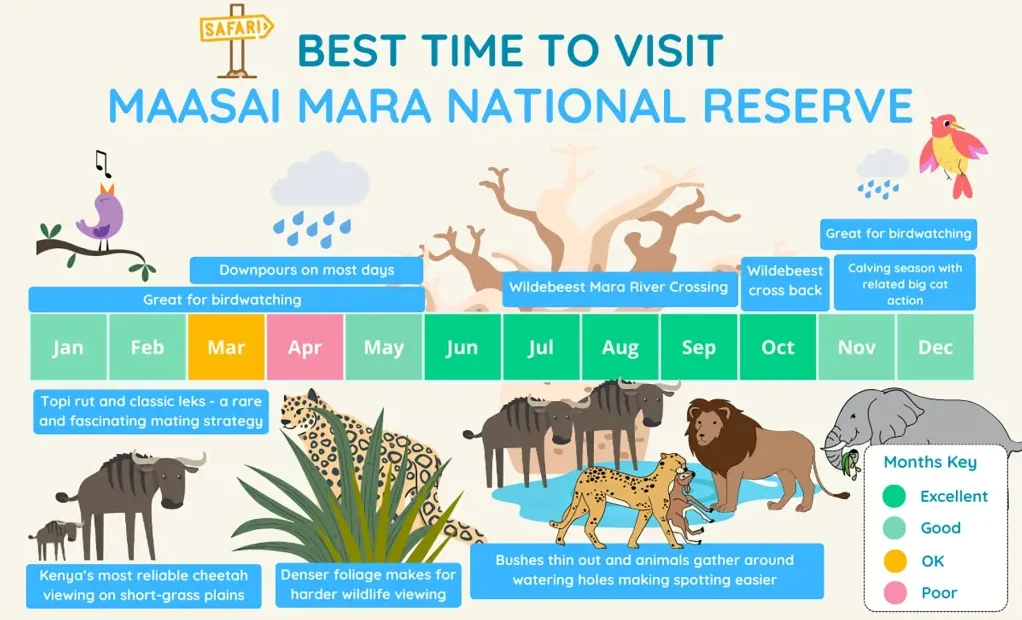
The Maasai Mara follows a pattern of dry and wet seasons rather than four distinct seasons. These cycles affect grass height, water availability, and wildlife concentration. While the Big Five remain in the reserve year-round, certain months offer better visibility and more predictable movements.
Dry Season: June to October
The dry season represents the best overall time for a Big Five safari in the Maasai Mara. Vegetation thins, water sources shrink, and animals concentrate around rivers and remaining waterholes. This makes tracking easier and sightings more frequent.
Lions and other predators become highly active as prey gathers in open areas. Leopards appear more often along riverbanks where shade and water remain available. Elephants and buffalo form larger, more visible herds, moving between feeding grounds and permanent rivers. Black rhinos are easier to spot as grass shortens, particularly in protected zones.
This period also coincides with the Great Migration, when millions of wildebeest and zebras cross into the Mara. The influx of prey heightens predator activity and creates dramatic Big Five interactions, especially near river crossings.
Short Dry Season: January to February
January and February offer another excellent window for Big Five viewing. These months bring warm days, low rainfall, and good visibility across the plains. Wildlife disperses slightly compared to peak dry season, yet predators remain active and sightings remain consistent.
This period suits travellers who want strong Big Five encounters without the higher visitor numbers of mid-year months. Photography benefits from clear skies and softer light, while road conditions stay favorable for extended game drives.
Green Season: March to May
The long rains transform the Maasai Mara into a lush, green landscape. Grass grows tall, water spreads across the plains, and animals disperse more widely. While Big Five sightings still occur, tracking requires greater patience and skilled guiding.
This season appeals to photographers and travellers seeking solitude. Dramatic skies, fresh vegetation, and newborn wildlife create beautiful scenes. Predator behavior remains dynamic, especially around cubs and territorial disputes, even though visibility can be more challenging.
Short Rains: November to December
The short rains bring fresh grazing and renewed wildlife movement. The landscape becomes vibrant without the heavy downpours of the long rains. Big Five sightings improve compared to the peak wet months, and animal behavior becomes more relaxed and natural.
This period offers a balance between good wildlife viewing and fewer crowds. Leopards and lions remain active, elephants move comfortably across the plains, and birdlife flourishes, adding color and diversity to game drives.
Month-by-Month Big Five Safari Highlights
From June through September, Big Five encounters reach their most reliable levels, supported by dry conditions and high predator activity. October maintains strong sightings while crowds begin to ease. January and February deliver excellent visibility with quieter conditions. November and December provide green landscapes with rewarding encounters for patient observers. March through May reward those who value atmosphere, photography, and exclusivity over guaranteed sightings.
Choosing the Right Time for Your Safari
The best time for a Big Five safari depends on personal travel priorities. Those seeking the highest chance of seeing all five species should focus on dry months. Travellers preferring fewer vehicles and scenic beauty may favor shoulder or green seasons. Each period offers a distinct version of the Maasai Mara experience without diminishing its wildlife richness.
Planning Your Maasai Mara Safari
Careful planning ensures that seasonal advantages align with accommodation choice, guiding expertise, and length of stay. Selecting camps near rivers and wildlife corridors improves Big Five sightings year-round. Flexible itineraries allow guides to follow animal movements naturally rather than rush between locations.
For inquiries and expert planning, African Wild Trekkers provides personalized safari guidance, helping you choose the best time to experience the Big Five in the Maasai Mara based on your travel style and expectations.
