Eastern Lowland vs. Mountain Gorillas – What’s the Difference?
Eastern lowland vs mountain gorillas. Eastern lowland gorillas and mountain gorillas belong to the same species group, but they live in completely different environments and show distinct physical and behavioural characteristics. Both create emotional wildlife encounters, yet the experience varies greatly between the rugged volcanic highlands of Rwanda, Uganda, and Congo, and the warm lowland rainforests of Kahuzi-Biega. Understanding these differences helps travellers choose the kind of gorilla adventure that matches their interests, physical ability, and preferred style of exploration.
Where Each Gorilla Lives
Mountain gorillas live only in the high-altitude forests of Volcanoes National Park in Rwanda, Bwindi Impenetrable and Mgahinga in Uganda, and the Mikeno sector of Virunga National Park in Congo. Their habitat rises above 2,200 metres and stretches into steep volcanic slopes, bamboo belts, and mist-covered ridges. The air feels cool, the vegetation grows thick, and the terrain demands steady climbing.
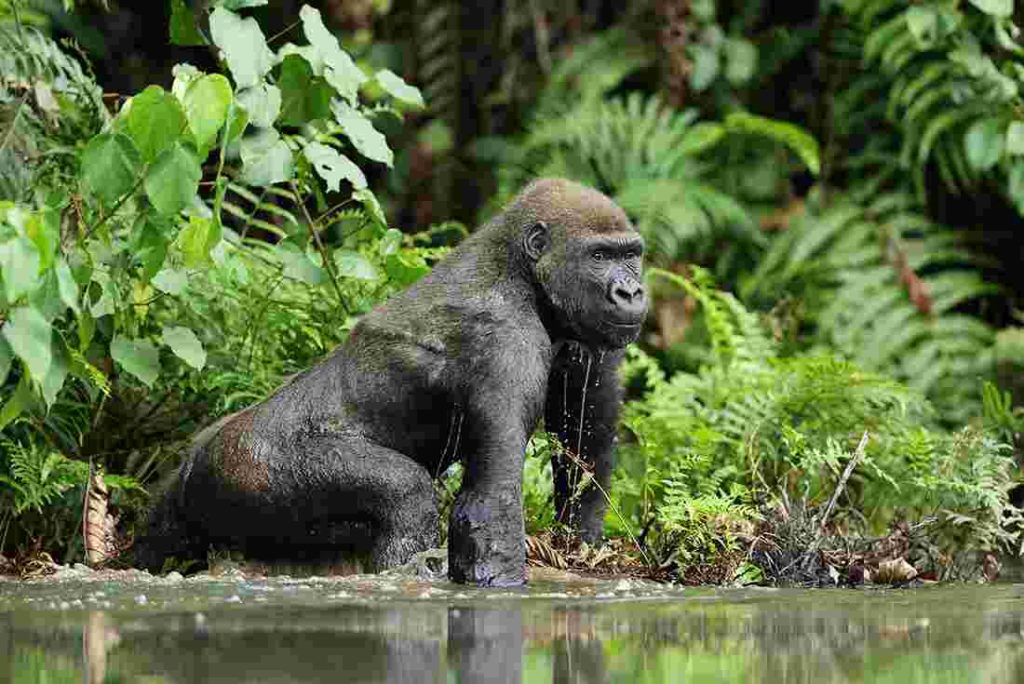
Eastern lowland gorillas live only in Kahuzi-Biega National Park in eastern Congo. This forest extends across lowland and mid-elevation rainforest, where tall hardwood trees rise above dense undergrowth. The climate feels warmer and more humid, and the terrain stays flatter and wide. The landscape supports large feeding zones and allows the gorillas to form bigger family groups.
Physical Differences
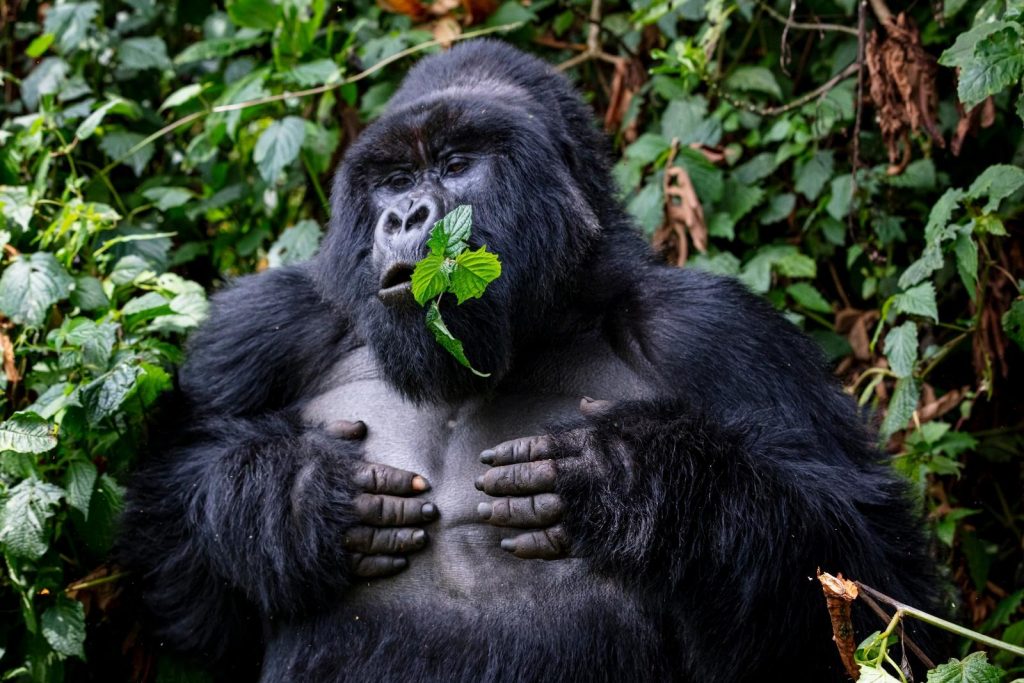
Mountain gorillas grow long, thick fur because they live in cold, high-altitude environments. Their bodies look compact and muscular. Their arms and shoulders hold dense hair, which helps them withstand mist, wind, and mountain temperatures. Their faces appear slightly rounder, and their limbs stay strong to navigate steep slopes.
Eastern lowland gorillas grow larger and broader bodies. Their chests expand wide, their hands and feet appear bigger, and their muscles develop heavily because of their rainforest diet and movement patterns. Their fur grows shorter and sometimes shows a brownish tint due to the warmer environment. Eastern lowland silverbacks often appear enormous compared to mountain silverbacks.
Group Size and Social Behaviour
Mountain gorilla families tend to remain smaller because they depend on vegetation that grows on steep slopes. These families often move closely together and maintain a tight social structure. The silverback leads with calm authority, and the group stays near him during feeding, resting, and grooming.
Eastern lowland gorilla families form larger groups because the rainforest provides abundant food. Some groups grow to over twenty or even thirty individuals. The silverback leads with strength, but group members move more freely through the forest. The social energy feels more spread out, and the families show more movement during the encounter.
Diet and Feeding Patterns
Mountain gorillas feed heavily on leaves, stems, wild celery, nettles, and bamboo shoots. Their habitat holds fewer fruiting trees, so their diet remains leafy and fibrous. They spend much of the day pulling soft vegetation from the ground or stripping bamboo with quiet focus.
Eastern lowland gorillas enjoy a wider diet. They feed on fruits, leaves, seeds, bark, and vines. Their rainforest habitat supports more fruiting trees, which encourages longer feeding sessions and wider movement zones. The variety of food shapes vibrant and lively behaviour during observation.
Landscape and Trekking Experience
Mountain gorilla trekking unfolds on steep volcanic slopes. The trails climb through bamboo, hagenia forest, mossy ridges, and narrow valleys. Mist often settles on the peaks, and the atmosphere feels cool and cinematic. Trekkers experience adventure, physical challenge, and emotional reward. Every step feels unpredictable because the terrain rises and falls sharply.
Eastern lowland gorilla trekking feels different. The rainforest stays warm, humid, and thick with vegetation. Trails remain flatter but long, and the forest opens into wide undergrowth filled with vines and giant ferns. The experience focuses on observing natural behaviour within a lush forest environment rather than climbing mountains. Trekkers enjoy a steady walk through a deep, unspoiled rainforest.
Behaviour During Encounters
Mountain gorillas behave calmly and reveal close family bonds. Mothers groom their infants. Silverbacks sit with steady authority. Juveniles climb vines or play quietly in shaded areas. The encounter feels peaceful because these families accept visitors easily after many years of habituation.
Eastern lowland gorillas behave with more movement because of their large group size and wider forest space. Adults feed across different parts of the family range. Young gorillas move quickly through vines and undergrowth. The silverback anchors the group with powerful presence. The atmosphere feels lively and full of natural energy.
Where You Can Trek Both Types
Travellers who want to see mountain gorillas can trek in Volcanoes National Park in Rwanda, Bwindi Impenetrable National Park in Uganda, Mgahinga Gorilla National Park in Uganda, and the Mikeno sector of Virunga National Park in Congo. These forests protect mountain gorillas within the cool high-altitude zones of the Virunga massif and the ancient slopes of Bwindi.
Travellers who want to see eastern lowland gorillas must visit Kahuzi-Biega National Park in eastern Congo. This park holds the world’s strongest population of the subspecies and remains the only reliable destination where travellers can meet them in the wild. The experience feels rare because eastern lowland gorillas live in one limited region.
Which Trek Should You Choose?
Travellers who enjoy volcanic landscapes, cool mountain forests, and intimate gorilla families often choose mountain gorilla trekking. The experience feels emotional and peaceful, with mist, moss, and steep ridges creating an unforgettable atmosphere.
Travellers who want a deeper rainforest immersion with large gorilla groups and massive silverbacks choose eastern lowland gorilla trekking. The forest feels warm and dense, the encounters feel raw, and the behaviour reveals a powerful side of gorilla life.
Both treks create strong memories, but each offers a different style of adventure. The choice depends on whether you prefer dramatic volcanic mountains or deep untamed rainforest.
Plan Your Safari
If you want, I can create a detailed side-by-side comparison table, a two-park gorilla itinerary, or a Kahuzi-Biega vs Virunga breakdown.
