info@africanwildtrekkers.com

Maasai Mara National Reserve: The Complete Guide to Kenya’s Iconic Safari Destination
The Maasai Mara sits in southwestern Kenya, an extension of Tanzania’s Serengeti ecosystem across an open border. It’s Kenya’s most famous reserve, and for many travelers, the very image of what an African safari should look like. Rolling grassland stretches to the horizon, broken only by acacia trees and the winding Mara River.
The Mara’s reputation rests on its predators. Lion, cheetah, and leopard all live here in strong numbers, and sightings happen with more consistency than almost anywhere else in Africa. For a few months each year, the reserve also hosts one of nature’s great spectacles, as huge herds of wildebeest cross the Mara River in search of fresh grazing.
This guide covers what to see, when to go, and where to stay. It also explains an important distinction many first-time visitors miss: the difference between the reserve itself and the private conservancies that surround it.
Why Visit the Maasai Mara
Few places on earth match the Mara’s predator density. Lion prides are large and easy to find here, and cheetah sightings happen often enough that guides recognize individual cats by name. Leopards take more patience, but steady sightings are still common, especially along the river’s tree-lined banks.
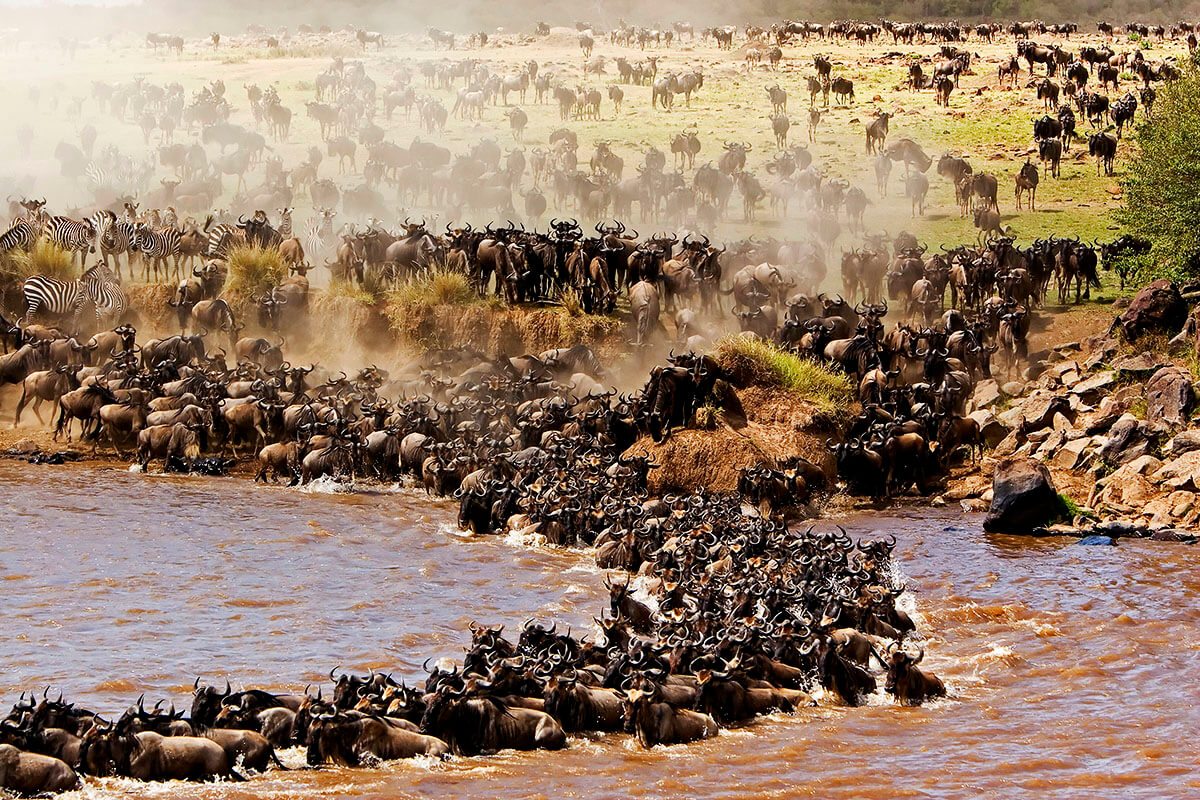
The Great Migration adds a second, equally strong draw. Between July and October, huge numbers of wildebeest and zebra cross the Mara River from Tanzania, with crocodiles waiting in the water below. Watching a crossing unfold is one of the most dramatic wildlife scenes anywhere in the world.
The Mara’s ecosystem doesn’t stop at the reserve boundary either. A ring of private conservancies surrounds it, each Maasai-owned and leased for conservation. These areas often deliver a quieter, more flexible safari than the reserve itself, a distinction worth understanding before booking.
Reserve or Conservancy: Understanding the Difference
The Maasai Mara National Reserve is the core protected area, and it’s what most people picture when they hear the name. It holds strong wildlife numbers and the most famous river crossing points. But it also comes with rules: game drives stay on the track, vehicle numbers can be high at popular sightings, and night drives aren’t allowed.
The private conservancies ring the reserve on almost every side. Mara North, Olare Motorogi, Naboisho, and Ol Kinyei are among the best known. Each leases land directly from Maasai families, limiting the number of camps and vehicles allowed inside.
That limit changes the experience. Conservancies allow off-road driving, night drives, and walking safaris, none of which the reserve permits. Predator sightings in several conservancies match or exceed the reserve’s own numbers, with far fewer vehicles at each one.
Many repeat visitors choose to split their stay, spending a few nights in the reserve for classic Mara scenery and river crossings, then a few more in a conservancy for a quieter, more flexible pace. It’s worth deciding early, since it shapes which lodges make sense to book.
Best Time to Visit
The Mara sits near the equator, so temperatures stay warm year-round. Rainfall, more than heat, shapes when to plan a visit.
The dry season runs from June through October, and it overlaps with the Great Migration’s arrival from Tanzania. River crossings tend to peak between July and September, drawing the largest crowds and the highest camp rates of the year. Booking six to nine months ahead is common for this window.
A second, shorter dry season falls between January and March, offering strong predator action and noticeably fewer crowds. The long rains fall from April to May, bringing a quieter, greener season with discounted rates at many camps. Short rains follow in November, though wildlife viewing stays solid throughout the year regardless of season.
Getting There
Most visitors fly into Nairobi’s Jomo Kenyatta International Airport, then continue to the Mara by a short domestic flight. Small aircraft land at one of several airstrips scattered across the reserve and conservancies, cutting a long drive down to under an hour.
A road transfer from Nairobi is also common, particularly for budget-conscious travelers. The drive takes around five to six hours, depending on the route and road conditions. Many road safaris break the journey with a stop at the Great Rift Valley viewpoint along the way.
What to See and Do
Game Drives
Game drives are the core activity, run at dawn and again in the late afternoon when animals are most active. Guides track fresh signs and radio updates from other vehicles to find predators quickly. In the reserve, drives stay on marked tracks, while conservancy drives can go off-road for a closer look.
River Crossings
The Mara River crossings are the reserve’s signature event, drawing visitors from around the world between July and September. Wildebeest gather in huge numbers on the riverbank before crossing in a sudden, chaotic rush, with crocodiles waiting below. Timing a crossing exactly isn’t possible, but experienced guides read herd behavior well enough to position vehicles with good odds.
Hot Air Balloon Safaris
A hot air balloon flight at sunrise offers a different view of the Mara entirely. Floating silently above the plains reveals the landscape’s scale in a way no vehicle can match. Most flights end with a champagne breakfast set up in the bush after landing.
Night Drives and Walking Safaris
Both activities are conservancy exclusives, unavailable inside the reserve itself. A night drive reveals nocturnal species rarely seen during the day, spotted with a red-filtered light that disturbs wildlife less. Walking safaris slow the pace down further, led by an armed Maasai guide who reads tracks and smaller details a vehicle would drive straight past.
Maasai Cultural Visits
Many conservancies include a visit to a local Maasai village as part of the experience, offering insight into a way of life built around cattle and community. These visits are usually arranged directly through camps with established, ongoing relationships with the surrounding community, rather than as a standalone tourist stop.
Wildlife in the Maasai Mara
Lion, leopard, and cheetah are all resident throughout the Mara, and sightings happen with more consistency here than in most other parks. Elephant and buffalo add to the Big Five count, with rhino present in smaller numbers, mainly within the reserve’s Mara Triangle sector. Large herds of zebra, topi, and Grant’s and Thomson’s gazelle round out the plains game.
The wildebeest migration is the Mara’s best-known event, though resident wildlife stays strong throughout the year regardless of the herds’ location. Birdlife is rich too, with over 450 species recorded across the wider ecosystem. The Mara River itself holds large numbers of hippo and Nile crocodile, both easily seen from the riverbank or a game drive.
Accommodation by Area
The Mara Triangle
The Mara Triangle, the reserve’s western section, is managed separately by the nonprofit Mara Conservancy and benefits from lower vehicle density and stronger anti-poaching than the central reserve. Angama Mara sits here, known for dramatic escarpment views and design-led luxury. Mara Serena Safari Lodge, perched on a hill above the Mara River, offers a more classic, reliable option well suited to first-time visitors and groups.
Talek, Sekenani, and the Central Reserve
The reserve’s central and eastern sections, around the Talek River, Sekenani Gate, and Keekorok, hold many of the Mara’s longest-running camps. Keekorok Lodge was one of the first properties built in the reserve and remains a solid mid-range choice. Fig Tree Camp and Mara Simba Lodge both sit along the Talek River, offering comfortable stays with easy access to central game drives. Budget travelers have options too, including Sentrim Mara Lodge and Enchoro Wildlife Camp near Sekenani Gate.
Mara North Conservancy
Mara North is the largest of the surrounding conservancies and holds a strong reputation for migration positioning. Kicheche Mara Camp offers an intimate, eight-tent bush camp experience here. Ngare Serian adds a more design-focused stay, complete with a treehouse suite built into the riverbank.
Olare Motorogi and Naboisho Conservancies
Olare Motorogi, northeast of the reserve, holds some of the highest recorded lion densities in the entire ecosystem. Mahali Mzuri, owned by Richard Branson, offers a well-known luxury stay here, and Mara Kempinski adds another high-end option nearby. Naboisho Conservancy, to the east, supports one of the most closely studied lion populations in the Mara and holds camps like Basecamp Eagle View for travelers who value sustainability alongside comfort.
Ol Kinyei Conservancy
Ol Kinyei offers some of the best value among the private conservancies, with strong wildlife density, including notably high cheetah sightings, at a lower price point than its neighbors. Porini Cheetah Camp is a small, intimate option here, and Ol Kinyei Mara Tented Camp offers a similar experience at a comparable rate.
Combining the Maasai Mara With the Rest of Kenya
Many itineraries pair the Mara with Amboseli National Park for elephant herds set against Mount Kilimanjaro’s backdrop, or with Lake Nakuru for birdlife and rhino tracking. A domestic flight typically connects the Mara to these other parks, avoiding a long return drive to Nairobi in between.
Travelers extending their trip further afield often add a few days at the Kenyan coast, flying from the Mara back through Nairobi and on to Mombasa or Diani Beach. This combination pairs the intensity of a Mara safari with a slower, beach-focused close to the trip.
Frequently Asked Questions
Should I stay in the reserve or a conservancy?
The reserve offers classic Mara scenery and the best access to river crossings, while conservancies offer night drives, walking safaris, and generally lower vehicle density, so many repeat visitors split their stay between the two.
When is the best time to see the river crossings?
Crossings tend to peak between July and September, though exact timing depends on rainfall patterns and cannot be predicted with certainty on any given day.
How many days do I need in the Maasai Mara?
Three to four days gives enough time for several game drives and a good chance at strong sightings, while five or more days allows for both a reserve stay and a conservancy stay.
Can I do a night drive in the Maasai Mara?
Night drives are not permitted inside the national reserve itself, but many of the surrounding private conservancies do allow them.
Is the Maasai Mara good to visit outside migration season?
Yes. Resident wildlife, including strong lion, leopard, and cheetah populations, remains in the Mara year-round regardless of where the migrating herds happen to be.