info@africanwildtrekkers.com

Murchison Falls National Park: The Complete Guide to Uganda’s Nile Country
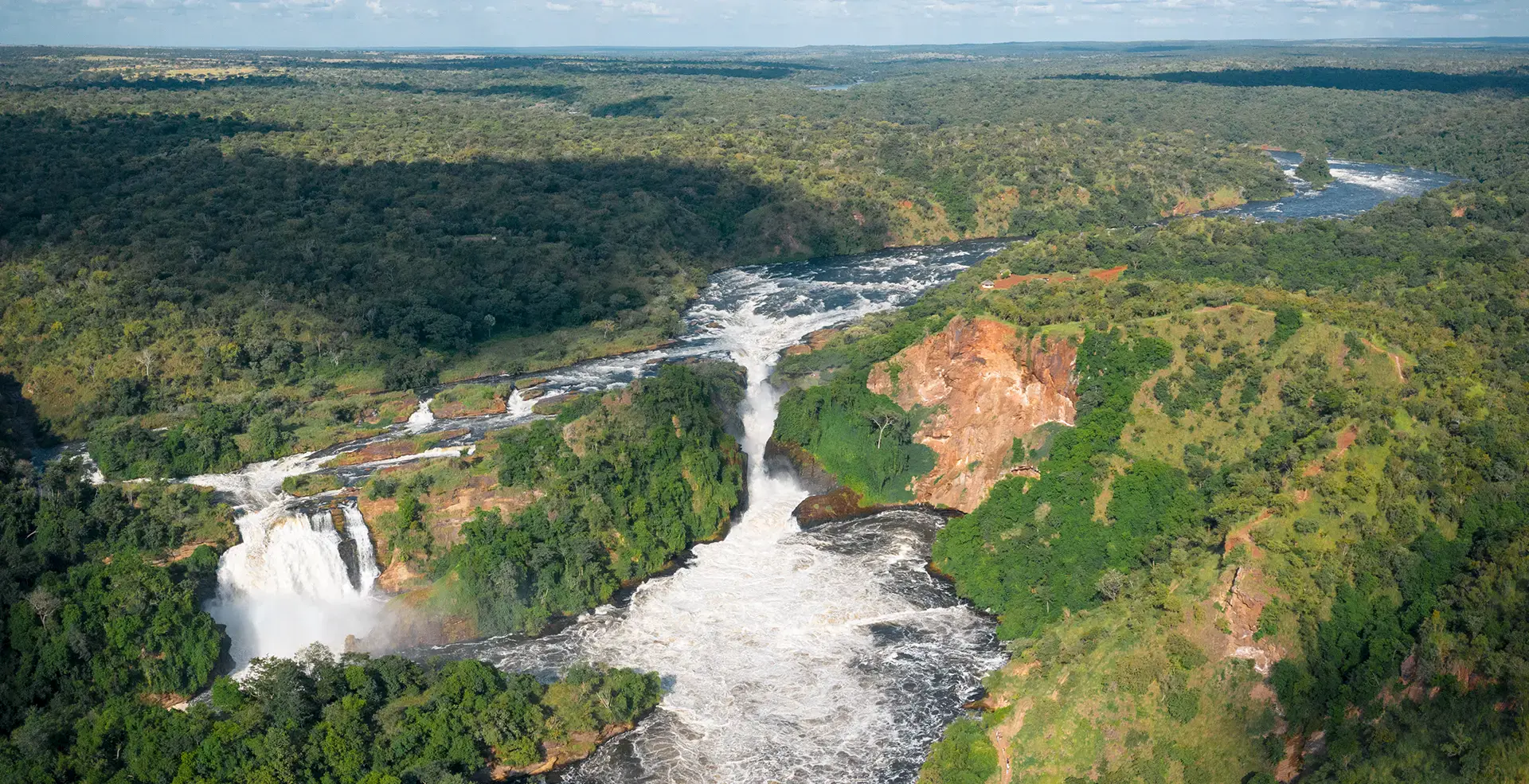
Murchison Falls National Park is Uganda’s largest. It sits in the northwest, split by the Victoria Nile. The river’s centerpiece is dramatic: at one point, the entire Nile squeezes through a gap just seven meters wide before plunging into a gorge below.
The park draws visitors for that single, thunderous sight. But it holds far more. Wide savannah on the northern bank supports strong game viewing, and the river itself is one of the best places in Uganda to see hippos, crocodiles, and elephants up close.
This guide covers what to see, when to go, and where to stay. It’s built for anyone planning a first visit or adding Murchison to a longer Uganda itinerary.
Why Visit Murchison Falls
Few sights in East Africa match the falls themselves. The Nile, already a substantial river by this point, is forced through a narrow rock gorge. The result is a wall of white water and spray, loud enough to hear well before it comes into view.
The park’s location adds to the appeal. Murchison sits roughly four to five hours from Kampala by road, or a short flight away, making it one of the more accessible major parks in Uganda. It also pairs naturally with a Budongo Forest chimp trek, since the forest borders the park’s southern edge.
Wildlife density here is strong too. Elephants, giraffes, lions, and buffalo are all regularly seen on a morning game drive. The river adds hippos and Nile crocodiles to the list, both easily spotted from a boat.
Best Time to Visit
Murchison sits close to the equator, so the climate stays warm year-round. Rainfall shapes the best time to go more than temperature does.
The dry season runs from June to September. Roads are firmer, and game viewing tends to be easiest during these months. A second, shorter dry stretch falls between December and February, offering a quieter alternative to the mid-year peak.
The wetter months fall between March and May, and again in October and November. Roads can turn muddy and harder to navigate. Fewer visitors travel during this period, though, so parks feel calmer and lodge rates tend to drop.
Getting There
Most visitors reach Murchison by road from Kampala or Entebbe. The drive takes around four to five hours, depending on the route and road conditions. Many itineraries break the journey with a stop at the Ziwa Rhino Sanctuary along the way.
A domestic flight is the faster option. Small aircraft connect Entebbe to airstrips near Pakuba, inside the park itself. This cuts travel time down to under an hour, which matters for anyone short on days.
Self-driving is possible on the main routes, though a guided vehicle is more common. Roads inside the park can be rough in places, and a local driver-guide adds real value for spotting wildlife along the way.
What to See and Do
The Falls Themselves
A boat cruise up the Nile toward the base of the falls is the park’s signature activity. The ride itself brings visitors close to hippos, crocodiles, and elephants drinking at the water’s edge. Reaching the base of the falls, with spray rising off the rock face, is the trip’s high point.
A hike to the top of the falls offers a different, equally striking view. From above, the sheer force of the river squeezing through such a narrow gap becomes even clearer. Many visitors do both, pairing the boat ride with a short drive and walk to the top on the same day.
Game Drives
Game drives run across the park’s northern bank, where open savannah supports strong wildlife numbers. Elephants, giraffes, buffalo, and several lion prides are all regularly spotted. Early morning and late afternoon drives tend to bring the best sightings, when temperatures are cooler and animals more active.
Chimpanzee Trekking
Budongo Forest sits along the park’s southern edge and offers some of Uganda’s best chimpanzee trekking outside Kibale. Guided walks here move through tall, mature forest rather than savannah, a different pace from the rest of a Murchison visit. Kaniyo Pabidi, a smaller section of the same forest, offers a shorter, more accessible trek option.
Sport Fishing
The Nile below the falls holds Nile perch of serious size, drawing anglers from well beyond Uganda. Catch-and-release fishing trips can be arranged through most lodges in the area. It’s a quieter, more niche activity, but a memorable one for anyone with an interest in fishing.
Wildlife in Murchison Falls
Murchison holds one of Uganda’s strongest wildlife populations outside the gorilla and chimp forests. Elephants move in good numbers across the northern plains, and giraffes are a common, easy sighting. Lions are present too, though spotting them takes a bit more patience than the more visible grazers.
The river adds its own wildlife layer. Hippos gather in large pods along calmer stretches of water, and Nile crocodiles bask on the banks in impressive numbers. Birdlife is rich throughout the park, with the shoebill stork among the more sought-after sightings for visiting birdwatchers.
Accommodation Near the Park
Lodges in Murchison cluster around three main areas. The Albert Nile in the northwest holds the widest mix of budget and mid-range options. Paraa, where the Victoria Nile meets Lake Albert, is the most popular base and holds several of the park’s best-known lodges. Kaniyo Pabidi and the Masindi road, further south, suit visitors focused on chimp trekking.
Paraa Safari Lodge is one of the oldest properties in the park, dating back to 1954. It sits inside the park itself, close to the falls and the boat launch. Chobe Safari Lodge offers a similar luxury tier on the north bank, known for sweeping river views and a well-regarded spa.
Baker’s Lodge and Nile Safari Lodge both sit on the southern bank, offering a smaller, more intimate style than the larger properties. Twiga Safari Lodge, just up the hill from Baker’s, blends canvas tents with solid cottage construction. All three put wildlife right at the doorstep, with hippos and monkeys often visible from the grounds.
Pakuba Safari Lodge is the strongest mid-range choice, set on the east bank near the Tangi Gate. Sambiya River Lodge, close to Kaniyo Pabidi, works well for anyone combining a stay with chimp trekking. Budongo Eco Lodge sits inside the forest itself, a simple, nature-focused option for the same purpose.
Budget travelers have solid choices too. Red Chilli Rest Camp is a longtime favorite for backpackers, known for its relaxed atmosphere and river views. Fort Murchison Lodge, just outside the park’s northern boundary, offers comfortable rooms and tents at a lower price without the park entry fee unless guests drive in for activities.
Combining Murchison With the Rest of Uganda
Murchison sits within reach of several other Uganda highlights, making it a natural stop on a longer circuit. Kibale National Park and its chimpanzee trekking lie a few hours south. Queen Elizabeth National Park, further south still, adds savannah game viewing and the Kazinga Channel boat cruise.
The Ziwa Rhino Sanctuary makes an easy stop on the drive up from Kampala, offering a rare chance to see white rhinos on foot with a guide. Many multi-park itineraries treat Murchison as either the first or last major stop, given its distance from Uganda’s southwestern gorilla circuit.
Frequently Asked Questions
How many days do I need at Murchison Falls?
Two to three days gives enough time for a boat cruise, a game drive, and a hike to the top of the falls, while a fourth day allows for a Budongo Forest chimp trek as well.
Can I combine Murchison Falls with gorilla trekking?
Yes, though the drive between Murchison and Uganda’s southwestern gorilla parks takes most of a day, so many itineraries treat them as separate legs of a longer trip rather than a quick add-on.
Is the boat cruise or the hike to the top better?
Both offer different views of the same falls, and doing both on the same day is common and generally recommended if time allows.
What is the best time to see wildlife at Murchison Falls?
Early morning and late afternoon game drives during the June to September dry season tend to bring the strongest sightings, though wildlife is present throughout the year.
Do I need a 4×4 to visit Murchison Falls?
A four-wheel-drive vehicle is recommended, especially during the wetter months, since some of the park’s roads can turn muddy and difficult for standard vehicles.