What Do Mountain Gorillas Eat?
Understanding what mountain gorillas eat gives deeper insight into their behavior, habitat, and daily movement patterns in forests like Bwindi Impenetrable National Park and the Virunga Mountains. Mountain gorillas are primarily herbivores, feeding on a wide range of vegetation that supports their large body size and social lifestyle. Their diet is diverse, seasonal, and closely tied to the forest ecosystem they inhabit.
The Core Diet of Mountain Gorillas
Leafy Vegetation as the Primary Food Source
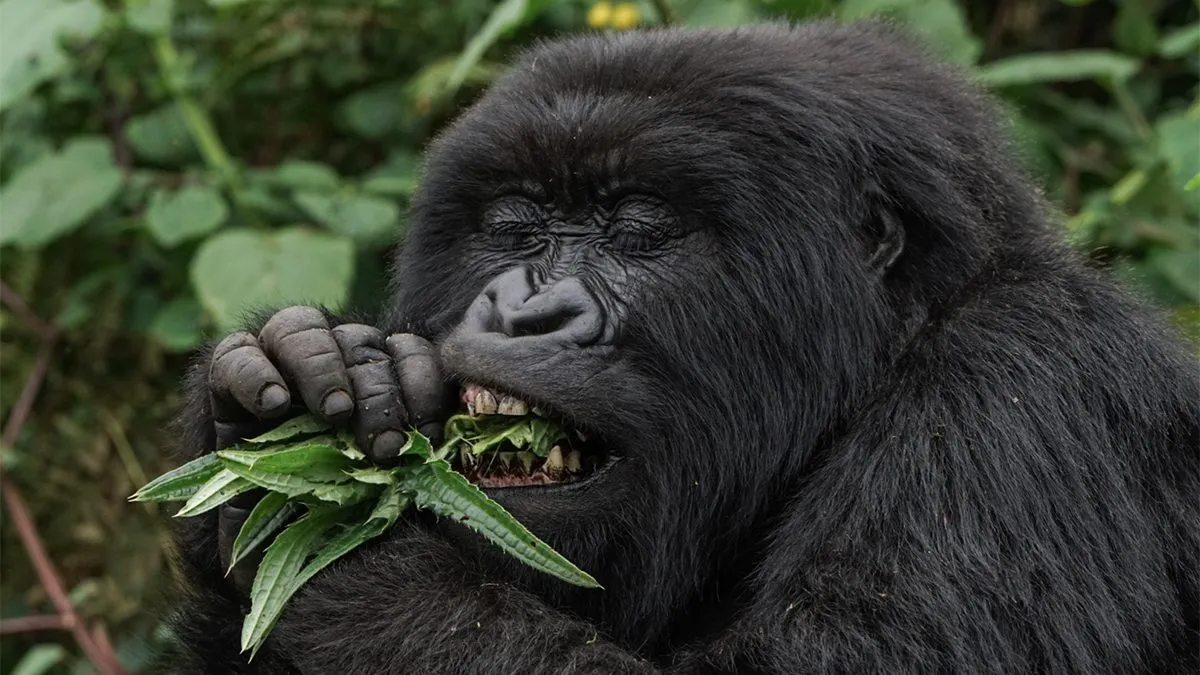
The majority of a mountain gorilla’s diet consists of leaves, stems, and shoots. These provide the fiber and nutrients needed to sustain their massive bodies, especially adult males (silverbacks), who can weigh over 180 kg.
They commonly feed on plants such as wild celery, nettles, thistles, and various forest herbs. These plants are abundant in high-altitude forests, making them a reliable food source year-round.
Stems, Pith, and Shoots
Beyond leaves, gorillas consume the inner parts of plants, known as pith. This is soft, water-rich, and easier to digest. Bamboo shoots are also highly favored, especially in regions like Mgahinga Gorilla National Park and Volcanoes National Park.
These food types are particularly important during certain seasons when other vegetation becomes less available.
Do Mountain Gorillas Eat Fruit?
Limited Fruit Consumption
When exploring what mountain gorillas eat, many expect fruit to dominate their diet. However, unlike lowland gorillas, mountain gorillas consume relatively little fruit due to limited availability in their high-altitude habitats.
In Bwindi, where fruiting trees are more common, gorillas may occasionally eat wild fruits. Still, fruit remains a minor component compared to leafy vegetation.
Do Mountain Gorillas Eat Insects or Meat?
Occasional Insect Consumption
Mountain gorillas sometimes eat insects such as ants, termites, and larvae. These provide additional protein but are not a major part of their diet.
No Active Hunting Behavior
Mountain gorillas do not hunt or consume meat in any significant way. Their digestive system is adapted to process plant material, not animal protein.
Daily Feeding Patterns
Constant Feeding Throughout the Day
Mountain gorillas spend a large portion of their day feeding—often up to 6–8 hours. Their feeding is spread throughout the day, with short rest periods in between.
This continuous feeding supports their high caloric needs and maintains energy for movement through dense forests.
Quantity of Food Consumed
An adult gorilla can consume up to 30 kilograms of vegetation per day. This large intake is necessary because plant material is low in calories compared to meat.
Seasonal Variations in Diet
Adapting to Forest Availability
The diet of mountain gorillas changes depending on what is available in the forest. During wet seasons, fresh vegetation is abundant, while in drier periods, gorillas may rely more on bark, roots, and tougher plant materials.
Regional Differences
In Mgahinga and Volcanoes National Park, bamboo shoots become a seasonal highlight. In Bwindi, a wider variety of plant species supports a more diverse diet.
These variations are essential when understanding what mountain gorillas eat, as their diet is not fixed but adaptable.
Feeding Behavior and Social Structure
Silverbacks Lead Feeding Movements
The dominant silverback decides where the group moves to feed. His knowledge of the forest ensures the group always has access to food.
Group Feeding Dynamics
Gorillas feed together within a general area but may spread out slightly while foraging. There is little competition for food due to its abundance.
Young gorillas learn feeding habits by observing adults, gradually developing knowledge of edible plants.
The Role of Diet in Gorilla Survival
Nutritional Balance and Health
The plant-based diet provides enough nutrients for growth, strength, and reproduction. The diversity of vegetation ensures they receive essential minerals and vitamins.
Influence on Habitat Range
Because their diet depends on dense vegetation, mountain gorillas remain within forested regions. Their movement patterns are directly linked to food availability.
Why Diet Matters for Gorilla Trekking
Predicting Gorilla Movement
Trackers locate gorillas partly by identifying feeding signs such as chewed stems, broken branches, and fresh dung.
Enhancing the Trekking Experience
Understanding what mountain gorillas eat allows visitors to better interpret what they observe during a trek, from feeding behavior to group interactions.
Plan Your Safari
Mountain gorillas are gentle giants sustained by a rich and varied plant-based diet. Knowing what they eat adds depth to your trekking experience, turning a simple wildlife encounter into a deeper understanding of their survival and ecosystem.