Why the Murchison Falls Uganda Safari Is Unlike Any Other
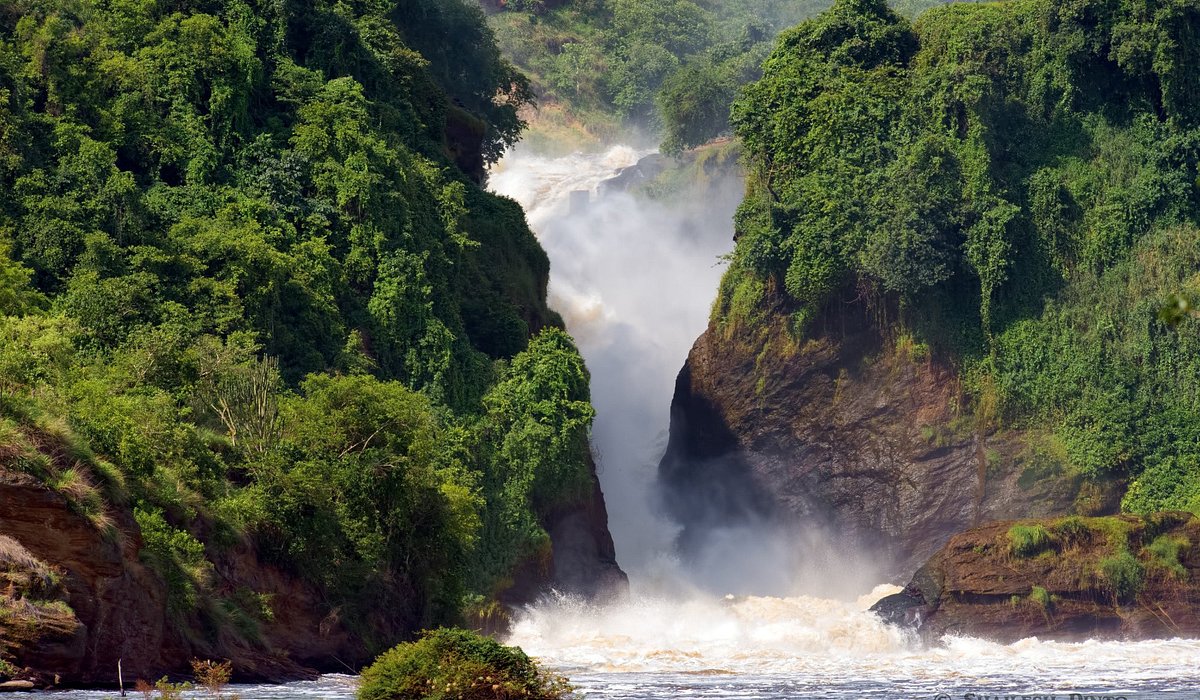
A Murchison Falls Uganda safari combines the raw power of the world’s most violent waterfall with classic African big-game viewing. It also delivers one of the most dramatic Nile boat cruises on the continent. Murchison Falls National Park covers 3,840 square kilometres of savannah, riverine forest, and wetland in northwestern Uganda. It is the country’s largest protected area. The Victoria Nile drives through the heart of the park. At Murchison Falls, it squeezes through a seven-metre-wide rock gorge. It then cascades 43 metres into a churning pool below. Early explorers described the roar as audible from kilometres away.
The park has recovered dramatically from the poaching devastation of the 1970s and 1980s. It now supports one of Uganda’s most robust big-game populations. Rothschild’s giraffes stride across the northern savannah in groups of fifteen or more. These giraffes are found nowhere else in Uganda. Elephants, buffaloes, lions, leopards, hippos, and Nile crocodiles share the landscape. More than 450 recorded bird species include one of East Africa’s most reliable shoebill viewing spots.
Wildlife You Will Encounter on a Murchison Falls Uganda Safari
Rothschild’s giraffes define the northern sector of Murchison. No other animal does so quite as dramatically. Uganda Wildlife Authority reintroduced this critically endangered subspecies in 2015. The population has grown steadily since. These giraffes stand taller than Maasai giraffes. They carry a distinctive coat pattern that stops abruptly above the lower leg. Pale, unmarked skin below the knee makes them unmistakable. A morning game drive across the Buligi Circuit almost guarantees a close encounter.
Elephants roam both sides of the Nile. The largest concentrations gather north of the river during the dry season. Herds of fifty or more are common in July and August. Lions and leopards inhabit the Buligi and Albert Delta plains. Lions are most reliably found during early morning drives. Spotted hyenas and olive baboons are abundant across the park. Warthogs root along every track.
The shoebill stork makes Murchison one of the continent’s premier birding destinations. This prehistoric-looking bird hunts lungfish in papyrus swamps near the Nile delta. Specialist operators run early morning boat trips into the delta to locate them. Sighting rates exceed 90 percent during the dry season. Jackson’s hornbill, Abyssinian ground hornbill, and the rare Goliath heron also breed within the park. The bat hawk hunts bats at dusk near the cliff faces around the falls.
Chimpanzee trekking is available at Budongo Forest. This large mahogany forest adjoins the park’s southern boundary. UWA charges USD 100 per person for the Budongo chimp permit. The chimps here are fully habituated. Budongo’s terrain is more easily traversed than Kibale. It is a good option for visitors adding a chimp experience to their Murchison itinerary.
The Nile Boat Cruise: The Highlight of Every Murchison Safari
The Nile boat cruise from Paraa jetty stands as the single most popular activity in the park. It is also one of the most memorable experiences on any Uganda safari. Launch trips depart twice daily at 09:00 and 14:00. They travel 17 kilometres upriver to the base of Murchison Falls. Passengers disembark onto rocks at the water’s edge. They feel the physical force of the Nile pouring through the gorge above. The trip takes two hours each way with wildlife viewing stops along both banks.
Hippos crowd the river in densities that make the Kazinga Channel look sparse. Nile crocodiles bask on every sandbar and mudflat. Some reach lengths experienced guides estimate at five to six metres. Elephants drink and bathe at the water’s edge in the afternoon. Buffaloes wade into the shallows near the banks. African fish eagles call from dead trees along the shore. Giant kingfishers hover over the margins. Pink-backed pelicans fish in loose flocks above the hippo pools. The boat cruise costs USD 30 per person, charged separately from daily park entry.
After the boat reaches the base of the falls, visitors can hike to the top. The trail climbs the escarpment beside the gorge. It takes about 45 minutes on a steep path. At the top, you stand at the narrow cleft where the entire Nile forces itself through before the drop. The contrast between the violent cascade above and the churned pool 43 metres below is one of East Africa’s most dramatic views. UWA charges a separate USD 20 fee for the launch trip to the top of the falls.
Murchison Falls Uganda Safari: Park Fees and Activity Costs 2026
Uganda Wildlife Authority administers all fees at Murchison Falls. The table below reflects the confirmed 2026 schedule.
| Activity / Fee | Foreign Non-Resident | Foreign Resident | East African Citizen |
|---|---|---|---|
| Park Entry (per person per day) | USD 40 | USD 30 | UGX 20,000 |
| Nile Boat Cruise to Falls | USD 30 | USD 25 | UGX 15,000 |
| Launch Trip to Top of Falls | USD 20 | USD 15 | UGX 10,000 |
| Budongo Chimp Trek Permit | USD 100 | USD 80 | UGX 80,000 |
| Ziwa Rhino Tracking Fee | USD 40 | USD 30 | UGX 20,000 |
Self-drive visitors may drive north of the Nile without a mandatory ranger escort. UWA recommends hiring a ranger guide for USD 20 to USD 30 per day. The vehicle ferry crossing the Nile at Paraa runs twice daily in each direction. Ferry costs are included in your park entry fee. Plan your day around ferry departure times. Missing the afternoon ferry means an unscheduled overnight on the wrong side of the river.
The Best Time for a Murchison Falls Uganda Safari
June through September delivers the driest and most rewarding safari conditions. Animal concentrations peak near the Nile as water sources across the northern savannah dry up. Game drive tracks stay passable for standard 4×4 vehicles. The boat cruise runs in calm water with clear sightlines. July and August represent peak season. Book lodges and activities at least two to three months in advance. December through February provides the short dry season. It is reliable and less crowded than the June to September peak.
April and May bring the heaviest rainfall. Most visitors choose to avoid these months. Some tracks become impassable even for experienced 4×4 drivers. The park’s northern sector floods periodically near the Albert delta. The birding during wet months is phenomenal, however. Migrants arrive from the Palearctic. Breeding activity peaks for resident species. The landscape transforms into vivid green. March and October sit in transitional positions. They can offer surprisingly good conditions in years when rainfall starts late or ends early.
Getting to Murchison Falls National Park
Murchison Falls sits 305 kilometres north of Kampala along the Kampala to Gulu highway. Road transfers take four and a half to five hours in a reliable vehicle. Ziwa Rhino Sanctuary lies one and a half hours south of the park gate. It makes an excellent stop on the way north. Ziwa is the only place in Uganda where you can track white rhinos on foot. UWA charges USD 40 per person for the tracking experience. Adding Ziwa costs only ninety minutes and provides a wildlife experience unavailable anywhere else in Uganda.
Visitors who prefer to fly can arrange charter or scheduled light aircraft from Entebbe. Pakuba Airstrip and Chobe Airstrip are both located inside the park. The flight from Entebbe to Pakuba takes under an hour. It eliminates the road journey entirely. Several Kampala-based operators run scheduled shuttle flights during peak season. Flying significantly increases per-person costs. But it recovers time that allows an extra game drive or boat cruise that road travellers cannot fit into the same itinerary length.
Where to Stay on Your Murchison Falls Uganda Safari
Paraa Safari Lodge occupies the best position in the park. It sits on a rocky promontory above the Nile at the Paraa jetty. Every room faces the river. Hippos and waterbucks graze the grounds at dusk. Rates run from USD 350 to USD 550 per person per night on a full-board basis. The lodge operates its own launch for private river trips. The dining area catches river breezes and the pool overlooks the Nile.
Baker’s Lodge is named after the Victorian explorer Samuel Baker. He reached the falls in 1864. The lodge sits six kilometres upstream from Paraa on the southern bank. Twelve cottages are designed to recall the colonial exploration era. Rates run from USD 400 to USD 600 per person per night. Its smaller size means more attentive service and a quieter atmosphere than the larger Paraa lodge.
Nile Safari Lodge sits on the southern bank between Paraa and the eastern park gate. Rates run from USD 200 to USD 350 per person per night. It offers good value and operates competent guided game drives and boat trips. Murchison River Lodge appeals to mid-range travellers at USD 100 to USD 180 per person per night. Red Chilli Rest Camp near the Paraa ferry provides the best budget option in the park. Simple banda rooms and camping space are available from USD 40 to USD 80 per person. Bring binoculars rated at least 8×42 and quality insect repellent with DEET for the tsetse-fly-active zones north of the Nile.
Plan Your Uganda Safari
How to Start Your Booking
Contact Us With Your Travel Dates
Reach out to African Wild Trekkers with your preferred travel window and group size. We check gorilla permit availability first, then build the full itinerary around your confirmed permit date. Contact us as early as possible for peak season dates.
Tell Us Your Budget and Style
We build Uganda safaris at every budget level — from $150 to $2,000+ per person per day. Share your accommodation preferences, activity interests and any special requirements. We tailor every element to match exactly what you want.
What Every Package Includes
Permits, Fees and Activities
Your quoted price covers all activity permits, park entry fees and ranger guide charges throughout Uganda. There are no hidden costs at park gates or trailheads. What we quote is exactly what you pay.
Transport, Accommodation and Meals
Private 4×4 safari vehicle with driver-guide, all lodge accommodation, full-board meals, Entebbe airport transfers and 24/7 in-country support are included in every African Wild Trekkers package from arrival to departure.
Why Travel With African Wild Trekkers
Local Expertise That Makes a Difference
We are a Uganda-based team with direct knowledge of every national park, lodge and guide in our network. We trek these forests and drive these plains ourselves. Our recommendations come from personal experience, not online research.
Request Your Custom Safari Quote
Visit africanwildtrekkers.com/contact to send us your enquiry. We respond within 24 hours every day of the week and deliver your personalised itinerary within three working days.