Rwanda Gorilla Trekking in Low Season: What Really Changes When It Rains
Rwanda gorilla trekking low season spans the long rains from March through May and the short rains in November, and the changes these months bring to the gorilla trekking experience are more nuanced than a simple “wet season equals bad” conclusion suggests. The gorilla encounter itself does not change—habituated families remain accessible year-round, and rangers track their daily movements regardless of rainfall—but the trail conditions, photography light, permit availability, and lodge pricing shift in ways that reward prepared travelers with genuine advantages. African Wild Trekkers guides clients through the honest trade-offs of low-season gorilla trekking so that the decision to visit during the wet months comes from an informed choice rather than default avoidance.
What Changes During Low Season
Trail Conditions in Wet Season
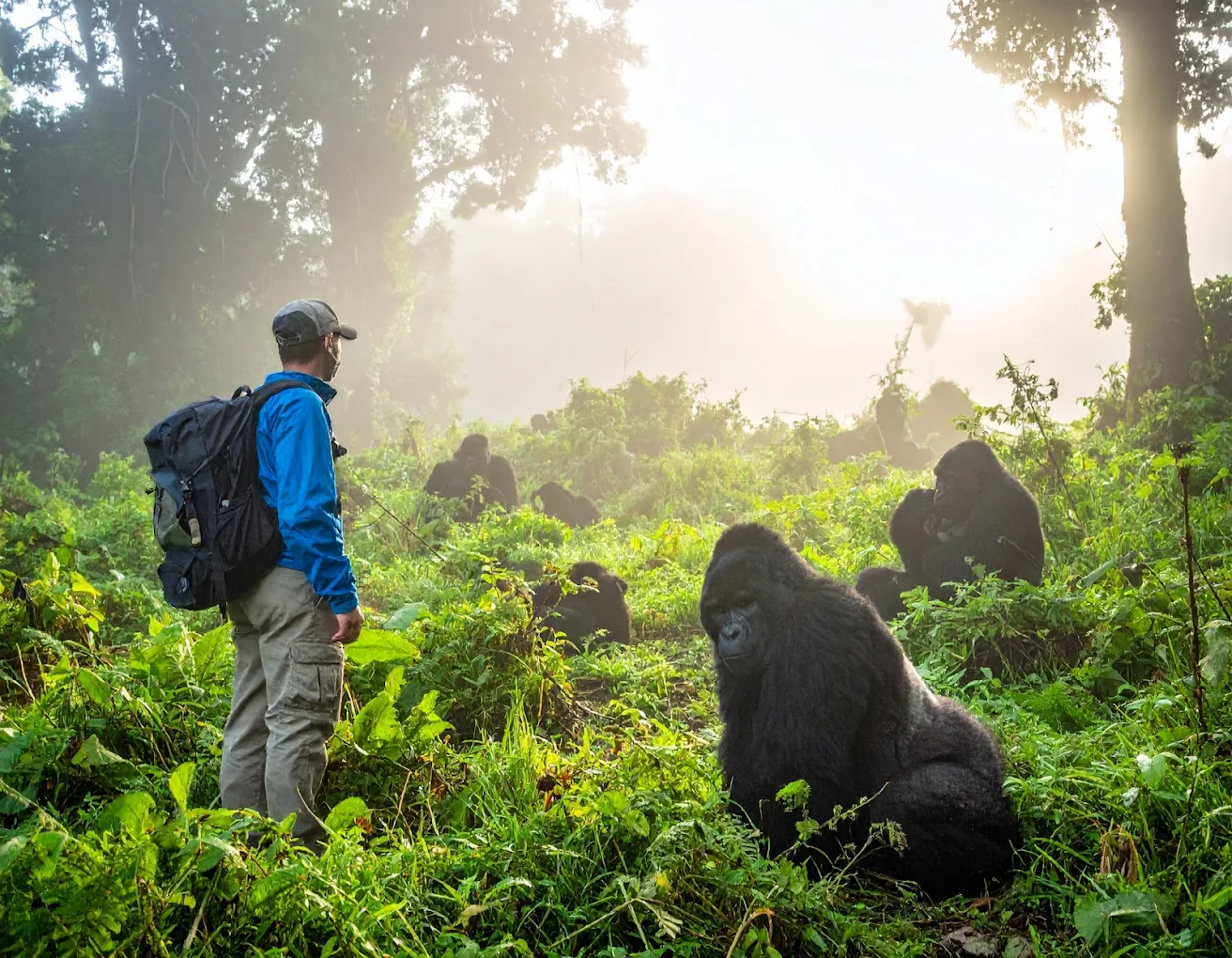
The volcanic soil of Volcanoes National Park becomes significantly more slippery during and after rainfall, and steep approach sections on certain trail routes require careful footing and confident use of trekking poles and the support of your porter. Rain transforms the forest canopy into a dripping environment where vegetation brushes water onto your clothing constantly, and waterproof gear becomes essential rather than optional for maintaining physical comfort during a two- to four-hour approach. The upside of wet conditions is that the vegetation appears at its most intensely green, the forest smells dramatically alive with petrichor and decomposition, and the gorillas sometimes shelter under dense foliage in positions that create strikingly intimate close encounters without the open-air distance that dry season encounters sometimes involve. Trails that are manageable for fit travelers in dry conditions can feel genuinely challenging in heavy rain, so honest fitness assessment before booking a rainy-season trek helps set appropriate expectations.
Photography Challenges and Opportunities
Low-season photography in Volcanoes National Park involves overcast skies that eliminate the harsh shadows common in dry-season forest light, and this diffused light actually creates superior conditions for gorilla portrait photography because the animal’s dark fur reflects evenly rather than creating blown highlights on the face and head. Rain droplets on leaves and fur create a visual texture that adds atmosphere to wet-season photographs that dry-season images lack. The challenge is that drizzle during the actual encounter requires keeping your camera dry while still shooting, and a good waterproof camera bag with quick access to the lens opening solves this problem practically. Heavy sustained rain is relatively uncommon during the March-to-May window compared to intermittent showers, and many low-season trekkers complete their entire encounter in dry conditions despite the seasonal context because rainfall in Rwanda tends to concentrate in the afternoon rather than the morning when treks operate.
Permit Availability and Pricing
The Rwanda Development Board does not reduce the gorilla permit price during low season—the $1,500 fee applies year-round regardless of demand—but the practical availability of permits improves dramatically during the March to May and November windows. Peak season permits from June through September and in December and January sell out six to nine months in advance, while low season dates often remain bookable within two to three months of departure for flexible travelers. This availability advantage benefits travelers whose work schedules limit them to term-time or shoulder-season holidays, and it means the low season option is sometimes not a choice between wet and dry but between seeing gorillas at all or missing the opportunity entirely due to sold-out peak-season permits. African Wild Trekkers maintains ongoing permit allocations throughout the year and can confirm availability for specific low season dates quickly upon inquiry.
Lodge Rates and Travel Costs in Low Season
Accommodation Price Reductions
Luxury and mid-range lodges around Volcanoes National Park reduce their rates by 20 to 35 percent during low-season months, and some properties offer all-inclusive rates or complimentary upgrades to attract bookings during their quieter occupancy periods. Singita Kwitonda, One&Only Gorilla’s Nest, and other premium Musanze properties discount their high-season rates meaningfully enough that budget-minded travelers who specifically target these months can access accommodation they could not afford in peak season. The lodge atmosphere during low season shifts toward a more intimate, uncrowded quality—dining rooms serve fewer covers, guides give individual rather than group briefings, and the park trails feel genuinely quiet between morning departures. Budget lodges and mid-range guesthouses apply smaller discounts because their year-round pricing already sits below peak season luxury rates, but the reduced competition for rooms means better room availability and more flexible check-in timing.
Flight and Wider Travel Costs
International flights to Kigali from Europe, North America, and Asia also follow seasonal pricing patterns, with the March to May and November windows typically delivering fares 15 to 25 percent lower than peak season July and August prices on the same routes. The combination of lower flight costs, reduced lodge rates, and better permit availability makes low season Rwanda genuinely attractive for travelers who calculate total trip cost rather than simply the headline permit price. Gorilla permit revenue remains at full price regardless of season, so visiting in low season does not reduce your conservation contribution — it simply redirects some of the money you save on flights and lodging toward other Rwanda activities rather than into the pockets of airlines and accommodation businesses. African Wild Trekkers provides seasonal pricing comparisons on request so clients can make fully informed decisions about timing their Rwanda trip.
Honest Assessment: Should You Go in Low Season?
Who Benefits Most from Low-Season Trekking
Travelers with school-age children face restricted holidays that often coincide with Rwanda’s peak season, and these families should book permits as far in advance as possible rather than waiting for low-season availability. Budget travelers who can travel flexibly benefit enormously from low season because the combination of lower lodge rates and better flight pricing reduces the total trip cost significantly without changing the gorilla encounter quality at all. Photographers who understand how to work with overcast diffused light and who prioritize intimate encounters over guaranteed blue-sky conditions often prefer low season specifically for the photography advantages it creates. Travelers who are comfortable with mud, rain gear, and physical challenge find that low season trekking delivers a more adventurous feel than the managed, sunny experience that peak season often provides. The honest conclusion is that low-season gorilla trekking rewards prepared, flexible travelers and should not be treated as a second-choice option by default.
Plan Your Safari
Book Your Low Season Gorilla Trek
African Wild Trekkers secures gorilla permits for all months, including the low season windows where availability is better and overall trip costs are lower. Contact us at africanwildtrekkers.com/contact to check permit availability for your dates.
What Your Package Covers
Your Rwanda gorilla package includes the $1,500 permit, private transfer, porter hire recommendation, waterproof gear briefing, and accommodation at your preferred lodge level — year-round, any season.
Request Your Rwanda Gorilla Trek Quote
Tell us your travel dates, and we will confirm permit availability and send a fully priced low season package within 24 hours. Reach us at africanwildtrekkers.com/contact.