Hell’s Gate National Park Kenya: Africa’s Most Accessible Walk-and-Cycle Safari
Hell’s Gate National Park Kenya occupies 68 square kilometers of dramatic volcanic gorge landscape in the Rift Valley near Lake Naivasha and offers something genuinely unique among Kenyan national parks — the freedom to cycle and walk among wildlife without requiring a safari vehicle, ranger escort, or advance permit. Zebras, giraffes, buffalos, warthogs, hyenas, and occasionally lions inhabit the park’s open grassland alongside the towering volcanic cliff walls and geothermal steam vents that create one of East Africa’s most visually dramatic landscapes. The park served as inspiration for Disney’s Lion King animated film and the live-action backdrop for several major film productions, and its combination of accessible adventure, geological spectacle, and wildlife freedom produces an experience unlike anything available in Kenya’s national parks. African Wild Trekkers includes Hell’s Gate in Kenya itineraries as a half-day adventure activity connecting a Naivasha lake visit with the main safari circuit, and it works equally well as a full-day excursion from Nairobi for travelers seeking budget wildlife activity outside the premium safari park structure.
Cycling and Walking Among Wildlife
The Unique Freedom of Non-Vehicle Wildlife Access
Hell’s Gate is one of only two national parks in Kenya that permit visitors to cycle and walk freely among wildlife without mandatory vehicle confinement, and this freedom creates an experience of embodied wilderness that completely transforms the human-wildlife relationship from the mediated vehicle encounter that defines most Kenyan safari experiences. Cycling past a giraffe that continues feeding while you pedal within 15 meters activates a completely different neurological response than watching the same giraffe through a vehicle window — the shared physical space, the absence of mechanical separation, and the awareness that your own movement and behavior matters to the animal’s response create a sense of genuine wild encounter that no amount of vehicle proximity can replicate. Walking the Hell’s Gate gorge trail with a warthog family routing alongside the path, or stopping to watch zebra stallions spar in the middle distance while you stand still and silent in the open grassland, produces the quality of present-moment immersion that travelers who have done only vehicle safaris describe as the most personally impactful wildlife experience of their East Africa trip.
The park enforces common sense distance rules — no approaching animals within a distance that would cause them to react, no running if an animal looks alert, no cycling between a mother and offspring — and the ranger station staff brief visitors on these protocols before entry. Most wildlife in Hell’s Gate has habituated to the presence of cyclists and walkers through decades of daily non-threatening human exposure, and the majority of encounters involve animals that acknowledge your presence briefly before resuming their normal activity. The exception is buffalo, which can be unpredictable regardless of habituation level, and the park’s standard protocol of giving buffalo maximum distance and retreat space if they display any sign of awareness remains an important behavioral rule that guides emphasize to all visitors. Carrying a working knowledge of wildlife response body language before entering on foot or cycle transforms the experience from a nerve-wracking proximity challenge into a genuinely empowered wildlife interaction that builds confidence and perceptual skill with each passing encounter.
Fischer’s Tower and the Main Gorge Circuit
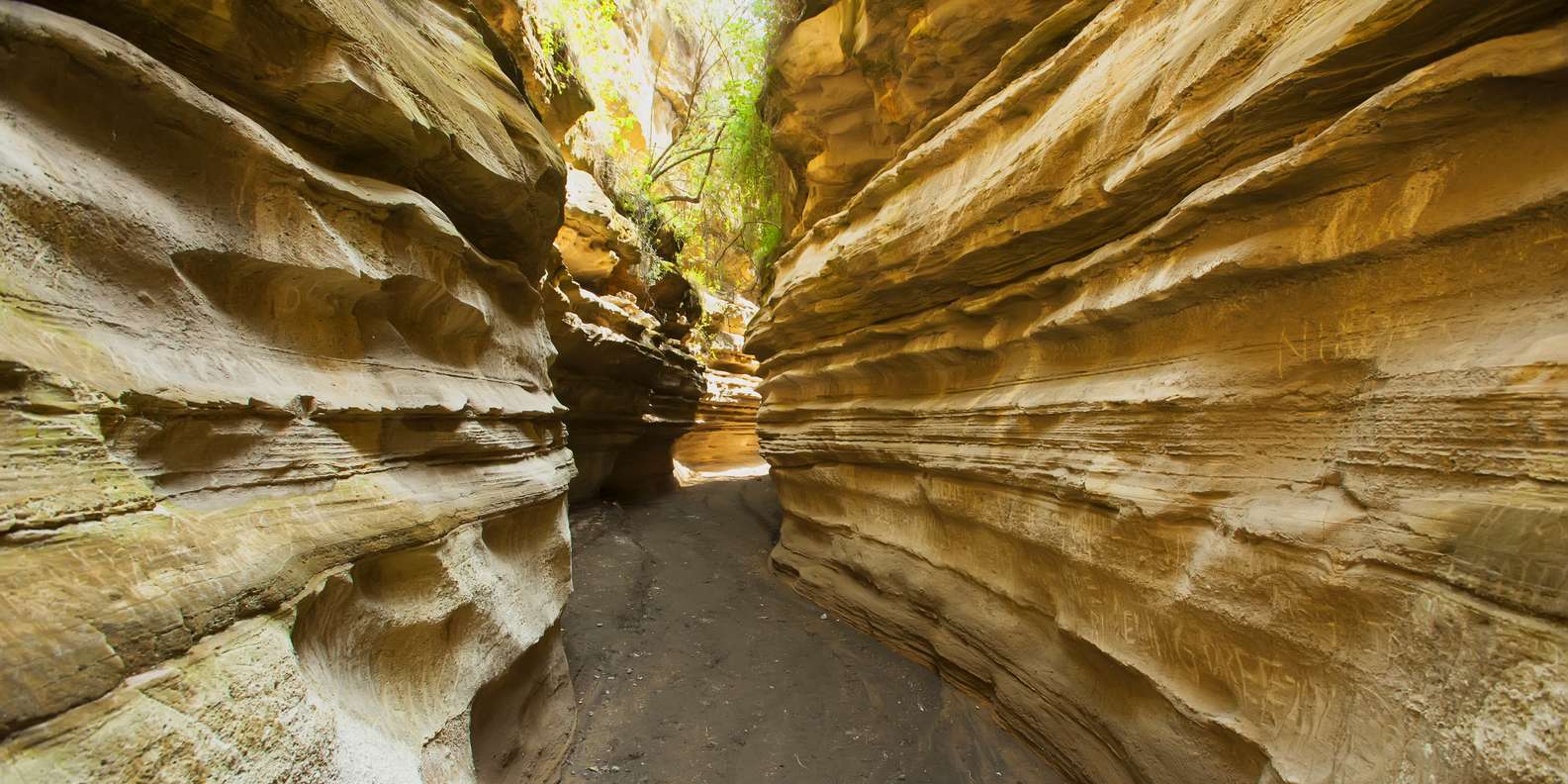
The Hell’s Gate main gorge circuit begins at the park entrance and follows a red-soil track between towering basalt cliffs that rise 120 meters above the valley floor, past Fischer’s Tower — a free-standing volcanic plug named after the explorer Gustav Fischer who passed through the area in 1882 — and through the upper gorge where geothermal steam vents exhale white clouds from cracks in the cliff face. The 22-kilometer circuit from the main gate to the Ol Karia geothermal station and back takes approximately three to four hours on bicycle at a relaxed pace that allows wildlife stops, photography breaks, and the 30-minute lower gorge walk that descends into the narrowest section of the volcanic chasm where the walls close to five meters apart and the light conditions create otherworldly photography in the late afternoon hours. Bicycle hire is available at the park entrance for approximately $5 USD per day — robust enough for the gravel tracks rather than refined cycling equipment — and the flat terrain through the main gorge section makes the circuit accessible for all fitness levels regardless of cycling experience.
The lower gorge walk descends into the riverbed channel carved by ancient volcanic flows and follows the seasonal watercourse between walls smoothed by millennia of water erosion into sculptural organic forms that architectural photographers find as compelling as the wildlife. Natural hot springs feed small pools along the gorge floor where you can soak in the warm mineral water — an unexpected restorative pleasure in the middle of an already diverse activity day. The gorge walk requires some basic scrambling over boulders in the narrowest sections, and the overall route takes 30 to 45 minutes depending on pace and photography stops. Guides for the gorge walk are available at the descent point for approximately $10 USD and are strongly recommended because they know the passage conditions, manage group safety in the confined sections, and provide geological and cultural interpretation that transforms the walk from a scenic traverse into an educational experience.
Wildlife in Hell’s Gate
Plains Game and Bird Diversity
Hell’s Gate supports plains zebra, Masai giraffe, buffalo, eland, Thomson’s and Grant’s gazelle, warthog, impala, and klipspringer in the rocky cliff habitats that are specific to this landscape type among Kenyan parks. The cliff faces support one of the region’s most significant lammergeier populations — the massive bone-eating vulture that soars on the thermal updrafts from the geothermal valley floor with a wingspan exceeding 2.5 meters — and the bird is visible from the main gorge circuit on most visits as it rides the valley thermals in long lazy circuits. Augur buzzards, Verreaux’s eagles, and various kestrel and falcon species use the cliff faces for nesting, and the concentration of cliff-nesting raptors in the park makes it one of Kenya’s finest locations for raptor photography from ground level rather than elevated game drive vehicle perspective. The gorge floor’s geothermal environment supports plant species unusually adapted to high soil temperatures, and the combination of volcanic geology, thermophilic flora, and raptor diversity creates an ecosystem that rewards naturalist interest beyond pure mammal wildlife observation.
Spotted hyenas use the rocky gorge sections for denning, and encounters with hyena family groups near the gorge entrance in the early morning before the main visitor flow arrives represent the park’s most consistently exciting mammal sighting for travelers who arrive at opening time rather than mid-morning. Hyenas are often underappreciated safari wildlife because most encounters occur at large carcasses in the company of lions, but seeing a hyena family at their den site — adults returning from a night hunt with young cubs greeting them with vocalizations and physical contact — reveals the species’ rich social intelligence and communication complexity that their vehicle-window scavenger reputation completely fails to convey. Lions occasionally pass through Hell’s Gate from the adjacent Naivasha area, though encounters are uncommon enough to be genuinely exciting rather than routine, and the possibility of lion presence adds an edge of authentic wilderness to the cycling and walking experience that park management communicates clearly to visitors at the entrance briefing.
Practical Information for Hell’s Gate
Getting There and Entry Costs in 2026
Hell’s Gate National Park sits 90 kilometers from Nairobi near the town of Naivasha on the Rift Valley floor, and the drive from the capital takes approximately 90 minutes via the Naivasha road — a journey that passes through the dramatic Rift Valley escarpment viewpoints above Naivasha that provide their own scenic reward. The park entrance fee in 2026 is approximately $26 USD for non-resident adults, with bicycle hire at the gate adding $5 to $10 USD for a full day. The park combines naturally with a morning boat ride on Lake Naivasha for hippo and waterbird viewing — the lake sits adjacent to the park entrance and its boat operations open from 6 AM, allowing a Naivasha boat experience before the Hell’s Gate cycling circuit without any backtracking. African Wild Trekkers includes Hell’s Gate as a half-day Naivasha activity within Kenya safari circuits where clients return to Nairobi or continue north to Nakuru on the afternoon after cycling, creating a logistically efficient day that delivers two completely different Rift Valley experiences for the cost of a single road transfer.
Lake Naivasha boat safaris access the lake’s papyrus shoreline where hippos rest in pods of 10 to 30 individuals at the water’s edge, and the combination of hippo encounters on the morning boat and giraffe and zebra alongside the afternoon cycling circuit creates a day that covers more ecological and experiential variety than most safari days in dedicated national parks. Crescent Island on Lake Naivasha permits walking among wildlife without a vehicle, sharing with Hell’s Gate the unusual characteristic of foot-accessible wildlife that makes the Naivasha area a uniquely physical safari destination within the broader Kenya circuit. African Wild Trekkers designs Naivasha day programs that maximize the Hell’s Gate cycling experience within a Kenya safari that prioritizes the Maasai Mara, Amboseli, and northern Kenya as the primary destinations.
Plan Your Safari
Hell’s Gate National Park works as a half-day or full-day excursion requiring minimal advance planning beyond standard Kenya safari logistics — no permits beyond the gate entry fee, no accommodation booking unless you choose to overnight in Naivasha rather than return to Nairobi, and bicycle hire available on arrival without advance reservation. African Wild Trekkers schedules Hell’s Gate visits on Kenya safari circuits to make the most of the Rift Valley road transit, typically combining the park with a Naivasha boat safari on the same day and positioning it logistically between Nairobi and the main wildlife circuit heading west toward Narok and the Mara.
Your Hell’s Gate visit includes park entry fees, bicycle hire, gorge walk guide, and road transfer connecting the park to your wider Kenya itinerary. We time the visit to allow arrival at the park gate before 8 AM when wildlife activity and light conditions are at their best and visitor volume is lowest.
Contact African Wild Trekkers at africanwildtrekkers.com/contact with your Kenya travel dates and we will design a Rift Valley day that includes Hell’s Gate within your complete safari itinerary. We respond within 24 hours.