Nairobi to Maasai Mara: Every Way to Get There in 2026
The journey from Nairobi to the Maasai Mara is one of the most common logistics questions in East African safari planning. Four options exist: scheduled flights, charter planes, private road transfer, and shared shuttle. Nairobi to the Mara sits approximately 260 kilometers by road and 40 minutes by air. Road conditions and Nairobi traffic push the drive to five to seven hours rather than the three hours the distance might suggest. African Wild Trekkers coordinates all Nairobi to Maasai Mara transfers for clients across every budget tier.
Flying From Nairobi to Maasai Mara
Scheduled Flights From Wilson Airport
Wilson Airport in Nairobi’s Langata neighborhood is the departure point for all scheduled light aircraft flights to the Maasai Mara. The airport is accessible from central Nairobi in 20–45 minutes depending on traffic. Safarilink Aviation and AirKenya Express operate daily scheduled services to the main Mara airstrips — Keekorok, Ol Kiombo, and Mara North — with departures at 8 AM and 11 AM. Journey time runs 40–55 minutes. One-way tickets cost $150–$250 USD per person. The weight limit on these aircraft is strictly 15 kilograms total in a soft-sided bag — hard suitcases are refused at check-in without exception.
The flight from Wilson to the Mara delivers one of Kenya’s best aerial perspectives. The Nairobi suburbs give way to smallholder farms, then the Great Rift Valley escarpment, then the golden open plains of the Maasai Mara. Landing on the Mara’s grass airstrips is a distinctive experience — the plane bounces lightly on the grass, wildebeest or zebra occasionally graze at the runway edge, and your lodge vehicle waits at the strip’s threshold. You arrive for your first game drive within 30 minutes of touching down.
Charter Flights to Private Mara Airstrips
Private conservancies surrounding the Maasai Mara — including Mara North, Olare Motorogi, and Naboisho — operate their own airstrips that scheduled carriers do not serve. Access to lodges in these conservancies requires a charter flight arranged by the lodge or safari operator. Charter flights carry your specific group without other passengers and can depart at your requested time. Charter costs run $800–$1,500 USD per flight for a four-seat light aircraft between Wilson and a private Mara strip. The per-person cost drops significantly when shared across a group of four.
The advantage of a private conservancy airstrip lies in the exclusivity of the conservancy itself — fewer tourists, no vehicle limits at wildlife sightings, and a wilderness quality the main reserve boundary cannot replicate. Lodges in Mara North and Olare Motorogi consistently report the Mara’s best leopard and cheetah sighting rates because vehicle numbers at any sighting remain limited to the lodge’s own game drive fleet. African Wild Trekkers coordinates charter logistics for clients booked into private conservancy camps, matching aircraft type to group size before booking.
Road Transfer to Maasai Mara
Private 4×4 Transfer From Nairobi
A private 4×4 road transfer from Nairobi to the Maasai Mara takes five to seven hours depending on departure time and traffic through Nairobi’s southern suburbs. The route follows the B3 highway through Naivasha and Narok — a two-lane tarmac road in reasonable condition — before deteriorating to corrugated dirt for the final 50 kilometers to the main Mara gate. Depart Nairobi no later than 6:30 AM to avoid morning rush hour, which adds 60–90 minutes to the Nairobi exit phase. A private transfer costs $200–$350 USD per vehicle one-way and suits families or groups of four or more whose combined flight cost would substantially exceed the road price.
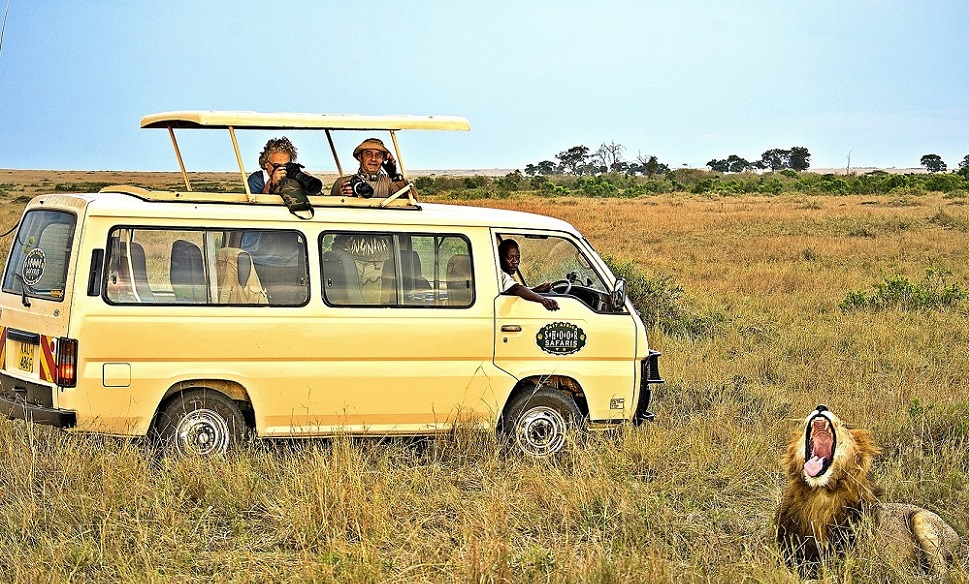
The road journey offers wildlife encounters before you reach the Mara. The drive through the Rift Valley floor passes Lake Naivasha and delivers views of the escarpment that aerial transfers bypass entirely. African Wild Trekkers uses Land Cruiser 4×4 vehicles with pop-up roof hatches for road transfers, so the vehicle doubles as a game drive vehicle on arrival without requiring a change of car at the park gate. A mid-journey stop at Narok town for a local lunch adds an authentic experience that the 45-minute flight skips entirely.
Shared Shuttle to Maasai Mara
Budget travelers can reach the Maasai Mara by shared shuttle — a 12-seat minibus or Land Cruiser that departs Nairobi at fixed times and drops passengers at their respective Mara camps. Shared shuttles cost $30–$60 USD per person one-way and represent the most economical ground option. The journey extends to seven to eight hours because the vehicle makes multiple drop-off stops across the Mara’s catchment area. Book in advance — available seats on morning departures sell out one to three days ahead during peak season.
The shared shuttle works less well for travelers on tight safari schedules because the arrival time at your lodge is unpredictable across multiple stops. A group of four paying $30 each ($120 total) versus a private transfer at $200 saves $80 but costs extra hours in a shared vehicle. Solo travelers and couples on budget itineraries find the shared shuttle entirely workable and often meet other safari travelers during the journey.
Planning the Nairobi to Maasai Mara Journey
Fly or Drive — Which to Choose
The decision between flying and driving depends primarily on trip length, group size, and budget. Travelers on five days or fewer in Kenya should fly both ways — the 10–12 hours of round-trip driving consumes 20 percent of a five-day itinerary. Travelers on eight days or longer can drive one way — typically out to see the landscape and fly back to maximize final days in the Mara. Groups of five or more shift the economics significantly — five flights at $200 each ($1,000) versus a private vehicle at $250 makes the road the obvious choice if time allows. African Wild Trekkers presents this analysis at booking and recommends the optimal transfer method for each specific itinerary.
Seasonal conditions affect the road transfer decision in ways the flight option avoids entirely. The Nairobi to Narok road remains paved year-round, but the final 50 kilometers from Narok to the Mara gate becomes a muddy challenge during the heaviest April–May rains. July to October is both the peak migration season and the driest road period, making it the best time for the road journey. African Wild Trekkers monitors road conditions throughout the season and adjusts recommendations when wet season conditions warrant switching to a flight.
Nairobi Airport to Wilson Airport Transfer
Jomo Kenyatta International Airport (JKIA) sits 12 kilometers from Wilson Airport, and the transfer between the two airports takes 30–60 minutes depending on traffic. A direct taxi or private transfer between JKIA and Wilson costs 2,000–3,000 KES. Most travelers arriving on international flights the evening before a scheduled morning Mara departure stay one night in a Nairobi airport hotel. Trademark Hotel and Weston Hotel both sit near Wilson Airport and provide early morning breakfast service that suits a 7 AM Wilson check-in.
Travelers arriving on early morning international flights with a same-day Mara connection should build a minimum three-hour buffer between their international arrival and Wilson Airport check-in. Immigration queues at JKIA can run 45–90 minutes during peak international arrival periods, and the traffic transfer between the two airports adds another 30–60 minutes on top. A 7 AM JKIA arrival connecting to a 10 AM Mara flight is typically achievable — an 8 AM arrival connecting to the same 10 AM flight is risky. African Wild Trekkers reviews international arrival times for all connecting clients and advises whether a same-day connection is feasible.
Plan Your Safari
The Nairobi to Maasai Mara transfer requires booking in advance alongside your lodge accommodation — peak season flights and private vehicles fill quickly. African Wild Trekkers coordinates all transfers as part of your complete Kenya safari package so you never need to navigate logistics independently.
Your Maasai Mara package includes the Nairobi airport transfer, Wilson Airport or road transfer to the Mara, full-board tented camp or lodge accommodation, national park or conservancy fees, an experienced guide, and a private 4×4 game drive vehicle.
Contact African Wild Trekkers at africanwildtrekkers.com/contact with your travel dates and Nairobi arrival time and we will recommend the best Nairobi to Maasai Mara transfer and confirm full availability within 24 hours.