Maasai Mara vs Serengeti: A Complete Safari Comparison
Maasai Mara vs. Serengeti is the most debated comparison in East African safari planning. The question of which side of the Kenya-Tanzania border delivers a better safari has no single right answer. The two ecosystems form one contiguous wildlife area where the same animals cross a border that exists only on maps. The Maasai Mara covers approximately 1,510 square kilometers in Kenya’s southwestern corner. The Serengeti covers 14,763 square kilometers across northern Tanzania — nearly ten times larger than the Mara. African Wild Trekkers operates on both sides of the border and designs itineraries that use each ecosystem’s specific strengths.
Wildlife and Safari Experience
Big Cat Populations in Mara vs Serengeti
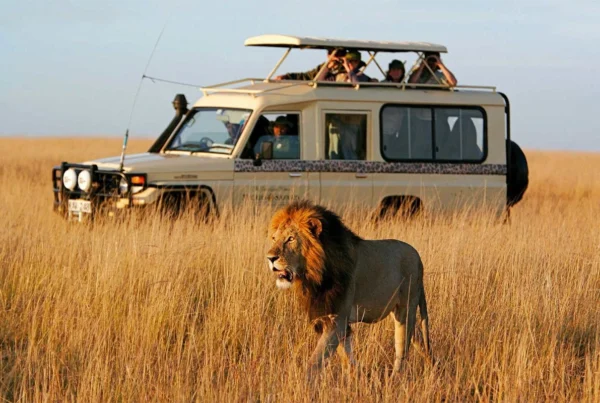
The Maasai Mara records some of Africa’s highest big cat densities per square kilometer. Resident lion prides, cheetah coalitions, and leopards concentrate across a compact area that makes multi-species sightings possible within a single morning game drive. The Mara’s famous Marsh Pride and Fig Tree Pride have been studied for decades, and the behavioral knowledge built about these individuals creates exceptional wildlife interpretation depth. Cheetah sightings peak between January and March when short-grass plains expose the fastest land animal’s ambush territory and produce some of Africa’s most dramatic photography conditions.
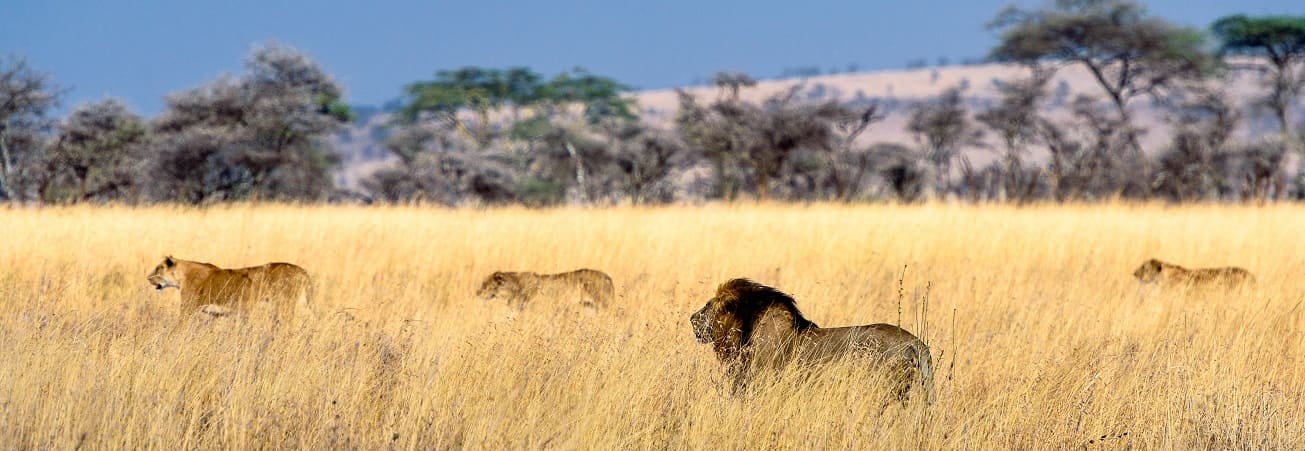
The Serengeti’s lion population — estimated at over 3,000 individuals — is substantially larger in absolute numbers, but distribution across a much larger ecosystem means lower density per square kilometer than the Mara. Leopard sightings favor the Mara’s private conservancies—particularly Mara North and Olare Motorogi—where vehicle limits allow guides to stay with leopards for extended periods that crowded Serengeti sighting points prevent. Wild dog sightings favor the Serengeti, particularly in the Loliondo area and eastern borders, because the Mara’s wild dog population is smaller and less predictable. Both destinations deliver excellent lion encounters year-round.
The Great Migration: Mara vs Serengeti Timing
The wildebeest great migration follows a seasonal circuit between the Serengeti’s southern calving grounds and the Maasai Mara’s northern plains. Calving season in the southern Serengeti between January and March produces 400,000 wildebeest calves in six weeks—extraordinary predator activity and newborn vulnerability create constant wildlife action at Ndutu. The river crossings at the Mara River—Kenya’s most iconic safari spectacle—occur between July and October when the herds arrive and must cross the crocodile-filled river repeatedly. Visiting the Mara in July–October and the Serengeti in January–March captures two different migration phases across both destinations.
The Serengeti also hosts dramatic wildebeest action in months that travelers sometimes overlook. The May–June northward migration through the western Serengeti corridor produces Grumeti River crossings that rival the Mara’s July–October spectacle in drama but occur with far fewer vehicles. December sees the herds return south through the eastern Serengeti, creating a transitional movement across beautiful short-grass plains with very few competing visitors. A well-planned combination itinerary schedules each destination during its specific high-season phase.
Accommodation and Cost Comparison
Price Differences: Kenya vs Tanzania
The Maasai Mara and Serengeti sit in different cost brackets despite their geographic adjacency. Tanzania’s Serengeti charges $70 USD per person per day. The Ngorongoro Conservation Area adds a $70 per person conservation levy plus a $60 crater descent fee per vehicle. Kenya’s Maasai Mara charges $200 per person per day for the main reserve, but private conservancy fees of $80–$150 per person per night often replace the park fee entirely and include additional conservation activities. A five-day Maasai Mara safari at a mid-range tented camp typically costs $1,800–$2,800 per person total. A comparable Serengeti five-day camp costs $2,000–$3,500 per person.
Budget safari options exist more widely in Tanzania than in Kenya for the Serengeti specifically. A handful of public campsites in the Serengeti offer $30–$50 USD per night accommodation for self-drive travelers—a category that does not exist inside the Mara’s main reserve. Mid-range mobile camps in the Serengeti—operator-run tented camps that move with the migration—represent the best value at $400–$700 per person per night full board with guide and vehicle. The Mara’s mid-range fixed camps offer comparable value at $350–$600 per person per night, and the tighter geographic area means shorter drives between camp and productive game areas.
Camp Quality and Atmosphere
Both destinations offer accommodation across the full spectrum from budget fly-camping to ultra-luxury tented lodges. The Mara’s private conservancy lodges—Mahali Mzuri, Angama Mara, and Sanctuary Olonana—rival the Serengeti’s Four Seasons, Singita Sasakwa, and &Beyond Serengeti Under Canvas in service standard and setting. The Mara’s private conservancy camps benefit from strict vehicle limits at sightings—no more vehicles can view any wildlife encounter than the lodge’s own fleet permits. The Serengeti’s central Seronera zone can feel busy during peak July–October migration season, with multiple vehicles converging at river crossing points.
The camp atmosphere differs between the two countries in subtle but noticeable ways. Kenya’s Maasai Mara camps employ predominantly Maasai staff. The red shukas, beadwork, and traditional musical greeting create a distinctly Kenyan atmosphere. Tanzania’s more mixed-ethnicity camp staff tends toward a slightly more understated hospitality style. Dining is consistently excellent at mid-range and above in both countries. The bush dinner—tables set under the stars at a dry riverbed or kopje with camp lanterns—is a shared tradition that both countries’ operators execute with equal care.
Practical Differences for Travelers
Visa, Entry, and Logistics
Kenya requires an ETA ($32.50 USD applied online before travel). Tanzania issues a tourist visa on arrival at the airport for $50 USD cash. Travelers combining both countries need both the Kenya ETA and the Tanzania visa — no shared visa between the two countries currently exists. Apply for the Kenya ETA at least two weeks before departure and carry $50 USD cash for the Tanzania visa on arrival. Both countries accept USD cash for tipping and small purchases at tourist lodges without needing to exchange into local currency for tourism-specific spending.
The land border crossing at Namanga provides the most common overland connection between Maasai Mara and Serengeti itineraries. The crossing typically takes 45–90 minutes, including immigration, vehicle permit, and luggage inspection. Crossing between 10 AM and 2 PM avoids the early morning and evening queues. Flying between the two countries’ routes through Nairobi Wilson Airport to Kilimanjaro International Airport—a journey of one to three hours depending on available connections. African Wild Trekkers handles the full logistics of Kenya-Tanzania combination itineraries, including cross-border transfer coordination.
Which Destination to Prioritize
First-time East Africa safari travelers visiting between July and October should prioritize the Maasai Mara for the river crossings, accessibility, compact game area, and straightforward Kenya ETA process. First-time travelers visiting between January and April should prioritize the Serengeti for the calving season spectacle at Ndutu, lower visitor numbers, and broader ecosystem diversity. Repeat safari travelers who have visited one side of the ecosystem should prioritize the other—the Mara and Serengeti deliver sufficiently different experiences that each rewards a dedicated visit.
Budget is the final practical variable. Tanzania’s higher park fees make a Serengeti-only itinerary more expensive than a comparable Maasai Mara-only itinerary of the same duration. The Mara’s private conservancies offer a premium wildlife experience that frequently matches the Serengeti’s mid-range camp category while delivering unlimited vehicle time at sightings that the Serengeti’s busier central zones cannot match during peak migration months. Neither destination is universally superior — the right choice depends on travel dates, budget, and priority wildlife experiences.
Plan Your Safari
Choosing between the Maasai Mara and Serengeti — or combining both — requires matching your travel dates to the migration calendar and your budget to the fee structures of each destination. African Wild Trekkers designs both single-destination and multi-country Maasai Mara and Serengeti itineraries with timing optimized for the wildlife activity you prioritize.
Your East Africa package includes all national park and conservancy fees, a private 4×4 game drive vehicle, an experienced guide, full-board accommodation, domestic flights where applicable, and all transfers between Nairobi and your safari destinations.
Contact African Wild Trekkers at africanwildtrekkers.com/contact with your travel dates, and we will recommend the right Maasai Mara vs. Serengeti strategy and send a complete itinerary within 24 hours.