Kenya and Zanzibar: Combining Safari and Beach in East Africa
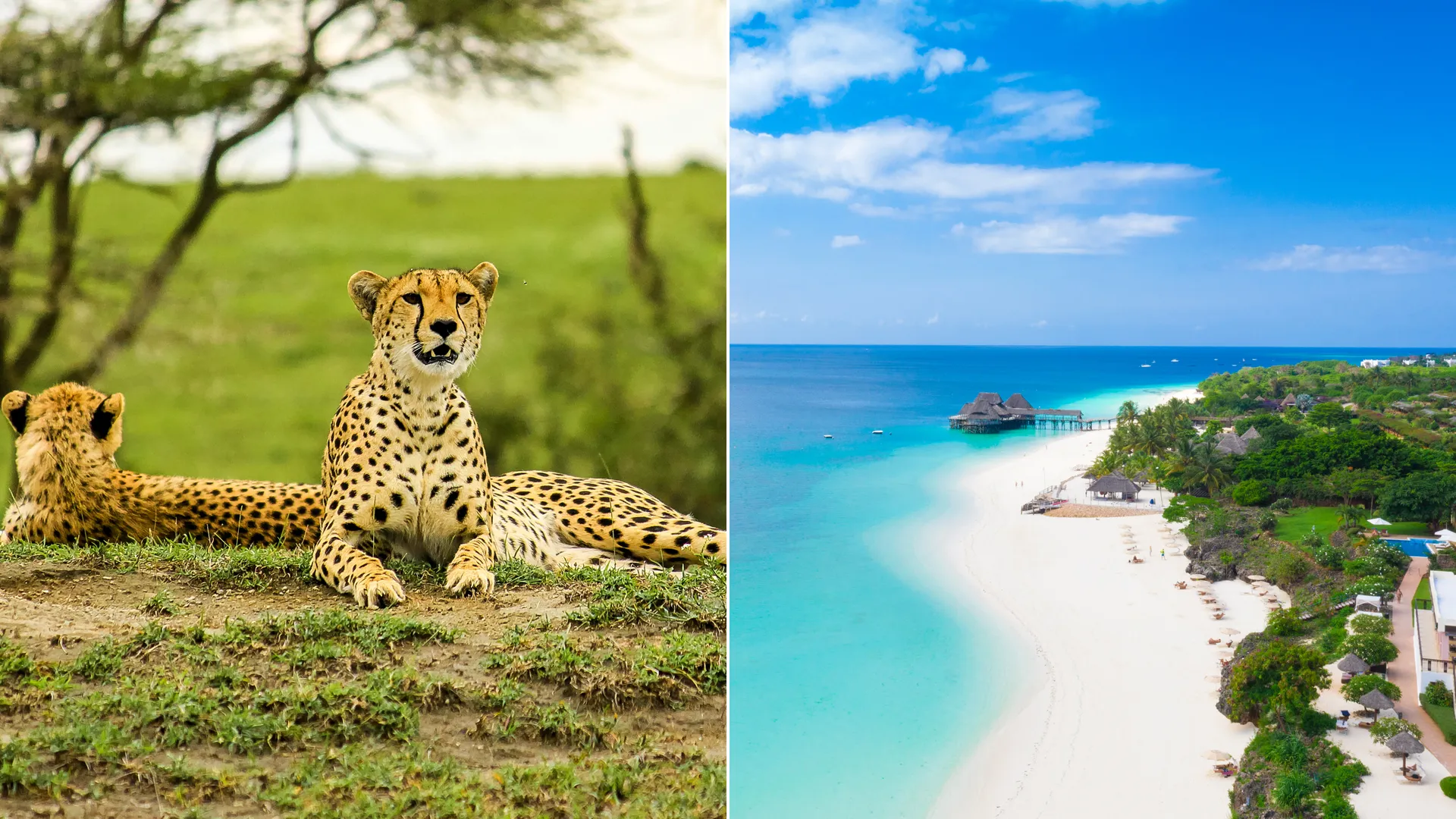
The Kenya Zanzibar safari beach combination pairs the Maasai Mara’s extraordinary wildlife with Zanzibar’s Indian Ocean beaches, historic Stone Town, and spice plantation culture into a 10 to 14 day East Africa trip that satisfies both the wildlife and beach dimensions of an African holiday without requiring a long-haul return to your home country between the two experiences. This combination works because the Nairobi to Zanzibar flight takes approximately two hours, making the transition from game drive dust and bush camps to coral reef waters and boutique beachside hotels straightforward and fast without the intercontinental connection that separating two such different destinations would otherwise require. The combination appeals particularly to couples who disagree on wildlife versus beach priorities — the safari half delivers lions, elephants, and river crossings, while the Zanzibar half delivers snorkeling, sunset dhow cruises, and beach days — and to travelers adding a meaningful cultural dimension through Zanzibar’s Stone Town UNESCO heritage district to what would otherwise be a wildlife-only East Africa itinerary. African Wild Trekkers coordinates the full Kenya Zanzibar package with both the Nairobi-Maasai Mara and Zanzibar components confirmed as a seamless single booking.
Why Kenya Safari Plus Zanzibar Works
Maasai Mara Into Zanzibar: The Ideal Sequence
Structuring the Kenya Zanzibar combination as safari first and beach second creates the natural emotional arc that most travelers find most satisfying — arriving in Zanzibar after several days of early morning game drives, dusty roads, and wildlife intensity, the shift to ocean breezes, quiet beach afternoons, and unhurried Stone Town exploration feels like a genuine reward rather than a detour from the trip’s main purpose. Traveling in the reverse sequence — beach first, then safari — works logistically but creates an anticlimactic progression where the beach’s relaxed pace makes the early 5:30 AM game drive starts and physical exertion of the bush feel like a step backward rather than a climax. Most experienced safari travelers and tour operators recommend the safari-then-beach sequence for this reason, and African Wild Trekkers designs the default Kenya Zanzibar itinerary in this safari-first order while offering the beach-first sequence for travelers whose international flight routing into Zanzibar makes the reverse order logistically simpler. Book both components simultaneously since Zanzibar’s best boutique beach hotels fill quickly during peak season, and coordinating the Nairobi-Zanzibar flight timing with your Maasai Mara departure day prevents gaps and avoids a Nairobi overnight that adds unnecessary cost.
The Maasai Mara portion of the Kenya Zanzibar combination benefits from a minimum of three nights to justify the Nairobi transfer cost and light aircraft fare, and three full days of game drives in the Mara provides enough time for the Mara River crossings (in season), big cat encounters, and the slow morning game drives that deliver the cheetah hunts and lion kills that rushed two-day Mara visits frequently miss. Four nights in the Mara pushes the total combination itinerary to 10 days minimum with the Zanzibar extension, which is the ideal length for most international travelers balancing available annual leave against the logistics of a dual-destination East Africa trip. Travelers with more flexibility can extend the Mara to five nights and Zanzibar to five nights for a 12-day combination that avoids any sense of rushing between destinations while remaining comfortably within a two-week holiday window.
Timing the Kenya Zanzibar Beach Extension
Zanzibar’s weather follows a different seasonal pattern from Kenya’s safari parks, and the two sets of seasonal considerations do not always align perfectly — understanding both climates prevents booking the combination in the one month window where both destinations simultaneously have problematic weather. The Maasai Mara’s best safari months run July to October (dry season, peak migration) and January to March (short dry season, cheetah on open plains). Zanzibar’s best beach months run June to October and December to March, with the long rains (April to May) producing rough Indian Ocean conditions and the short rains (November) temporarily interrupting beach quality. June to October and January to March both satisfy both destinations’ weather requirements simultaneously, making these the optimal combination booking windows. December is ideal for Zanzibar but catches the Maasai Mara between migration phases — still excellent for resident wildlife but without the river crossing drama that July–October delivers.
The July to October window represents the single best period for the Kenya Zanzibar safari beach combination — the Maasai Mara’s wildebeest river crossings coincide precisely with Zanzibar’s clearest blue Indian Ocean conditions, lowest humidity, and warmest beach temperatures. The southeast trade wind (kusi) blows reliably through this period, producing the offshore conditions that generate the Zanzibar sailing culture, dhow races, and kitesurfing at Paje Beach that add an active water sports dimension to the beach component. For travelers who cannot travel in July–October, January and February deliver excellent conditions at both destinations — the Mara’s resident wildlife on open short-grass plains and Zanzibar’s stable Indian Ocean beach season combine into a strong alternative combination window that costs less than the peak July–October period at most properties.
Getting From Kenya to Zanzibar
Flights From Nairobi to Zanzibar
The Nairobi to Zanzibar flight operates on Kenya Airways with one or two scheduled departures daily from Jomo Kenyatta International Airport, and the journey takes approximately 1 hour 45 minutes to Abeid Amani Karume International Airport on Zanzibar island. Flight costs run $150–$300 USD per person one-way depending on booking lead time and cabin class, and booking three to four months in advance for peak season (July–October) secures the best fares at Kenya Airways’ economy and business class rates. Travelers finishing their Maasai Mara safari and flying to Zanzibar on the same day connect from Wilson Airport (domestic Mara flight) to JKIA (international Zanzibar flight) with a minimum two-hour connection time to allow for the Wilson-to-JKIA ground transfer and JKIA check-in. African Wild Trekkers coordinates this connection timing for all Kenya Zanzibar clients by scheduling the Mara departure flight to Wilson no later than 11 AM on the connection day, providing a 3 to 4 hour JKIA buffer before typical afternoon Zanzibar departures.
A budget alternative to the Nairobi-Zanzibar direct flight involves flying from Mombasa or Malindi on Kenya’s coast to Zanzibar on Coastal Aviation or similar smaller carriers — this routing makes sense for travelers who add a Kenya coast component (Diani Beach or Watamu) between the Maasai Mara and Zanzibar legs of their combination itinerary. The Mombasa to Zanzibar flight takes 40 minutes on light aircraft or is available by ferry from the Likoni crossing in Mombasa port, though the ferry journey is long and rough in adverse weather conditions. Travelers adding Kenya’s coast between safari and Zanzibar extend the combination to 14 days and add a third distinct environment — the coastal Kenyan beach culture, Swahili architecture at Lamu, and East Africa’s own version of the beach resort experience before crossing to Zanzibar’s more intensively developed beach hotel strip at Nungwi or Kendwa.
Getting Around Zanzibar After Safari
Zanzibar Airport sits 6 kilometers south of Stone Town, and the taxi transfer to your Stone Town hotel or beach resort takes 10 to 60 minutes depending on whether your accommodation is in Stone Town, the northern beaches at Nungwi, or the southeast coast at Jambiani and Paje. Arrange airport pickup through your hotel or the African Wild Trekkers Zanzibar ground partner before arrival rather than negotiating a taxi at the airport, since unmetered airport taxis frequently quote inflated rates to arriving international passengers who do not yet know the standard fare. The alternative is Dala-dala (local minibus) from the airport to Stone Town for 500 TZS — cheap and authentic but slow, crowded, and impractical with large safari luggage. Renting a scooter or bicycle works well for exploring the island independently from a Stone Town base — the island is small enough (approximately 90 kilometers north to south) that a scooter reaches any beach in under 90 minutes. Hire a driver for day trips to Jozani Forest, Prison Island, and Mnemba Atoll for a more comfortable exploration of the island’s main attractions without managing an unfamiliar vehicle on Zanzibar’s occasionally chaotic village roads.
Zanzibar’s accommodation options range from boutique Stone Town guesthouses at $60–$150 USD per night to beachfront luxury lodges at Nungwi and Kendwa at $300–$600 per night. The split-base approach — two nights in Stone Town to explore the UNESCO heritage district, two nights at a beach resort for Indian Ocean swimming and snorkeling — covers both the cultural and beach dimensions of Zanzibar within a four-night extension that most Kenya safari combination travelers find ideal. Stone Town’s narrow alley pedestrian architecture, spice market, dhow harbor, and Forodhani Gardens night food market create a genuinely different atmosphere from the game drive camp environment, and the cultural contrast between bush camp and Zanzibar Stone Town contributes significantly to the combination’s appeal beyond simply adding beach days to the itinerary.
What to Do in Zanzibar After Safari
Stone Town and Spice Tours
Zanzibar’s Stone Town earned its UNESCO World Heritage status for its intact 19th-century Swahili, Arab, and Portuguese colonial architecture — the narrow alleys lined with carved wooden doors, merchant palaces, mosques, and the old slave market site contain more historical layers per square kilometer than any equivalent old city in East Africa. Walking a Stone Town food tour after the safari delivers some of the trip’s most distinctive sensory experiences — the smell of cloves, cardamom, and cumin drifting from spice stalls, freshly baked bread at the waterfront Forodhani Gardens, and fresh-caught seafood grilled at the harbor market create an evening atmosphere that no game drive can replicate. The Zanzibar Spice Tour — a half-day guided agricultural visit to a working spice plantation in the island’s central highlands — shows how the cloves, vanilla, black pepper, turmeric, and cinnamon that made Zanzibar the Spice Island grow and are harvested, and the tasting session at the plantation end provides a sensory education that most travelers describe as one of their favorite Zanzibar experiences. Book through your hotel or African Wild Trekkers’ Zanzibar partner to ensure a guide who speaks English fluently and who visits a working plantation rather than a tourist-stage mock-up.
The Old Fort (Arab Fort) at Stone Town’s seafront and the Palace Museum (Beit el Sahel) offer structured historical context for Zanzibar’s layered sultanate, colonial, and post-independence history that transforms a Stone Town walk from aimless alley wandering into an informed cultural engagement with a genuinely complex city. The Peace Memorial Museum and the Slave Trade Exhibition at the Anglican Cathedral — built on the site of the former slave market — provide the most substantive historical documentation of the East African slave trade’s specific role in Zanzibar’s 19th-century economy and society, and both are within walking distance of the central Stone Town hotel cluster. Budget two to three hours for the cathedral and slave market site combined — the exhibition is confronting and well-documented, and rushing through it produces a superficial encounter with a historical reality that rewards careful attention.
Beach Resorts and Water Activities
Zanzibar’s northern beaches — Nungwi and Kendwa — offer the clearest Indian Ocean water and the most reliable swimming conditions on the island because the northern coral reef protects these beaches from the tidal variation that makes some of Zanzibar’s east coast beaches inaccessible for swimming at low tide. Nungwi’s beach strip hosts the island’s highest concentration of beach bars, dive shops, water sports centers, and sunset dhow cruise operators, creating an active beach culture that suits travelers who want activity alongside sun and swimming rather than pure relaxation. Kendwa Beach sits five kilometers south of Nungwi and offers a quieter equivalent with fewer beach vendors and more boutique accommodation options that appeal to travelers transitioning from an active safari week to a specifically peaceful beach conclusion. The southeast beaches at Paje and Jambiani attract kitesurfers drawn by the reliable southeast trade wind and shallow turquoise lagoons that exposed reef creates — conditions for learning are ideal in this area and Paje has established kite schools that offer beginner instruction from qualified instructors.
Snorkeling and diving at Mnemba Atoll Marine Reserve — a protected coral reef approximately 3 kilometers offshore from Zanzibar’s northeast coast — ranks among East Africa’s best marine wildlife experiences, with healthy hard and soft coral formations hosting green and hawksbill turtles, dolphin pods, octopus, moray eels, and the full range of Indo-Pacific reef fish. Day trips to Mnemba from Nungwi take 30 minutes by speedboat, and the marine reserve’s protection from fishing and anchoring keeps the reef in markedly better condition than Zanzibar’s inshore reefs. Prison Island (Changuu Island) visits provide a different half-day experience — the island holds Aldabra giant tortoise that can be fed by hand, a snorkeling area around the pier, and a brief historical visit to the island’s 19th-century quarantine facilities that were also used briefly as a slave holding station before the trade’s abolition. Book the Mnemba snorkeling trip and Prison Island visit on separate days to avoid compressing both into a single rushed day that does neither destination justice.
Plan Your Safari
The Kenya Zanzibar safari beach combination requires coordinated booking of both the Maasai Mara accommodation and domestic flights alongside the Nairobi-Zanzibar international flight and Zanzibar hotel — peak season availability disappears months in advance at quality properties on both legs, and last-minute combination bookings frequently compromise one half of the trip to accommodate the other. African Wild Trekkers manages both components as a single package with all connection times confirmed and gap-free.
Your Kenya Zanzibar package includes Nairobi airport transfer, Wilson Airport Maasai Mara flights, full-board Mara accommodation, private 4×4 game drive vehicle, Nairobi-Zanzibar international flight coordination, Stone Town or beach hotel accommodation, and Zanzibar airport transfers on both arrival and departure.
Contact African Wild Trekkers at africanwildtrekkers.com/contact with your travel dates and we will design a complete Kenya Zanzibar safari beach itinerary and confirm availability within 24 hours.