info@africanwildtrekkers.com

info@africanwildtrekkers.com

Kenya Tanzania Safari Combination: Planning the Classic East Africa Circuit

The Kenya Tanzania safari combination is the most comprehensive East Africa wildlife itinerary available, pairing the Maasai Mara’s big cat concentration and river crossing spectacle with the Serengeti’s migration scale, the Ngorongoro Crater’s volcanic wildlife paradise, and the dramatic ecological variety of Tarangire and Amboseli. This circuit has earned its reputation as the definitive Africa safari experience because it moves travelers through six distinct ecosystems — open savanna, caldera, acacia woodland, semi-arid north, volcanic highland, and miombo scrub — within a single two-week window that delivers more sustained wildlife intensity than any single-country itinerary. Combining both countries adds logistical complexity at the border crossing, requires separate entry documentation for each nation, and costs more than a single-country safari of equivalent duration, but the breadth of experience it delivers makes the combination consistently the most popular choice among first-time East Africa visitors. African Wild Trekkers manages the Kenya Tanzania safari combination as a seamless single package with full border logistics, dual-country guiding, and accommodation sequencing confirmed before departure.

The Classic East Africa Circuit

Maasai Mara and Serengeti Together

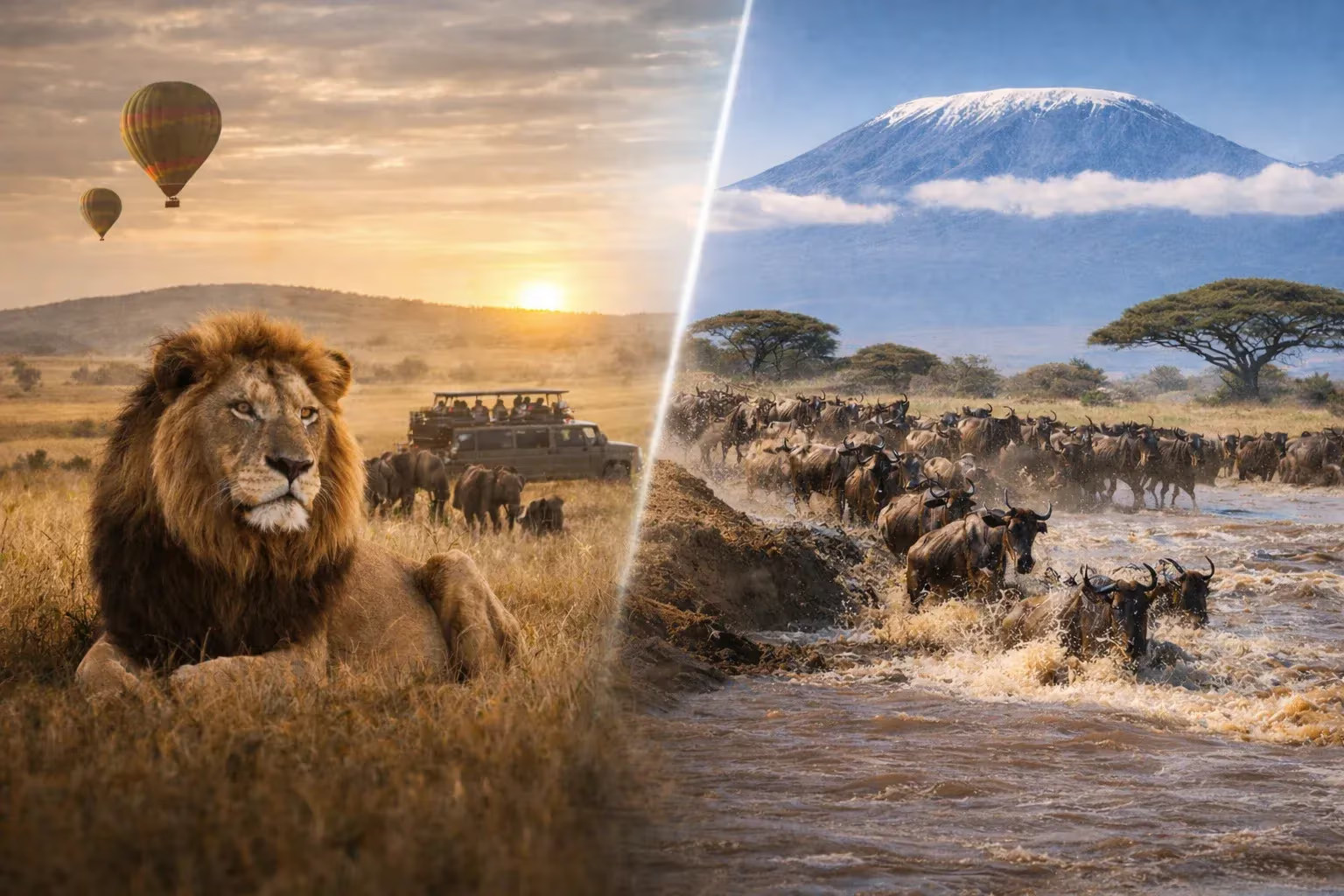
The Maasai Mara and Serengeti form one connected ecosystem divided by the Kenya-Tanzania border, and combining both in a single itinerary allows travelers to follow the Great Migration through two different phases and experience the differences in landscape, camp atmosphere, and wildlife encounter format that each side of the border creates. The Maasai Mara delivers its peak experience between July and October when the wildebeest herds arrive from Tanzania and begin the Mara River crossings — dramatic, chaotic, and photographically extraordinary encounters that draw most of the world’s safari photographers to the same river bend between August and September. The Serengeti’s own peak comes in two separate phases — the calving season at Ndutu between January and March, and the Grumeti River crossings in May and June — that complement rather than overlap with the Mara’s July–October peak. A combination itinerary timed to coincide with both the Mara river crossings in August and the Serengeti’s resident wildlife and caldera visits avoids having to choose between migration phases.

The Serengeti’s scale changes the safari experience significantly compared to the Maasai Mara — the Mara is compact enough that your camp sits within 30 minutes of most productive game areas, while the Serengeti requires longer drives between ecosystem zones that spread the wildlife viewing across a larger geographic canvas. This difference in scale is not a disadvantage — the Serengeti’s vastness contributes to a genuine wilderness feeling that the Mara’s more compact and heavily visited main reserve cannot replicate, and travelers who move from the Mara’s intimate river crossing experience to the Serengeti’s open horizon immediately notice the atmospheric shift. Africa Wild Trekkers designs the Mara-to-Serengeti sequence to include a full day in the Serengeti’s central Seronera zone, which produces the most reliable year-round wildlife concentration in the park regardless of migration position, so clients arriving outside peak migration months encounter a productive day regardless of herd location.

Ngorongoro Crater and Amboseli Combined

Ngorongoro Crater and Amboseli National Park represent the two most dramatically landscape-framed wildlife destinations in East Africa, and including both in a combination circuit delivers a visual contrast — the volcanic crater walls enclosing Tanzania’s most concentrated wildlife arena, and Kilimanjaro rising above the Amboseli elephant herds across the Kenya border — that forms the strongest single argument for combining both countries in one trip. Ngorongoro requires a two-night minimum stay to justify the descent fees and the drive time from Arusha — one full day on the crater floor is achievable in a single night’s stay, but a second morning adds the different light conditions that photographers specifically seek to cover dawn wildlife activity that one-day visitors miss. The crater’s black rhino population — approximately 26 individuals in 2026 — makes Ngorongoro one of Africa’s most reliable rhino viewing destinations outside a fenced sanctuary, since the caldera walls contain the rhino without needing game-fence infrastructure. Amboseli’s rhino population is smaller and less reliably viewed, but its elephant interaction — herds of 50 to 100 animals walking directly toward you through the swamp edge with Kilimanjaro framed above — creates an Amboseli-specific experience that neither Kenya’s Tsavo parks nor Tanzania’s Tarangire can replicate in the same visual terms.

A Kenya Tanzania combination that includes both Ngorongoro and Amboseli adds travel days to the circuit — the Crater sits in Tanzania’s northern highlands, while Amboseli lies on the Kenya-Tanzania border accessible from Nairobi. Building both into a 12 to 14 day combination requires careful sequencing to avoid backtracking across the same roads and to minimize the non-wildlife transfer days that erode the game drive ratio. African Wild Trekkers sequences the circuit as Nairobi arrival — Amboseli two nights — Maasai Mara three nights — Arusha border — Tarangire two nights — Serengeti three nights — Ngorongoro two nights — Arusha departure, a 14-day framework that visits each major ecosystem without revisiting any route section. This sequence follows a geographic arc from Kenya’s southeast to the Mara’s southwest, then sweeps across northern Tanzania from east to west, ending at Ngorongoro before returning to the Arusha international gateway.

Logistics and Border Crossing

Crossing the Kenya-Tanzania Border

The most common overland crossing for Kenya Tanzania safari combination travelers is the Namanga border post — the Kenya side on the A104 highway south of Nairobi, and the Tanzania side on the A104 continuing to Arusha. The crossing typically takes 60–90 minutes including Kenya exit stamp, Tanzania visa on arrival ($50 USD cash), luggage inspection, and vehicle permit processing, and crossing between 10 AM and 2 PM avoids the early morning and evening rush that extends wait times. Kenya ETA holders need no additional documentation for the Kenya exit — present your passport with the entry stamp at the Kenya immigration counter, pay no exit fee, and proceed to the Tanzania immigration building 200 meters into Tanzania territory. Tanzania immigration issues the visa on arrival for $50 USD in cash — carry exact change in clean bills because the immigration desk does not always maintain change for large denominations, and the queue behind you does not want to wait for a currency search.

Your safari vehicle crosses with you after a vehicle permit is issued by Tanzania customs — the permit costs approximately $20–$30 USD and is paid by the driver, not separately by passengers. The vehicle inspection at the Tanzania border post checks that the vehicle has a fire extinguisher, reflective triangles, and valid insurance documentation — items that professional safari operators carry as standard equipment. Travelers on African Wild Trekkers’ combination packages cross the border in a vehicle that the company’s operations team has already confirmed meets all Tanzania border requirements, eliminating the risk of a vehicle rejection that forces travelers to wait for replacement transport in Namanga town. Once through the border, the drive from Namanga to Arusha takes approximately two hours on a well-paved road through the Kilimanjaro foothills, and travelers who crossed the border at midday arrive in Arusha in time for an afternoon lunch and lodge check-in.

Flying Between Kenya and Tanzania

The alternative to the Namanga road crossing is flying from Nairobi Wilson Airport to Kilimanjaro International Airport near Arusha — a journey of approximately 90 minutes on scheduled services operated by Kenya Airways, Precision Air, and seasonal charter connections. Flights cost $200–$350 USD per person one-way and eliminate the five-hour Namanga border crossing drive from the combination itinerary, adding roughly half a day of time that translates directly into additional game drive hours at the Tanzania destination. Travelers on shorter combination itineraries — 10 days or fewer — should seriously evaluate the flight option because the time saving at this itinerary length represents more game drive value than the cost difference warrants as a saving. The Kilimanjaro arrivals process issues the Tanzania visa on arrival for the same $50 USD cash required at the Namanga border — the international airport process is typically faster than the Namanga land crossing and rarely takes more than 45 minutes from arrival to luggage collection.

A hybrid approach works well for the Kenya Tanzania combination — fly into Kilimanjaro to reach Tanzania’s northern circuit, do the full Tanzania sequence, and exit through Arusha overland back to Kenya via Namanga before flying home from Nairobi, or vice versa. This approach breaks the symmetry of the circuit but saves one flight cost while still avoiding the double road transfer in both directions. African Wild Trekkers advises clients on the optimal routing based on their international flight schedule — if the international departure flight goes from Nairobi, the circuit should end in Kenya; if from Kilimanjaro or Dar es Salaam, the Tanzania exit makes more logical sense. The sequencing is flexible enough that African Wild Trekkers can build any of these routing variations as a complete package rather than requiring clients to piece together separate Kenya and Tanzania operators independently.

Sample Kenya Tanzania Itineraries

The 14-Day Classic East Africa Circuit

Day 1: Arrive Nairobi, overnight Karen or Westlands. Day 2: Drive or fly to Amboseli National Park, afternoon game drive with Kilimanjaro view. Day 3: Full day Amboseli — elephant, lion, cheetah. Day 4: Transfer to Maasai Mara, evening game drive. Days 5 and 6: Full days Maasai Mara game drives, river crossings in season. Day 7: Cross Namanga border to Arusha, overnight Arusha. Day 8: Drive to Tarangire National Park, afternoon game drive with baobab forest. Day 9: Full day Tarangire — elephants, predators. Day 10: Drive to central Serengeti (Seronera), afternoon game drive. Day 11: Full day Serengeti game drives. Day 12: Drive to Ngorongoro Conservation Area, sunset at crater rim. Day 13: Full crater descent — lion, rhino, hippo, flamingo. Day 14: Drive back to Arusha for international departure flight. This sequence delivers five countries worth of ecosystem variety — actually two countries, six distinct wildlife environments — within a 14-day window that most international travelers can fit into an annual leave cycle.

The itinerary above assumes a July–October travel window when the Mara river crossings are active and the Serengeti’s resident wildlife is at its accessible dry-season concentration. For January–March travel, the sequence adjusts to prioritize Ndutu in the southern Serengeti for wildebeest calving — arriving at Serengeti’s southern boundary before moving north through Seronera, then visiting Ngorongoro and returning to Arusha via the eastern route. March–June travel shifts the most productive Serengeti window to the western corridor’s Grumeti River crossings, which requires an additional transfer day to reach from the central zone but delivers river crossing drama comparable to the Mara in isolation from its peak season crowds. African Wild Trekkers builds the month-specific sequence adjustments into every combination booking so the itinerary reflects real wildlife activity patterns rather than a generic circuit that visits the same route regardless of the season.

10-Day Kenya Tanzania Highlights

Travelers with only 10 days for the Kenya Tanzania safari combination face a genuine prioritization choice — the most efficient 10-day circuit drops one destination from the full 14-day sequence to maintain adequate game drive time at each remaining stop. The recommended 10-day version prioritizes the Maasai Mara (three nights), Serengeti (three nights), and Ngorongoro (one night), skipping Amboseli and Tarangire to maintain sufficient game drive density at the three headline destinations. This stripped-down circuit still delivers the Great Migration (in season), Ngorongoro’s unique caldera experience, and the Serengeti’s wildlife scale within a schedule that most international flight connections can accommodate without requiring a mid-week domestic connection day. Fly from Nairobi to Maasai Mara on Day 1, cross the border at Namanga on Day 4, arrive Serengeti on Day 5 after a Tarangire afternoon game drive en route, move to Ngorongoro on Day 8, and drive to Arusha on Day 9 for the Day 10 international departure.

Adding Amboseli to a 10-day combination is possible by treating it as a one-night stop on the way from Nairobi to the Maasai Mara — the Amboseli to Mara road transfer takes approximately four hours through the Ngong Hills, and a single afternoon and morning at Amboseli captures the elephant herd and Kilimanjaro view that represent the park’s headline experiences. This approach compresses the full circuit into 10 nights but requires efficient pre-dawn game drive starts on several consecutive days to maximize the limited time at each destination, and it suits travelers with high wildlife density tolerance who prefer breadth over depth in a first East Africa itinerary. African Wild Trekkers can pace either version of the 10-day circuit — the three-park compact version or the four-park compressed version — to match the specific energy level and travel style of each client group without overscheduling any single day.

Plan Your Safari

The Kenya Tanzania safari combination requires advance booking of both countries’ accommodation and domestic flight connections, since peak season Maasai Mara and Serengeti camps fill months ahead and the border crossing logistics require pre-confirmed vehicle permits. African Wild Trekkers manages the full combination as a single seamless package with both countries’ logistics coordinated from your Nairobi arrival to your Arusha or Nairobi departure.

Your Kenya Tanzania combination package includes all national park fees in both countries, private 4×4 safari vehicle with experienced guide in each country, full-board accommodation throughout, domestic flights or road transfers, border crossing coordination, and all airport collections and drops. We handle the Tanzania visa brief and Kenya ETA guidance as part of your pre-travel document pack.

Contact African Wild Trekkers at africanwildtrekkers.com/contact with your travel dates and we will design a complete Kenya Tanzania safari combination itinerary and confirm availability within 24 hours.