7-Day Kenya Safari Itinerary: The Best One-Week Safari
The best 7 day Kenya safari itinerary combines the Maasai Mara, Amboseli, and a Nairobi stop — three distinct wildlife and cultural experiences packed into one week using domestic flights to remove road transit time. Kenya’s main parks sit within 45 minutes of each other by light aircraft. This means your game drive hours stay high even on a short trip. African Wild Trekkers designs 7-day Kenya safari itineraries to maximize the ratio of wildlife hours to transfer hours, eliminating road connections that eat time without adding value. This one-week circuit suits first-time Africa visitors and travelers with limited annual leave who want a complete Kenya introduction without the complexity of a self-planned longer trip.
Day-by-Day 7-Day Kenya Safari
Days 1 and 2: Nairobi Arrival and Maasai Mara
Day 1 starts with your international arrival at JKIA. An African Wild Trekkers driver meets you at arrivals and transfers you to a Karen hotel — Hemingways Karen or The Wildebeest Eco Camp — close to Wilson Airport. Flights arriving before midday leave time for an afternoon at the David Sheldrick Wildlife Trust elephant orphanage (book the 11 AM entry slot in advance) or the Giraffe Centre, both within 20 minutes of Karen. Day 2 starts with a 6:30 AM Wilson Airport check-in for the 45-minute Safarilink flight to the Maasai Mara. Your guide meets the aircraft at the Ol Kiombo or Keekorok airstrip and the morning game drive begins immediately. The first Maasai Mara game drive delivers a distinctive intensity — open plains, abundant wildlife, and your first lion sighting from a private vehicle create an impact that first-time safari travelers consistently describe as overwhelming in the best possible way.
Maasai Mara accommodation on this itinerary sits inside a private conservancy — Mara North or Olare Motorogi — rather than the main reserve public camps. Conservancy vehicle limits dramatically improve encounter quality for travelers on limited time. Camp check-in on Day 2 happens after the morning drive and before an afternoon session that catches late-day activity: cheetahs beginning their hunts and lions moving off their midday rest positions toward the woodland. Day 2 ends with dinner around a fire, a Maasai cultural greeting, and a briefing from the camp manager on current wildlife activity — information that shapes the following morning’s game drive routing.
Days 3 and 4: Full Maasai Mara Game Drives
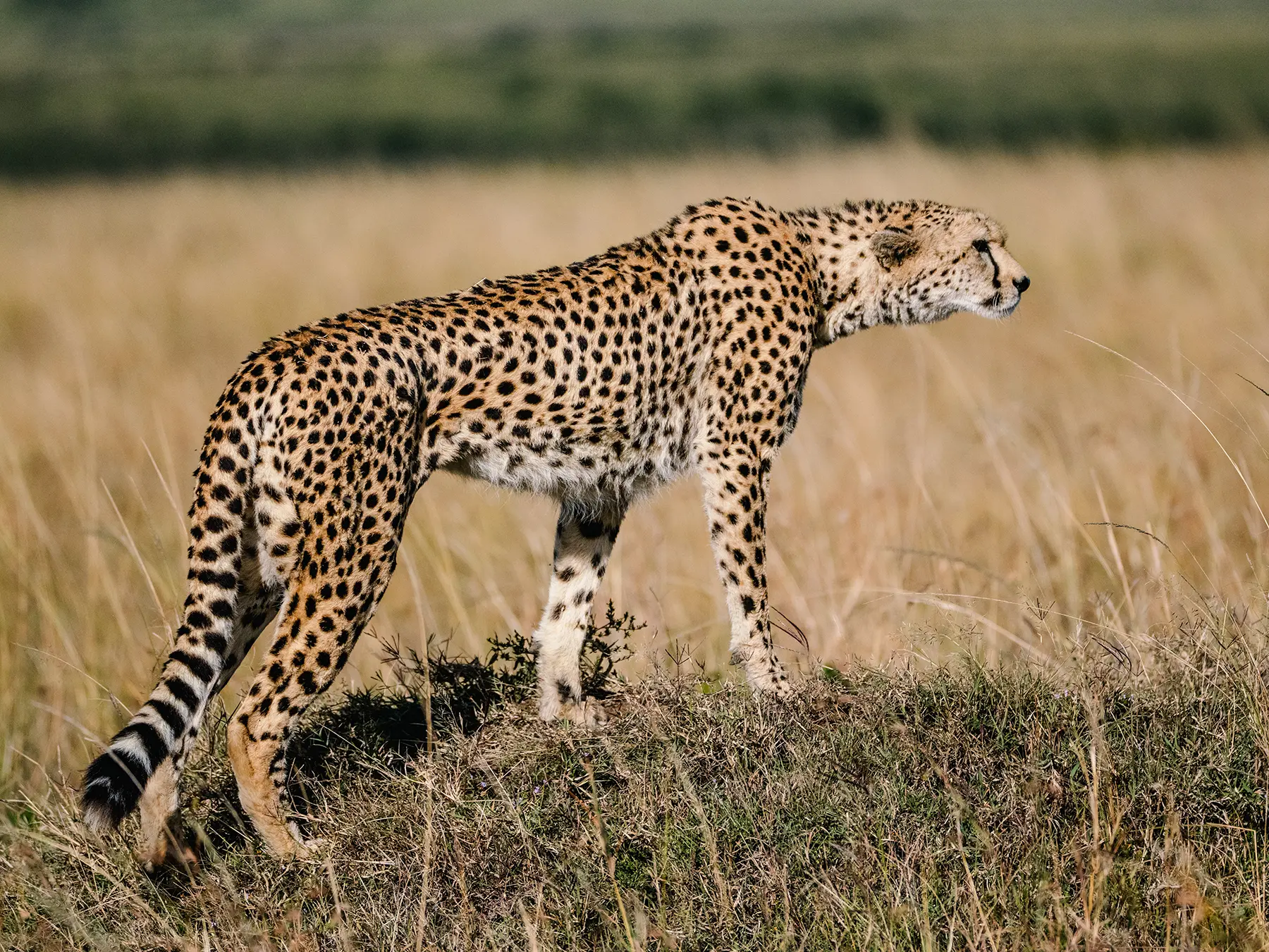
Days 3 and 4 provide two uninterrupted full game drive days. A 6 AM sunrise departure catches mist above the Mara River, big cats moving from overnight hunting positions, and the golden morning light that produces Kenya’s best wildlife photography. Day 3 focuses on the Mara Triangle and the river crossing points. In July–October peak season, wildebeest gather at the bank and the guide positions the vehicle to watch the tension build before a potential crossing. Crossings are never guaranteed — the herds may turn back multiple times — but the sound of 10,000 animals calling and the crocodile movement in the current creates a spectacle even when no crossing occurs. Day 4 targets the cheetah territory east of the Mara airstrip. Resident cheetah use these open plains year-round, and early morning scanning from elevated ground often locates a coalition or a mother with cubs within the first 30 minutes.
Both full Mara days should include at least one evening drive running until last light at 6:30 PM. The Mara’s evening light — low sun, warm golden tone, long shadows — creates the most photogenic conditions of the day and the period when lion prides start moving toward their evening activity. Camp managers arrange bush breakfasts during morning drives — a folding table set up at an acacia grove with hot coffee, fresh bread, and fruit delivered in an insulated box. African Wild Trekkers ensures both Mara game drive days include this bush breakfast option as a standard part of the itinerary.
Days 5 and 6: Amboseli National Park
Day 5 starts with a morning game drive at the Mara before the 11 AM departure flight to Wilson. From Wilson, a road transfer of three to four hours reaches Amboseli before dark. The elephant encounter begins before camp — herds of 30 to 60 animals cross the road between the park boundary and the main camp area throughout the afternoon. Accommodation options include Tortilis Camp, Amboseli Serena, and Ol Tukai Lodge, all positioned well for the park’s elephant and Kilimanjaro experience. Day 6 delivers Amboseli’s signature moment — a 6 AM departure when Kilimanjaro’s snow cap stands clear above the elephant herds before cloud covers the mountain by 10 AM most mornings. The park’s 1,200-strong elephant population concentrates at the swamp edge in dense, photogenic groups during the early morning hours.
Amboseli’s clear morning photography conditions are reliable — elephants in the foreground at 15 to 20 metres, the Enkongo Narok swamp behind them, and Kilimanjaro occupying the upper third of the frame in a composition the landscape arranges naturally every clear morning from dawn to 10 AM. The afternoon drive on Day 6 covers the drier areas south of the swamp, where lion and cheetah concentrate in the thornbush. Amboseli’s birdlife rewards attention at the swamp edge — African fish eagle, yellow-billed stork, sacred ibis, and flamingo on the dry lake bed in good rainfall years all appear during afternoon drives that focus purely on mammals tend to miss.
Day 7: Nairobi Return and Departure
Day 7 manages the Amboseli-to-Nairobi return and international departure. The road transfer takes three to four hours, arriving by midday for a final Karen lunch before the airport transfer to JKIA. Most long-haul Kenya flights depart between 9 PM and midnight, giving a comfortable afternoon gap before the 7 PM airport check-in. African Wild Trekkers schedules a Day 7 afternoon at the Karen Blixen Museum (90 minutes including the film, house tour, and garden walk) or a Kazuri Beads workshop visit for travelers who skipped Day 1 sightseeing. The adjacent Karen Blixen Coffee Garden provides an excellent final Nairobi lunch in a colonial farm setting — a specifically Kenyan cultural note before the international flight home. Travelers with afternoon departures skip Nairobi activities and transfer directly to JKIA via the Nairobi bypass, reaching the terminal in 90 minutes from Amboseli road.
Variations on the 7-Day Kenya Safari
Replacing Amboseli With Samburu
Travelers who have visited Amboseli before or who specifically want Kenya’s northern endemic species can substitute Samburu National Reserve for Amboseli without changing the Mara component or Nairobi logistics. Samburu sits north of Nairobi at 45 minutes flight time from Wilson. A domestic connection via Wilson between the Mara and Samburu takes two to three hours total including the transit wait. Samburu’s endemic Samburu Five — gerenuk, Grevy’s zebra, reticulated giraffe, beisa oryx, and Somali ostrich — do not occur at any Kenya destination south of the equator. The Ewaso Ng’iro River’s elephant and crocodile encounters add a different riparian dynamic from Amboseli’s lake and swamp setting. African Wild Trekkers recommends this variant to returning Kenya visitors who experienced Amboseli on a previous trip.
A third option combines the Maasai Mara with Lake Nakuru — two nights at the Mara followed by two nights at Nakuru creates a Rift Valley circuit adding flamingo, white and black rhino, Rothschild giraffe, and yellow fever tree forest to the Mara’s predator focus. Lake Nakuru sits two hours from Nairobi by road and three hours from the Mara via the A104 highway — no domestic flight needed, a private vehicle connects the two parks in a morning transfer. At $53 per person per day, Nakuru is Kenya’s most affordable major park entry fee. African Wild Trekkers designs all three 7-day variations based on specific wildlife priorities: the standard Mara-Amboseli circuit, the Mara-Samburu northern endemic variant, and the Mara-Nakuru Rift Valley circuit.
Plan Your Safari
A 7-day Kenya safari itinerary requires advance booking of Maasai Mara conservancy accommodation, domestic flights between Wilson and the Mara and Amboseli, and Nairobi hotels on arrival and departure nights. Peak season availability at sought-after Mara conservancy camps disappears months ahead. African Wild Trekkers builds the complete 7-day circuit with all logistics confirmed before you fly.
Your 7-day Kenya package includes the Nairobi airport transfer and hotel, Wilson Airport flights to the Mara and Amboseli, full-board accommodation at both parks, a private 4×4 game drive vehicle, an experienced guide, and all park and conservancy fees throughout.
Contact African Wild Trekkers at africanwildtrekkers.com/contact with your travel dates and we will send a complete 7-day Kenya safari itinerary with pricing and availability within 24 hours.