10-Day Kenya Safari Itinerary: The Complete Kenya Wildlife Circuit
The best 10 day Kenya safari itinerary connects four distinct ecosystems — the Maasai Mara, Amboseli, Samburu, and optionally the Kenyan coast — in one country. Together they deliver open savanna big cats, Kilimanjaro elephant herds, semi-arid northern endemic species, and Indian Ocean marine wildlife within a single trip. Ten days allows three full nights at each primary safari destination without compressing any park to a single-night stop that fails to reveal the animals’ daily rhythms. African Wild Trekkers designs 10-day Kenya safari itineraries using domestic flights between all destinations, turning transfer days into quick hops rather than eight-hour road journeys. The result is eight full game drive days out of ten nights — an outstanding wildlife-to-travel ratio that domestic aviation makes possible.
Days 1 Through 4: Nairobi and Maasai Mara
Arrival and Mara Transfer
Day 1 brings the international arrival at Nairobi JKIA and an overnight at a Karen hotel to recover from the long-haul flight before the domestic connection. The David Sheldrick Wildlife Trust elephant orphanage (11 AM entry) fills the Day 1 afternoon if the international flight arrives before noon — an engaging conservation introduction that sets the tone for the safari days ahead. Day 2 flies from Wilson Airport to the Maasai Mara on the 8 AM or 11 AM Safarilink service, arriving with time for a camp check-in and a late morning game drive before the midday rest. The 10-day itinerary uses a private conservancy — Mara North, Olare Motorogi, or Naboisho — for the Maasai Mara leg, where vehicle limits at sightings immediately distinguish conservancy game drives from the public reserve experience at sightings shared with buses from public camps.
Days 2, 3, and 4 in the Maasai Mara provide three full game drive days. Depth of time transforms the experience — by Day 3, the guide knows which cheetah coalition hunted the previous afternoon, where the elephant families drink, and which lion pride has cubs visible at the den site. Day 3 becomes a targeted wildlife visit rather than a general exploration. The Mara River crossing opportunity peaks between July and October. A 10-day safari timed for this window allocates three Mara days to maximize crossing probability — a group spending three mornings at the crossing points typically observes at least one significant crossing during peak season. African Wild Trekkers guides brief clients on crossing signs so the group reads the situation themselves rather than waiting passively for the guide’s signal.
Wildlife Depth Over Three Mara Nights
Three Maasai Mara nights deliver significantly more wildlife depth than two nights allow on a compressed seven-day itinerary. The extra day reveals behavioral patterns that shorter stays cannot establish. A leopard resting in a specific fig tree at dawn on Day 2 may return to the same tree on Day 4’s morning drive — a predictable repeat the guide positions the vehicle for in advance. Lion prides with cubs return to the same shaded kopje areas during midday heat consistently enough that a guide visiting the area on Day 2 knows exactly where to find active cubs on Day 3 afternoon. The depth of wildlife knowledge that develops over three consecutive days with the same guide at the same destination is one of the strongest arguments for fewer destinations with more nights rather than more parks with one night each.
Camp activities beyond game drives add value over three Mara nights: a guided Maasai cultural village visit, a bush breakfast at the riverbank, a sundowner at a viewpoint hill, and a hot air balloon safari at dawn if the budget allows. The Mara balloon costs $450–$500 per person, lasts 90 minutes at sunrise, and delivers an aerial perspective — the visual scale of the ecosystem from elevation, the movement patterns of herds from above, the silent drift over sleeping lions — that the ground-level game drive cannot replicate. African Wild Trekkers books the balloon for any client who requests it and coordinates the pre-dawn departure timing with the lodge kitchen for the hot post-landing breakfast.
Days 5 and 6: Amboseli National Park
Maasai Mara to Amboseli Transfer
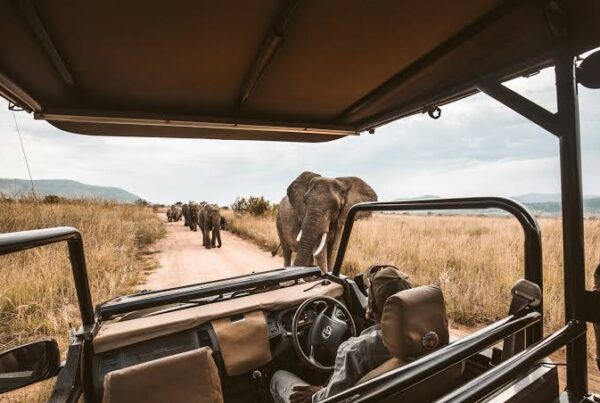
Day 5 departs the Mara on the morning game drive before the 11 AM departure flight to Wilson, then connects by road to Amboseli — a four-hour drive arriving before dark. The elephant encounter begins on the approach road before camp, with herds of 30 to 60 animals crossing between the park boundary and the main camp area throughout the afternoon. Amboseli accommodation options range from Tortilis Camp (the most iconic property with direct Kilimanjaro views) to Ol Tukai Lodge (mid-range at the swamp edge) to Amboseli Serena (comfortable and centrally located for multiple park habitats). Two nights allows one full game drive day plus partial drives on arrival and departure days.
Day 6 is the full Amboseli day. The 6 AM departure catches Kilimanjaro above cloud cover before the mountain disappears most mornings by 10 AM. Herds of 50 to 100 elephants gather at the Enkongo Narok and Longinye swamps in the early morning, providing Kenya’s most concentrated elephant viewing at its most photogenic. The afternoon drive explores the drier park edges where Amboseli’s lion prides use thornbush for hunting cover — the guides know approximately 50 resident lions individually by face and behavior. The Amboseli sunset, viewed from an elevated eastern park boundary vantage point, silhouettes yellow fever trees and flat-topped acacias against an orange and purple western sky — a visual conclusion every traveler mentions in their trip summary as one of Kenya’s best moments.
Days 7 Through 9: Samburu National Reserve
The Samburu Five and Northern Kenya
Day 7 transfers from Amboseli to Samburu by domestic flight — 45 minutes to the Sasaab or Elephant Bedroom airstrips. The landscape change is immediate: Amboseli’s semi-arid lake bed and Kilimanjaro backdrop gives way to Samburu’s acacia scrubland along the permanent Ewaso Ng’iro River. The northern Kenya atmosphere creates a safari character distinct from anything south of the equator. Samburu’s endemic Samburu Five — gerenuk, Grevy’s zebra, reticulated giraffe, beisa oryx, and Somali ostrich — appear in the first afternoon drive with reliable frequency. The gerenuk’s ability to stand on its hind legs while browsing acacia branches is unique among all African antelopes and consistently surprises travelers who have only read about this behavior before seeing it live.
Three nights at Samburu build the same behavioral depth that the Mara’s three nights created. By Day 9, the guide knows which elephant bulls reach the river in the early morning, which leopard uses the riverine fig trees, and where the resident lion pride denns this season. Experienced Samburu guides combine superb tracking with botanical, ornithological, and ecological knowledge that makes each drive more than a list of species sightings. The Ewaso Ng’iro River provides the single most productive viewing location — waterfall pools draw elephant, buffalo, crocodile, African fish eagle, and the endemic species simultaneously in a scene of extraordinary wildlife density along a 100-metre stretch of shoreline. African Wild Trekkers positions Samburu accommodation along the Ewaso Ng’iro to maximize access to this riverfront concentration.
Kenya Coast Addition
The 10-day circuit can extend to include the Kenyan coast — Diani Beach, Watamu, or Lamu Island — if the total trip stretches to 12–14 days. Connecting from Samburu to the coast requires a Samburu-to-Wilson flight, one Nairobi overnight, and a Nairobi-to-Mombasa flight the following morning. Diani Beach provides the most accessible beach resort experience — a one-hour flight to Ukunda airstrip, a five-minute taxi to the beach hotels, and Indian Ocean snorkeling within 200 metres of most properties. Watamu offers a smaller, less developed alternative with Watamu Marine National Park providing excellent snorkeling and seasonal whale shark encounters. Lamu Island’s Swahili heritage, motorboat-free streets, and 14th-century stone town architecture deliver a coastal culture encounter that rewards the longer journey required to reach it.
Position the coast extension as a genuine stay of at least three nights rather than a rushed final day — less than three nights at any Kenya coast destination produces an impression rather than a satisfying beach experience, particularly for travelers transitioning from the high stimulation of three wildlife destinations in succession. African Wild Trekkers designs the coast extension as an optional add-on confirmed at booking time, with coastal accommodation coordinated alongside the safari components so availability aligns across all destinations for the same travel period. The Kenya coast beach season of June to October and January to March aligns well with both Maasai Mara and Samburu peak wildlife viewing months.
Day 10: Return to Nairobi
Samburu Departure and Final Nairobi Afternoon
Day 10 departs Samburu on the morning flight to Wilson Airport, arriving in Nairobi by midday for a final afternoon before the evening JKIA departure. The afternoon suits a visit to the African Heritage House in Langata — a cultural repository of East African art and textile — or lunch at Carnivore Restaurant’s famous mixed-grill near Wilson Airport. Travelers who stored baggage at a Karen hotel since Day 1 collect it during the Wilson-to-JKIA transfer, and African Wild Trekkers coordinates this baggage handover as part of the Day 10 transfer logistics. JKIA long-haul departures to Europe typically leave between 10 PM and midnight, and the 7 PM airport transfer allows several comfortable Nairobi afternoon hours before check-in. The JKIA departure process requires three hours before the flight for security, check-in, immigration, and boarding.
Plan Your Safari
The 10-day Kenya safari itinerary covering Maasai Mara, Amboseli, and Samburu requires advance booking of three sets of accommodation, domestic flights between all destinations, and Nairobi airport transfers. Peak season availability disappears months ahead at the best conservancy and lodge options. African Wild Trekkers coordinates the full 10-day circuit as a single managed booking.
Your 10-day Kenya package includes the Nairobi arrival hotel, all domestic flights between destinations, full-board accommodation at the Maasai Mara, Amboseli, and Samburu, a private 4×4 game drive vehicle with an experienced guide at each park, and all national park and conservancy fees.
Contact African Wild Trekkers at africanwildtrekkers.com/contact with your travel dates and we will send a complete 10-day Kenya safari itinerary with costs and availability within 24 hours.