The Best Time to Visit the Serengeti
Understanding the Serengeti’s Seasonal Calendar
Why There Is No Single Best Month
The Serengeti National Park offers a different caliber of exceptional wildlife experience in every month of the year, with the optimal visit time depending entirely on which specific spectacle a traveler prioritizes above the others. The wildebeest river crossings in the north from July through October attract the highest international visitor numbers and the most dramatic individual wildlife moments of the annual cycle. The calving season on the southern plains from January through March produces the most ecologically significant events of the cycle and rivals the crossings for sheer wildlife density and predator activity. The quieter months of May through June offer the Grumeti River crossings, excellent lion and leopard sightings in the Seronera valley, and accommodation rates that fall significantly below peak season without any proportional reduction in wildlife quality.
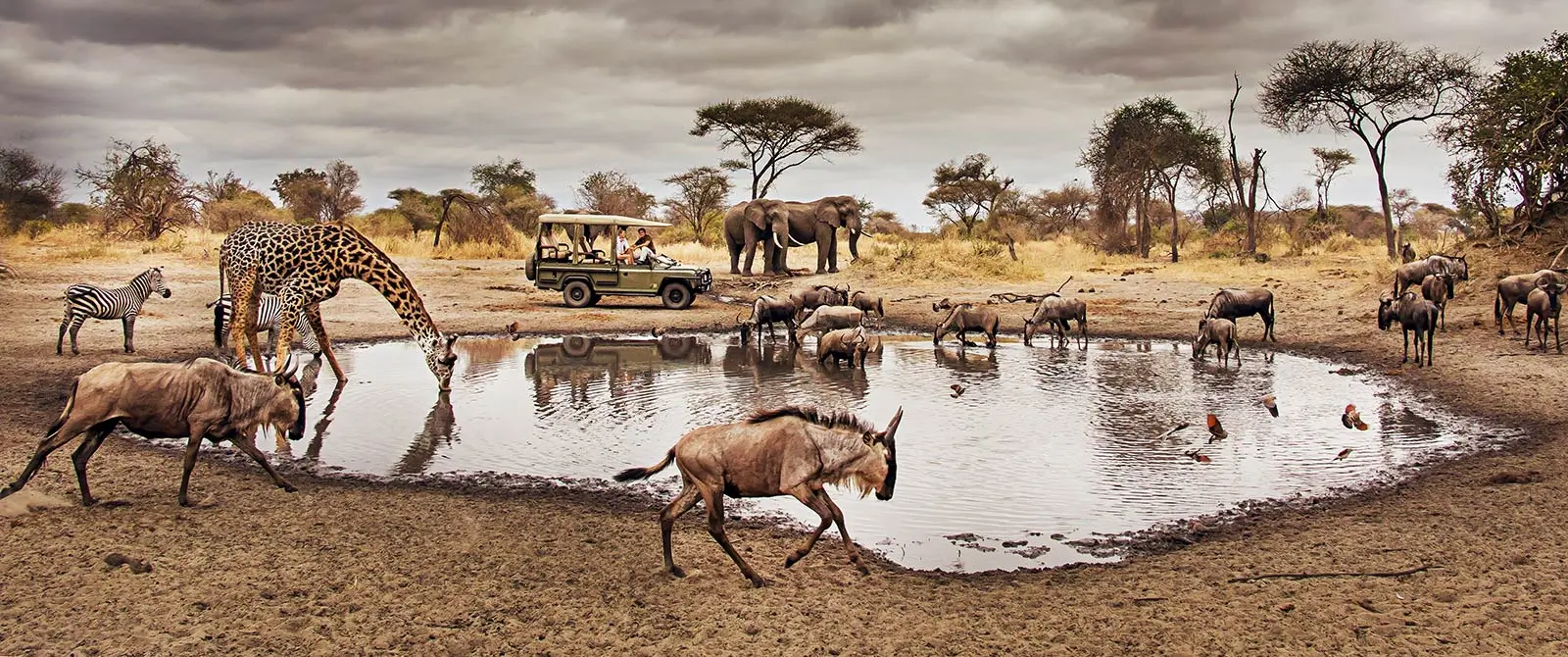
The Serengeti’s permanent wildlife population — lions, leopards, elephants, buffalo, cheetahs, and the full supporting cast of plains and forest species — remains in the park year-round regardless of where the wildebeest herd is located at any given time. This means that a Serengeti visit in March or November, which migration-focused marketing presents as off-season, still delivers the wildlife density benchmarks that make the Serengeti famous regardless of the annual herd’s specific location within the ecosystem. For travelers whose primary interest is predators rather than the wildebeest spectacle specifically, the distinction between peak and shoulder season becomes largely irrelevant—lions, leopards, and cheetahs in Seronera are equally present and equally active in April as in August.
January and February: Calving Season on the Southern Plains
January delivers the Serengeti’s calving season across the short-grass plains of the park’s southern section and the adjacent Ngorongoro Conservation Area’s Ndutu basin. Between 400,000 and 500,000 wildebeest calves are born during the six to eight-week peak of calving, flooding the plains with newborns that predators target and that produce the drama of natural selection in compressed time. Cheetahs in the southern Serengeti demonstrate hunting specialisms during calving that the rest of the year’s prey composition does not require—targeting individual calves in the first days of life when their sprint speed cannot match a pursuing cheetah’s minimum pace. Lion prides with cubs in the southern section experience a temporary abundance that creates the relaxed, well-fed pride behavior that photographers find most accessible. February continues the calving peak and begins the transition toward the herd’s northwestward movement as the long rains approach.
Weather in January and February on the southern Serengeti is warm and largely dry with afternoon thunderstorms building over the Ngorongoro highlands that provide dramatic sky backdrops for landscape photography. The short-grass plains in the calving area are among the most open and flat terrain in the entire Serengeti, producing wide-angle photography opportunities and unobstructed wildlife sightings across distances of several kilometers that the more vegetation-covered central and northern sections cannot provide. Accommodation in the Ndutu area during calving season fills well in advance—the seasonal camps that operate exclusively during this period open limited inventory that peak-season advance booking from calving enthusiasts consumes quickly, and late inquiries for January and February find availability concentrated at secondary camps rather than the best-positioned properties.
Month-by-Month Guide: March Through December
March, April and May: Transition and Western Corridor
March brings the long rains to the southern Serengeti and pushes the wildebeest herd northwestward into the central and western sections of the park. The rains create challenging road conditions in the park’s south that four-wheel-drive vehicles navigate without serious difficulty on the established track network, and the greening vegetation produces a visual transformation that makes March and April among the most photographically interesting months for landscape images despite the rain-reduced visibility. Accommodation rates drop significantly from the January-February calving peak in March and April, reflecting the difficulty that rain creates for logistics rather than any reduction in wildlife quality for travelers comfortable with wet-season conditions. The Seronera Valley’s permanent wildlife—specifically its high-density leopard population—remains accessible and productive regardless of the rain’s impact on the southern plains.
May sees the migration entering the western corridor between Seronera and the Grumeti Reserve, with the herd building toward the Grumeti River crossings that begin in late May and peak through June. The western corridor’s crossings differ from the Mara’s northern crossings in scale—fewer animals cross at any single point, and the crocodile population in the Grumeti is smaller than the Mara River’s enormous aggregation—but the drama and photographic quality of a Grumeti crossing equal or exceed the Mara experience for travelers who witness a full event. May accommodation rates in camps positioned for western corridor access represent some of the year’s best value, with camp quality equivalent to peak season at 30 to 40 percent lower rates, reflecting the lower overall visitor numbers in this transition month.
June and July: Building Toward Peak Season
June delivers the migration’s northward movement through the western corridor and into the northern Serengeti in a progression that guides monitoring the herd’s daily advance, which can be tracked with reasonable accuracy across the month. The southern Serengeti in June has transitioned from the long rains’ mud to firm, dry tracks that make the full park accessible for the first time since February, and the combination of this full access with lower visitor numbers than the July peak produces excellent conditions for travelers who value uncrowded game drives. The Seronera Valley’s leopard population achieves its most reliable sighting window in June as the valley’s resident cats emerge from the rain season’s reduced activity patterns and resume the vehicle tolerance that Seronera’s decades of tourism have produced in the Serengeti’s most studied leopard population.
July marks the Serengeti’s transition into its peak international season as the wildebeest herd reaches the northern Serengeti and begins pressing against the Mara River’s Tanzanian bank. Northern Serengeti camps at Kogatende fill their peak occupancy from July onward, with river crossing viewing available from the Tanzanian side at positions complementary to—and sometimes less crowded than—the Kenyan side’s crossings. The dramatic landscapes of the Lamai Wedge and the northern Serengeti’s kopje country provide a different photographic environment from the Mara’s open plains, with granite outcrops that frame wildlife against more complex backgrounds and that serve as territorial reference points for the resident lion prides whose territories the migration passes through annually.
August Through December: Peak Season and Beyond
August represents the Serengeti’s peak visitor month—river crossings in the north at maximum frequency, all camp types across the park at or near full occupancy, and accommodation rates at their annual high point across every zone from Seronera to the northern kopjes. The value that August provides for this premium is genuine — the August Mara River crossings from the Tanzanian side can be spectacular, the resident predator population maintains high activity alongside the migrating herds, and the dry season’s clear air produces the visibility and blue sky conditions that safari photography prefers. September continues the peak season conditions at slightly lower rates as the first wave of peak visitors departs and the remaining weeks before October deliver the last intensive crossing season before the southward return begins.
October sees the migration beginning its southward retreat as short rains arrive and the Serengeti’s dry season vegetation begins to green. The southward Mara River crossings continue through October and early November before the herd disperses across the central and western Serengeti on its transit toward the southern calving grounds. November and December in the central Serengeti deliver good game viewing at lower rates than peak season, with the Seronera Valley’s permanent wildlife and recovering vegetation creating conditions that resident wildlife enthusiasts prefer over the migration-season concentrations of July through October. December sees a brief rate increase around Christmas and New Year before the early January calving season visitors begin the annual cycle again.
Practical Seasonal Planning
Choosing Your Serengeti Timing
Matching Your Priorities to the Calendar
Choosing the right Serengeti timing requires honest prioritization between the specific spectacles the different seasons offer rather than defaulting to the August peak because it attracts the most marketing attention. Calving season travelers should target January and February, accepting higher rates than shoulder months and the need to book Ndutu area camps well in advance. River crossing enthusiasts should target late July through September for the Mara River’s peak crossing frequency while building flexibility into dates that allow adjustment based on the herd’s actual position rather than a fixed calendar prediction. Budget-conscious safari travelers who prioritize quality over specific spectacle should target May through July for the Grumeti crossings’ drama at shoulder pricing or November for resident wildlife at the year’s most competitive rates.
Advance booking lead times vary dramatically by month and camp zone. Northern Serengeti river crossing camps—particularly the most sought-after properties in the Lamai Wedge—fill twelve to eighteen months ahead for August dates, with July and September filling on a six- to twelve-month lead time. Southern Serengeti calving season camps book at similar lead times for their January-February peak. Central Serengeti camps and the western corridor properties maintain somewhat shorter booking windows but still recommend advance planning of six to nine months for specific date requirements during their respective peak windows. The flexibility to shift dates by two to three weeks significantly extends available inventory at all camps and seasons, with the Saturday-to-Saturday peak week pattern creating compression that the midweek traveler escapes entirely.
Plan Your Safari
Choosing the right Serengeti timing, zone, and camp from the park’s enormous range of seasonal options requires knowledge of current conditions, camp availability, and the migration’s recent behavior patterns that general advice cannot replace. African Wild Trekkers tracks Serengeti conditions across all zones throughout the year and advises guests on the specific timing and camp combination that delivers their wildlife priorities at the best available value.
The package covers Serengeti camp accommodation in the appropriate zone for your target season, Tanzania park fees, internal flights from Nairobi or Kilimanjaro Airport, visa assistance, and specialist guide briefings on migration position relative to your camp. Multi-zone itineraries that combine calving plains, Seronera Valley, and northern river crossings in a single extended visit are designed as single-package logistics.
Contact African Wild Trekkers at africanwildtrekkers.com/contact with your available travel window and Serengeti priorities, and we will design your Tanzania itinerary within 24 hours.