Tanzania Travel Guide 2026: Visa, Health, Money and Best Time to Go
Tanzania rewards visitors who arrive prepared. The country is straightforward to navigate once you understand the visa process, vaccination requirements, currency situation, and seasonal patterns that determine what wildlife you encounter and where. In 2026 Tanzania remains one of Africa’s most welcoming destinations for international visitors, with a well-established tourism infrastructure, English-speaking guides, and a government that actively protects the wild landscapes that draw travellers from across the world. This guide covers every practical detail you need before you board the plane.
Entry Requirements and Visas for Tanzania in 2026
Who Needs a Visa
Countries Requiring a Visa
Most nationalities require a visa to enter Tanzania, including citizens of the United States, United Kingdom, Canada, Australia, most European countries, and many others. Tanzania offers visas on arrival at Julius Nyerere International Airport in Dar es Salaam and at Kilimanjaro International Airport near Arusha, but most visitors now apply online through the e-visa portal before departure. The online application reduces time at immigration, avoids the risk of processing delays at busy border stations, and provides a confirmed approval to show at the gate. In 2026 Tanzania has expanded its e-visa system to cover more nationalities, so check the Tanzania Immigration Department’s official website before assuming your country still qualifies for visa on arrival.
The standard tourist visa costs USD 50 for most nationalities and permits a stay of up to 90 days. Multiple-entry visas cost USD 100 and allow travellers to cross into Kenya and return — relevant for anyone doing a combined Kenya-Tanzania safari or planning to visit Zanzibar and then travel to the mainland. The East Africa Tourist Visa, available for USD 100, covers Kenya, Uganda, and Rwanda in a single document but does NOT include Tanzania — a common point of confusion that catches travellers off guard.
Visa-Free Countries
A handful of nationalities enter Tanzania without a visa, including citizens of several East African Community member states. Citizens of Burundi, Kenya, Rwanda, South Sudan, and Uganda currently enter without visa requirements under EAC agreements, though the situation evolves and checking before travel is always advisable. Hong Kong and Macau residents have historically received visa-free access, but rules for special administrative regions change periodically. Citizens of Singapore, Malaysia, and the Philippines have in the past received visa on arrival at no cost, but travellers should verify current rules directly with the Tanzania Immigration Department or their nearest Tanzanian embassy before departure.
Even visa-free travellers need a return ticket, evidence of sufficient funds, and travel insurance to satisfy immigration officers at entry points. Tanzania’s immigration officers take their responsibilities seriously, and arriving without documentation of onward travel can result in delays or refusal at the port of entry. African Wild Trekkers sends all clients a full pre-departure information pack covering entry requirements for their specific nationality as part of the booking confirmation.
Health and Vaccinations
Required and Recommended Vaccinations
Yellow fever vaccination is a requirement for travellers arriving from yellow fever endemic countries, and Tanzania’s immigration officers check yellow fever certificates at the port of entry when applicable. Travellers arriving directly from Europe, North America, or Australia do not need a yellow fever certificate unless they transited through an endemic country in the preceding days. Always carry your yellow fever certificate in the same bag as your passport so it is immediately accessible when requested. The certificate remains valid for life following the 2016 WHO ruling that removed the ten-year expiry from international regulations.
Beyond yellow fever, the recommended vaccinations for Tanzania in 2026 include hepatitis A, hepatitis B, typhoid, tetanus, and polio boosters. Rabies pre-exposure vaccination is worth considering for travellers spending time in rural areas or doing activities that bring them close to animals. Your travel health clinic or GP can advise on the full schedule, and it is worth starting the vaccination process at least six weeks before departure to allow time for multi-dose courses. Travellers who have not previously received meningitis vaccination should consider the ACWY vaccine before visiting Tanzania.
Malaria Prevention in Tanzania
Tanzania is a malaria-endemic country, and malaria prevention is an essential part of preparing for any visit. The Tanzanian mainland carries year-round malaria risk, with transmission higher during the wet seasons. Zanzibar and the northern highlands at altitude — particularly around Ngorongoro — carry lower risk, but most travel health specialists recommend antimalarial prophylaxis for all Tanzania travel regardless of the specific itinerary. The three main options in 2026 are atovaquone-proguanil (Malarone), doxycycline, and mefloquine (Lariam), each with different dosing schedules and side effect profiles. Your travel health clinic will advise on which suits you best.
In addition to prophylaxis, insect repellent containing DEET and long-sleeved clothing at dawn and dusk reduce bite risk significantly. Most safari camps provide mosquito nets over beds, and many also run mosquito coils or plug-in repellent devices in rooms. Game drives at sunrise and sunset happen during peak mosquito activity, so applying repellent before entering the vehicle is a simple habit that makes a real difference. African Wild Trekkers includes malaria guidance in all pre-departure documentation and can recommend the latest travel health clinic advice for your specific departure country.
Money and Currency in Tanzania
Tanzanian Shilling and USD
Using Cash in Tanzania
Tanzania’s official currency is the Tanzanian shilling (TZS), but US dollars are widely accepted — and often preferred — at tourist establishments, safari camps, national park entry points, and hotels. In 2026 the exchange rate hovers around TZS 2,500 to USD 1, though rates fluctuate and vary between exchange bureaux. ATMs in Arusha, Dar es Salaam, and Stone Town dispense Tanzanian shillings and sometimes accept international Visa and Mastercard cards, but rural areas and national park gates rarely have working ATMs. Arriving with sufficient USD cash is strongly advisable for any trip that extends beyond the major cities.
US dollar notes printed before 2009 face widespread refusal in Tanzania because older serial numbers have been associated with counterfeiting. Banks and exchange bureaux check note dates closely. Bring new, clean, undamaged USD notes and you will have no problems. Smaller denominations — USD 1, USD 5, USD 10, and USD 20 — are useful for tips, small purchases, and village markets. Large bills of USD 100 are accepted at most hotels and safari operators but can be difficult to break into smaller change in rural areas.
Cards and Electronic Payments
Credit and debit cards work reliably at Zanzibar resorts, larger Arusha hotels, and some safari operators, but do not rely on card payment as your primary method for a mainland Tanzania safari. Many camps in national parks charge a card surcharge of 3 to 5 percent, and some accept only cash for park fee settlements. M-Pesa mobile money is widespread among Tanzanians but not set up for international visitors in the same way it works in Kenya. Notify your bank before travelling so your card is not blocked on first use abroad, and always have enough cash to cover at least three days of expenses in case of connectivity issues or ATM outages.
Travellers cheques are essentially obsolete in Tanzania and will not be accepted at most exchange bureaux or hotels. Prepaid travel money cards loaded with USD are a reasonable option for accessing cash at Arusha ATMs, but they are not a replacement for carrying a reasonable cash reserve. African Wild Trekkers quotes and collects safari balances in USD and can advise each client on how much local cash to carry for their specific itinerary based on what is and is not included in their package.
Best Time to Visit Tanzania
Dry Season and Peak Safari Months
June to October: The Best Safari Window
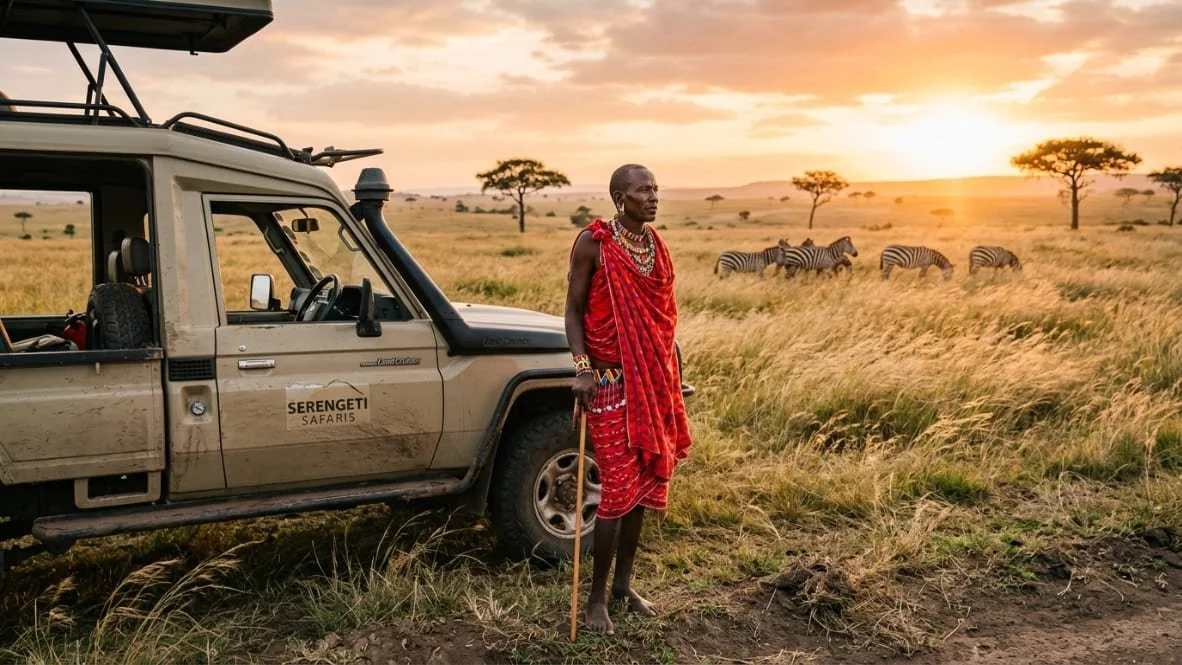
The dry season from June through October is Tanzania’s peak safari period and for good reason. Wildlife concentrates around permanent water sources, vegetation thins as the grasses dry back, and the Great Migration’s dramatic Mara River crossings peak between July and September. Temperatures are comfortable, nights cool pleasantly in the highlands, and the roads through the parks are at their most passable. This is when you see the Serengeti at its most dramatic — vast columns of wildebeest and zebra moving through golden grass, with lions, cheetahs, and wild dogs hunting the margins.
The trade-off for peak season is cost and crowds. Popular camps fill months in advance, and park roads near active game sightings attract multiple vehicles. Booking twelve to eighteen months ahead for a June-October Tanzania safari is not excessive for the most sought-after camps. African Wild Trekkers recommends the shoulder months of June and October for travellers who want excellent conditions with marginally fewer vehicles than the July-August peak. Both months deliver superb game viewing at slightly more accessible rates than the absolute high season.
January to March: Short Dry Season and Calving
January through March brings Tanzania’s short dry season and one of its most underrated wildlife spectacles — the wildebeest calving season in the southern Serengeti. Up to half a million calves drop within a few weeks during January and February, attracting every predator in the ecosystem. Cheetahs, hyenas, lions, jackals, and crocodiles all take advantage of the abundance. The calving grounds in the Ndutu area at the border of the Serengeti and Ngorongoro Conservation Area offer intimate, close-up viewing of predator-prey interactions that rival the river crossings in intensity.
This period also sees fewer visitors than the June-October high season, which means more competitive pricing and less congestion on game drives. The landscape is green and photogenic from the long rains that end in December, and migratory birds arrive in great numbers. Zanzibar’s weather is excellent during January through March, making this an ideal time for a combined safari-beach trip. African Wild Trekkers runs dedicated calving season itineraries for clients who specifically want to experience this extraordinary event.
Plan Your Safari
Tanzania travel preparation covers visas, vaccinations, cash, and the seasonal calendar — and the right timing for your trip depends on what you most want to see. African Wild Trekkers plans Tanzania safaris around migration patterns, calving season, and your specific dates to ensure your itinerary places you in the right park at the right time. The team handles booking confirmation paperwork that includes a full pre-departure checklist covering every item in this guide.
Every African Wild Trekkers Tanzania package includes internal coordination — airport transfers, park entries, accommodation, guide, and vehicle — in a single confirmed itinerary. You arrive knowing every detail of your journey from the moment you land at Kilimanjaro or Julius Nyerere International Airport to your departure gate. The team stays reachable throughout your trip in case any logistical question arises on the ground.
Contact African Wild Trekkers at africanwildtrekkers.com/contact with your Tanzania travel dates and nationality and we will confirm visa requirements and build your personalised itinerary within 24 hours.