Tsavo Lions History: The Man-Eaters That Stopped a Railway
Tsavo lions history is one of Africa’s most famous wildlife stories. In 1898, two maneless male lions killed railway workers during construction of the Uganda Railway bridge over the Tsavo River.
The attacks stopped construction for around nine months. Colonel John Henry Patterson later hunted and killed both lions. He documented the events in his 1907 book, The Man-Eaters of Tsavo.
Today, the two lions are preserved at the Field Museum in Chicago. Their story continues to attract scientists and safari visitors because of its historical and biological importance.
However, Tsavo lions history is more than a dramatic human-wildlife conflict story. Research into the lions has revealed important information about predatory behaviour, genetics, and mane development.
Scientific studies of the preserved skulls used chemical isotope analysis to estimate the number of victims. Research suggested the actual number was lower than Patterson’s original claim, creating ongoing debate.
Tsavo Lions History Science
Maneless Tsavo Lions
One of the most important discoveries from Tsavo lions history is the unusual lack of manes among adult males.
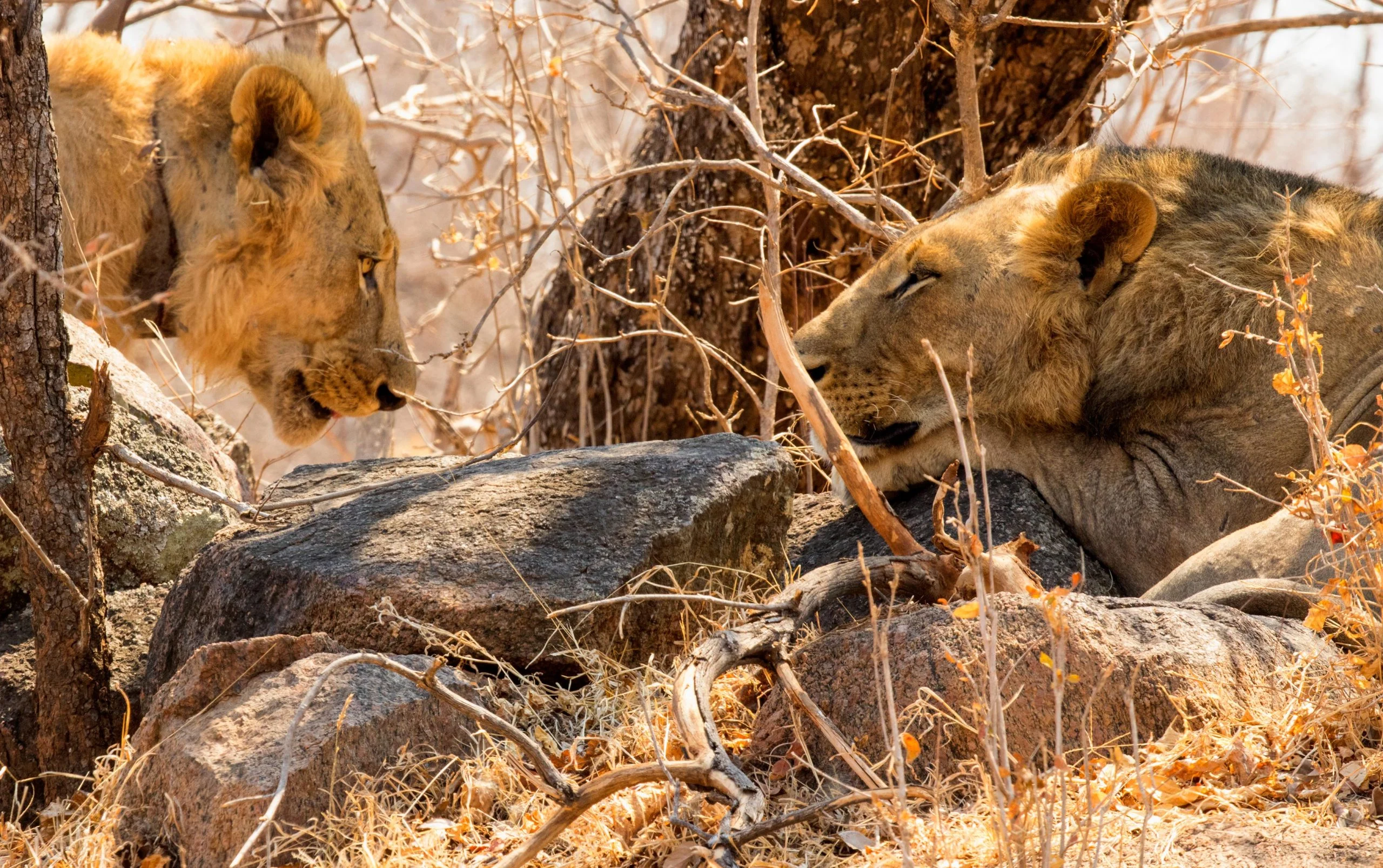
The two 1898 man-eaters were fully grown males without typical lion manes. Modern Tsavo lions also often show reduced mane growth compared with lions from cooler regions such as the Masai Mara.
Scientists have studied this difference for more than a century. Early theories suggested that Tsavo’s hot climate influenced mane development.
Research by Dr. Peyton West found that temperature and testosterone influence lion mane growth. Males from warmer areas tend to develop smaller manes, while the same lions may grow fuller manes in cooler environments.
This research changed scientific understanding of lion variation across Africa.
Why Tsavo Lions Attacked Humans
The reasons behind the 1898 attacks remain debated. Earlier explanations focused on unique behaviour caused by injury or illness.
Later research found that one lion had a damaged tooth, which may have made hunting normal prey difficult. The other lion showed no clear physical problem.
The most accepted theory is that both lions developed a pattern of hunting humans together. Once human prey became available, the behaviour continued.
Conditions at the railway camp also contributed. Workers had limited protection, camps were poorly secured, and human remains were sometimes buried in shallow graves.
These factors may have allowed the lions to associate humans with food. Today, Tsavo lions history is studied in wildlife conflict management as an example of how human practices can influence predator behaviour.
Tsavo Lions Today
The modern Tsavo lion population includes around 300 lions across Tsavo East and Tsavo West National Parks.
Many Tsavo males continue to show reduced mane development. They are also generally larger-bodied and live in smaller prides than lions from the Masai Mara.
The semi-arid Tsavo environment requires larger territories and different social structures. Therefore, Tsavo lions have adapted differently from lions in richer grassland ecosystems.
Game drives in Tsavo regularly encounter maneless males that represent the continuing legacy of this unique population.
Tsavo Lions History Sites
The Tsavo lions history story can still be explored in the modern landscape.
The Tsavo River bridge area near Voi marks the location of the original railway construction site. The current railway crossing remains close to the historic location.
Visiting this site alongside a Tsavo safari creates a deeper connection between the historical events and the living ecosystem.
The Voi area also connects with Patterson’s original hunting route described in The Man-Eaters of Tsavo.
Reading Tsavo Lions History
Before visiting Tsavo, reading The Man-Eaters of Tsavo provides historical context from Patterson’s perspective.
Bruce Patterson’s The Lions of Tsavo offers a scientific perspective on the original specimens and modern Tsavo lions.
Reading both works helps visitors understand the landscape, the lions, and the continuing research surrounding them.
The original lion specimens can also be viewed at the Field Museum in Chicago. The exhibit includes historical material and scientific information about the Tsavo lions.
Plan Your Safari
Include the Tsavo River bridge area during a Tsavo East or Tsavo West safari. Staying at locations such as Satao Camp or Voi Safari Lodge can provide access to experienced guides with knowledge of Tsavo’s lion history.
African Wild Trekkers designs Tsavo safari programmes combining historical sites with modern wildlife encounters. We arrange experiences that connect the legendary Tsavo lions history with today’s remarkable lion population.
Contact African Wild Trekkers to explore Tsavo lions history on safari. We respond within 24 hours and design Tsavo programmes combining this extraordinary wildlife history with the finest elephant, hippo, and red plains wildlife in southern Kenya.