Leopard Facts: Africa’s Most Elusive Big Cat — Behavior & Where to Find It
The Master of Concealment
Of all Africa’s large predators, the leopard is the one that most frequently makes experienced safari travelers feel genuinely humbled. Lions can be found and followed. Cheetahs hunt in open country where they are visible from enormous distances. Wild dogs are loud, fast-moving, and conspicuous. The leopard is none of these things. It is a solitary, nocturnal, territory-holding master of concealment. can share a landscape with hundreds of daily game drive vehicles and be seen by almost none of them. It does this simply by remaining still in a tree or dense thicket while every other animal moves around it. The experience of a quality leopard sighting carries a weight that lion and elephant sightings rarely match. This is precisely because the leopard has actively chosen to be seen or has misjudged your presence. It feels like a gift that was almost withheld.
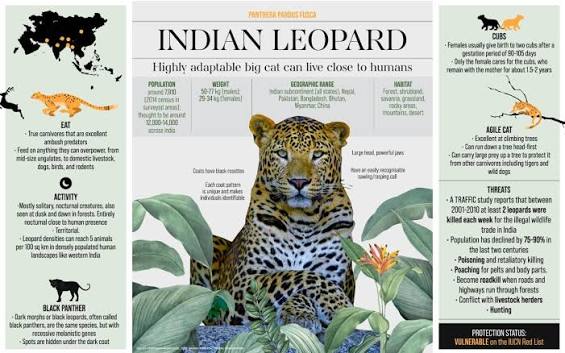
Leopards are the most widely distributed of all big cat species. They are found across sub-Saharan Africa, the Middle East, South Asia, and parts of Southeast Asia. In Africa, they inhabit a greater range of habitats than any other large felid. Savanna, forest, mountain moorland, semi-desert, and the margins of agricultural land. This adaptability makes them the most resilient of Africa’s large predators in the face of habitat loss. However, several African subspecies are now seriously threatened, and the total population has declined significantly from historical levels. On safari, the leopard is the most challenging of the Big Five to see. For many experienced travelers, it is also the most satisfying when finally found.
Leopard Behavior and Biology
How Leopards Hold Territory
Leopards are strictly solitary outside of mating and the mother-cub relationship. Adults of both sexes maintain exclusive territories that overlap minimally with those of the same sex. Territory boundaries are maintained through scent marking. Urine sprayed on bushes and tree trunks and scratch marks on bark. And fecal deposits at prominent landmarks. Rather than through frequent direct confrontation. Males hold larger territories that overlap with those of multiple females. This gives them access to several potential mates while maintaining competitive exclusion against other males. Territory sizes vary enormously by habitat and prey availability. They range from as small as five square kilometers in productive riverine forest to over 2,000 square kilometers in the semi-arid Kalahari.
When leopards do meet—at kills, at territorial boundaries, or during mating—interactions can be highly charged and occasionally fatal. Infanticide by incoming males has been documented in leopard populations where males displace rivals and kill the previous male’s cubs. This is similar to the pattern seen in lions. Female leopards are remarkably effective defenders of their cubs against male aggression given the size difference between sexes. Adult males weigh 60 to 90 kilograms, while females typically weigh 28 to 60 kilograms. Female leopards will fight considerably larger males to defend cubs. Researchers describe this as some of the most ferocious defensive behavior seen in any felid species.
Hunting Strategy and the Tree-Hoisting Behavior
Leopards are the most versatile hunters of Africa’s large felids. They take prey ranging from insects and rodents to adult male baboons, warthogs, and young wildebeest. Their hunting strategy relies on patience and explosive close-range ambush rather than sustained pursuit. The classic approach involves immobile waiting at a water source, a prey animal’s regular path, or beneath a tree where birds or monkeys feed. This is followed by a sprint of rarely more than twenty meters that ends in a neck bite or suffocating throat hold. The leopard’s shoulder and neck musculature is extraordinarily powerful relative to its overall body mass. It produces a grip strength that can hold struggling prey many times its size for the minutes required to suffocate it.
The behavior that most distinguishes leopards from other large African predators is the hoisting of kills into trees. Leopards routinely carry prey weighing as much as or more than themselves up vertical tree trunks and into the canopy. The carcass is cached there against scavengers. Primarily lions and spotted hyenas. That would otherwise steal it within hours of the kill. A leopard that has made a large kill and successfully hoisted it can feed for several days from the carcass. This compensates for the energy cost of the hoist. Watch a leopard descend from a tree with its kill in its mouth and reposition it further along a branch. And return to feeding is one of the most remarkable behavioral observations available from a safari vehicle.
Leopard Cubs and Cub Development
Female leopards give birth to litters of one to three cubs in dense cover. Caves, rocky outcrops, thickets, or hollow logs. They move the cubs repeatedly in their early weeks to prevent predators from locating the den by scent. Cubs are born blind and completely dependent. The female raises them alone, leaving them hidden while she hunts and returning to suckle and groom. Mortality in the first year is high. Lion predation accounts for a significant proportion of cub deaths in areas where lions and leopards coexist. Hyenas, baboons, and even other leopards kill cubs opportunistically. Females that successfully raise a cub to independence. At around eighteen months to two years. Have overcome a substantial gauntlet of threats through constant vigilance and repeated relocation.
Cubs begin accompanying their mother on hunts at around three months of age. They start attempting their own hunting through play behavior from four or five months. By eighteen months most cubs can make independent kills of small- to medium-sized prey. The transition to full independence is gradual. Young leopards may occupy ranges overlapping with their mother’s for months before establishing fully separate territories. Female cubs tend to establish territories adjacent to or overlapping with their mother’s range. Male cubs typically disperse farther. In well-studied populations like South Africa’s Sabi Sand, researchers track these family relationships across generations. They map the genealogies that underlie the overlapping territory structure of the resident population.
Best Places to See Leopards in Africa
Sabi Sand and South Luangwa
South Africa’s Sabi Sand Game Reserve is widely acknowledged as the best place in Africa for reliable, close-range leopard sightings. The reserve’s leopard population has been habituated to vehicles over decades of daily contact. This produces animals so relaxed around game drive vehicles that they mate, hunt, feed on kills, and raise cubs in full view. Encounters sometimes occur at ranges measured in meters rather than dozens of meters. The combination of off-road driving permission, night drive access, and skilled guides who know each individual animal’s territory in detail makes Sabi Sand the global benchmark for leopard watching. Multiple sightings in a single day are not unusual during the dry season. It is the destination most experienced safari travelers recommend when a quality leopard encounter is the primary trip objective.
South Luangwa National Park in Zambia has one of the highest leopard densities in Africa. It also has a long tradition of nighttime leopard spotlighting that produces dramatic hunt observations unavailable in parks where night drives are prohibited. The park’s riverine woodland — dense with cover but opened up by regular elephant browsing — creates ideal leopard habitat along the Luangwa River’s edge. Resident individuals with established vehicle habituation allow extended observations at the quality Sabi Sand delivers during daytime. South Luangwa’s leopard population is the subject of ongoing research. It is one of the most robust and well-protected in Africa outside of private reserves in South Africa.
Masai Mara and Namibia
The Masai Mara and Serengeti both support healthy leopard populations. Sightings are less predictable than in Sabi Sand or South Luangwa because the open savanna habitat makes concealment easy. The leopards are also somewhat less habituated to vehicles than their South African counterparts. The best Mara leopard sightings typically come from guides who know the territories of specific resident individuals. They position their vehicle correctly to observe the animal’s morning movements before it takes to cover for the day. Leopards in the Mara are most reliably found in the riverine woodland along the Mara and Talek rivers. Dense fig and croton thickets there provide daytime cover. The regular movement of prey along river edges creates productive hunting opportunities.
Namibia’s Okonjima Reserve — home to the AfriCat Foundation — offers a different and compelling leopard experience. The foundation’s work with problem-animal leopards removed from farmland and rehabilitated has produced a population of semi-wild leopards. Expert guides can track these on foot and view them at close range in a controlled but genuinely wild environment. The tracking experience involves following fresh tracks through Namibian thornbush on foot before locating the animal at rest. It is one of the most intense and intimate wildlife encounters available anywhere in Africa. It attracts experienced safari travelers who have already done the vehicle-based encounters elsewhere.
Plan Your Safari
Leopard sightings reward patience, guide expertise, and the right camp selection above all other variables. Choosing a destination where leopards are habituated to vehicles and guides know individual territories transforms a possible sighting into a near-certainty across a multi-day safari. Sabi Sand, South Luangwa, and the Masai Mara all deliver this if you are with the right operator.
African Wild Trekkers selects camps specifically for the quality of their leopard encounters. We pair guests with guides who have years of individual-animal familiarity in their specific parks and reserves. We build itineraries that put you in the right habitat at the right time of day for Africa’s most elusive big cat.
Contact African Wild Trekkers at africanwildtrekkers.com/contact with your travel dates. We will design a leopard-focused safari itinerary that maximizes your chance of extraordinary encounters within 24 hours.