Cape Buffalo Facts: Everything About Africa’s Most Dangerous Big Five Member
The Black Death of the African Savanna
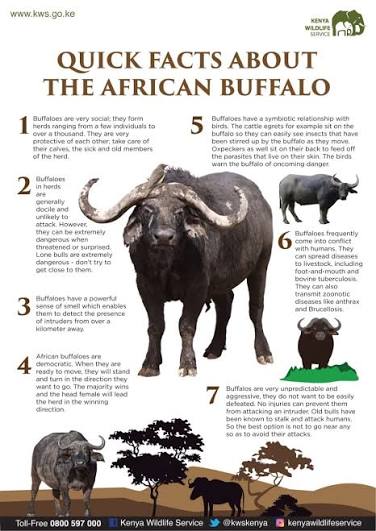
Of all the animals that make up the Big Five, the Cape buffalo is the one most consistently underestimated by first-time safari travelers. Elephants command immediate respect by virtue of their size. Lions command it by reputation and presence. Leopards are defined by rarity and the sense that they choose their own encounters. Rhinos by prehistoric appearance. But buffalos—massive, bovine, moving in dusty herds across the savanna—can look, from a distance, almost like oversized cattle. This impression is dangerous. The Cape buffalo is responsible for more hunter fatalities historically than any other large African animal. Its behavioral profile explains why. It is unpredictable, tenacious, and capable of sustained aggression after injury. charges a threat repeatedly rather than retreating. It turns to face pursuit rather than running from it. returns to attack a predator or hunter that it believes poses a continuing threat. Professional hunters in Africa refer to the Cape buffalo as “the black death,” and the epithet is earned.
For safari travelers in vehicles, Cape buffalo represent no practical threat. The herd behavior, the charging tests, and the defensive formations that bulls adopt around calves all unfold at close range from a vehicle without producing aggression directed at humans. What buffalos offer safari observers is something unique among the Big Five: genuinely impressive scale combined with constant social activity that makes large herds endlessly watchable. The interaction between buffalo and lions. The biggest buffalo herds in Africa are the primary prey base for the continent’s largest lion prides. Produces some of the most dramatic predator-prey encounters available anywhere. Watching a pride attempt to separate a calf from a herd of hundreds of defensive adults is one of the most thrilling natural history events in Africa.
Cape Buffalo Biology and Behavior
The Mixed Breeding Herd
Cape buffalo are highly gregarious animals that live in herds ranging from a few individuals to several thousand. The largest aggregations form in the wet season when food is abundant and widespread. The core social unit is the mixed breeding herd. Adult females, their calves, sub-adults of both sexes, and a proportion of adult bulls. They move together, feed together, and defend their members cooperatively against predators. Within this herd, females form the stable long-term social structure. They maintain bonds with female relatives across years and decades. Males compete for dominance and mating access through physical contests. Head-to-head shoving matches and horn clashing that can last minutes and occasionally cause injury. Adult bull dominance hierarchies are relatively stable outside of the peak breeding season.
The collective defense behavior of buffalo herds is one of the most remarkable antipredator strategies in the African savanna. When lions attack a herd, they attack the adults. Including bulls that the lions did not directly threaten. Frequently turn and charge the lions. They rescue calves from the grip of attacking predators. They pursue retreating lions for hundreds of meters after the immediate threat has passed. This collective rescue behavior is documented across multiple African populations. It was most dramatically captured in the famous 2007 “Battle at Kruger” video that accumulated hundreds of millions of online views. It requires individual animals to take personal risk for the benefit of unrelated herd members. Evolutionary biologists continue to examine this for its implications about altruism in non-human animals.
Dagga Boys: Old Bull Behavior
Old male buffalo—called “dagga boys” from the Zulu word for “mud,” referring to their habit of wallowing—often separate from the main breeding herds. They form small bachelor groups or range as solitary animals. These aged bulls are no longer competitive in the mating hierarchy but remain formidable physical specimens: large, scarred, and highly experienced. Dagga boys are more dangerous to approach on foot than herd animals. They lack the safety buffer of the group. They are typically more aware of their own vulnerability. Professional walking safari guides throughout Southern and East Africa regard old solitary buffalo bulls as the highest-risk animal they regularly encounter on foot.
The relationship between dagga boys and lions tells its own story. Old bulls that have lost the protection of the herd become viable prey for lion prides. Large bull buffalo are hunted far more frequently by lions than the size-weight ratio might predict. Their isolation makes them accessible in ways that herd members are not. The lion-versus-old-buffalo encounter is one of the most common and most watched predator-prey interactions in African parks. The extended battles that often result. A large bull holding off multiple lions for ten, fifteen, twenty minutes through sheer physical tenacity. Are among the most dramatic wildlife observations available on any African safari.
Cape Buffalo and the Ecosystem
How Buffalo Shape the Savanna
Cape buffalo are bulk grazers that consume enormous quantities of grass daily. An adult bull requires approximately 20 kilograms of grass per day. Large herds moving through an ecosystem have dramatic effects on vegetation structure. Heavy buffalo grazing reduces tall grass cover and creates shorter, higher-quality grazing patches. These attract zebra, wildebeest, and Thomson’s gazelles. This facilitative grazing — where large grazers create conditions that improve habitat quality for smaller species — is one of the mechanisms that allows multi-species grazing communities to coexist at high densities. The ecological importance of buffalo to savanna structure is substantially underappreciated relative to the attention that larger charismatic species receive.
Buffalo are the single most important prey species for large lion prides across much of their African range. In Botswana’s northern parks, buffalo herds numbering in the tens of thousands support lion populations of corresponding size. The seasonal movements of buffalo herds drive lion pride territory shifts across the landscape. In Uganda’s Queen Elizabeth National Park, buffalo herds on the Kasenyi plains support the lion and leopard populations that make the park one of East Africa’s most reliable predator destinations. Where buffalo are abundant, large predators follow. This makes the presence of substantial buffalo herds one of the most reliable indicators of overall predator productivity in any African ecosystem.
Disease and Conservation Challenges
Cape buffalo carry foot-and-mouth disease and bovine tuberculosis. Both can transmit to cattle in areas where buffalo and livestock share water sources or grazing land. This disease dynamic creates significant management challenges at the boundaries between protected areas and livestock farming land. It has historically justified culling of buffalo populations near park boundaries. The political economy of buffalo disease management is one of the most contentious wildlife management debates in Southern Africa. This is particularly intense around the Kruger National Park boundary in South Africa. Bovine tuberculosis has spread from buffalo into lion and leopard populations there.
Within protected areas, Cape buffalo populations are generally stable or increasing. The IUCN classifies the species as Near Threatened rather than Endangered. A significantly better status than most other large African mammals. Their ecological resilience is high. Their group defense against predators is effective. They hold no appeal for the illegal wildlife trade, unlike elephants, rhinos, and pangolins. Within well-managed parks, buffalo continue to thrive in numbers that support the large predator populations that safari travelers travel specifically to see.
Best Places to See Cape Buffalo
The best buffalo viewing in Africa is found in the parks that support the largest herds and the most dramatic predator-prey interactions. Botswana’s Chobe National Park in the dry season hosts some of the largest buffalo herds on the continent. They move between the Chobe River and inland grazing areas. Lion predation attempts on these herds are daily events. Queen Elizabeth National Park in Uganda has large buffalo populations on the Kasenyi plains. It delivers dramatic lion-buffalo encounters alongside its other wildlife highlights. Tanzania’s Ngorongoro Crater supports a resident buffalo population of over 4,000 animals within the crater floor. This is one of the highest density concentrations anywhere. The crater’s closed ecosystem produces daily predator-prey interactions of exceptional quality.
Zambia’s South Luangwa and Lower Zambezi; Zimbabwe’s Mana Pools and Hwange. And South Africa’s Kruger and Sabi Sand all support substantial buffalo populations. These attract and sustain resident lion prides. In Mana Pools, the interaction between buffalo and lions is particularly dramatic during the dry season. Both species concentrate along the Zambezi. Close-range walking encounters with large buffalo herds in Mana Pools. On foot with an armed professional guide. Are among the most intensely memorable experiences that African walking safari offers.
Plan Your Safari
Cape buffalo are a year-round presence in most of Africa’s great parks. But the best buffalo encounters are Large herd concentrations and predator interactions. And walking safari encounters with dagga boys. Follow seasonal patterns that make destination timing critical. Dry season in Botswana, Zambia, and Zimbabwe delivers the most dramatic buffalo viewing.
African Wild Trekkers designs itineraries around the predator-prey dynamics that make buffalo watching genuinely thrilling. This includes walking safari options in Zambia and Zimbabwe where on-foot encounters with large herds are a core part of the experience rather than an afterthought.
Contact African Wild Trekkers at africanwildtrekkers.com/contact with your travel dates. We will design a Big Five safari itinerary with exceptional buffalo encounters built into every day in the bush within 24 hours.