Chimp Sleeping Nest Uganda: Discovering the Night Beds of Kibale’s Chimpanzees
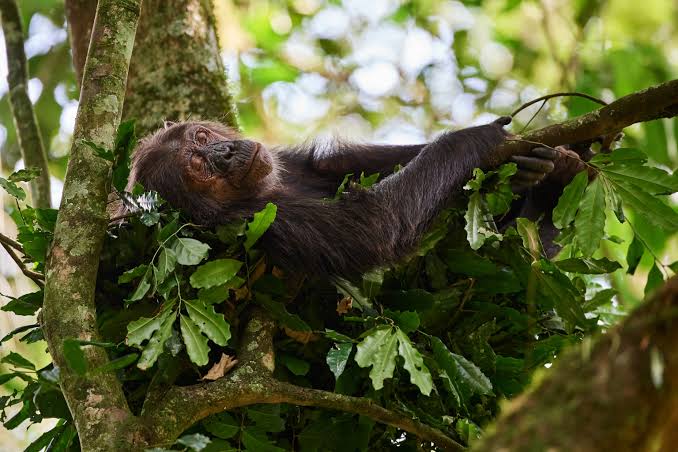
Every chimpanzee in Uganda’s Kibale Forest builds a fresh sleeping nest each evening. The nest goes in a tree canopy — 10 to 30 metres above the forest floor. Bent branches and leafy twigs fold and interlock into a firm platform. The entire construction process takes 5 to 10 minutes. The chimp tests the nest’s stability by sitting in it and rocking slightly before settling for the night. By morning, the nest has been used and abandoned. The chimp descends, calls loudly to announce its position to the community, and moves off to begin the day’s foraging circuit. The nest remains in the canopy as a physical record of the previous night. A morning visit to a fresh nest cluster — still containing shed hairs and the smell of chimp — is one of Uganda’s most unusual and direct wildlife encounters.
Why Chimpanzees Build Nests
Chimpanzee nest building serves multiple functions. The elevated canopy position protects from ground predators — leopards, the primary chimp predator, are less effective hunters in the tree canopy than on the ground. The insulated leaf platform reduces heat loss through the cool forest night. Forest temperatures drop significantly after dark, and the nest provides a valuable thermal buffer. Additionally, nest building appears to have a social communication function. Nests visible from the forest floor signal an individual’s resting location to other community members. Older, experienced chimpanzees build more structurally complex nests with better insulation and stability. Nest building quality is learned and improves through practice across the chimp’s juvenile years.
Kibale Forest: Uganda’s Best Chimp Nest Visits
Kibale National Park near Fort Portal holds Uganda’s highest chimpanzee density — approximately 1,490 individuals in the park. The Kanyanchu habituation centre runs both standard chimpanzee trekking permits and chimp habituation experience permits. The habituation permits follow a semi-habituated group from dawn until dusk across two full research days. This full-day format includes the morning descent from night nests. It also covers the day’s foraging and social activities and the late afternoon nest building as dusk falls. As a result, guests on habituation experience permits witness the complete 24-hour nest cycle. They watch the chimp select its tree, bend branches, and settle into the finished nest as darkness approaches.
Reading a Chimp Nest for Behavioural Information
A tracker who finds a fresh chimp nest cluster in the morning reads several pieces of information from the nest’s condition. Size estimates the individual’s body weight and age. Fresh green leaves indicate it was built the previous evening. Hair in the nest provides DNA identification material for research teams. The nest’s height indicates the individual’s risk assessment of the previous night nervous animals build higher. Furthermore, the arrangement of nests within the cluster reveals social relationships. Mother-offspring pairs nest within a few metres of each other. Adult males in alliance sometimes build adjacent nests on the same large tree. This spatial information, recorded across months of observation, builds a detailed map of the community’s social structure.
Plan Your Safari
Kibale’s chimp habituation experience permits allow full-day access to the research groups and run year-round. Standard trekking permits provide 1-hour encounters with the fully habituated Kanyanchu community. Nest visits work best as additions to the standard trekking programme — the trackers move to the previous night’s nest cluster after the habituated group departs the site each morning. Adding a second Kibale morning specifically for a nest site visit requires a second trekking permit and advance booking.
African Wild Trekkers builds Uganda safari itineraries combining Kibale chimp habituation experience permits with gorilla trekking at Bwindi and savanna wildlife at Queen Elizabeth. Contact us to plan a Uganda safari exploring the full range of East Africa’s primate diversity.