Tanzania Kenya Rwanda: The Three-Country East Africa Grand Safari
East Africa’s greatest wildlife experiences span three nations in a relatively compact geographic arc: Tanzania offers the Serengeti and Kilimanjaro, Kenya has the Masai Mara and Amboseli, and Rwanda provides mountain gorilla trekking in the Virunga volcanoes. Each country contributes something the others cannot fully replicate — and combining all three in a single journey creates an East Africa experience of extraordinary breadth and depth. The three-country East Africa grand safari is not a budget itinerary or a weekend adventure, but for travellers with the time and commitment to undertake it, the result is one of the most significant wildlife journeys available anywhere on the planet.
The logic of the grand safari lies in complementarity. Tanzania’s Serengeti provides the wildebeest migration, the open savannah predator drama, and the sheer scale of African wildlife abundance. Kenya’s Masai Mara adds the northern bank of the migration with its famous Mara River crossings, the world-class Amboseli elephant viewing against Kilimanjaro’s backdrop, and the cultural dimension of Maasai community interactions that differ from Tanzania’s versions. Rwanda’s Bwindi Impenetrable Forest and Volcanoes National Park deliver intimate close-range encounters with mountain gorillas — a wildlife experience unlike anything available in Tanzania or Kenya, and one that consistently registers as the most emotionally powerful encounter of the entire journey for most travellers who complete it.
Tanzania: The Wildlife Foundation
Building the Grand Safari from Tanzania’s Northern Circuit
Serengeti and Ngorongoro as the Grand Safari Base
Tanzania makes the strongest contribution to the grand safari in terms of sheer wildlife volume and variety. The northern circuit — Serengeti, Ngorongoro Crater, Tarangire, and Lake Manyara — provides four to six days of game driving that covers the full range of East African savannah wildlife in a connected ecosystem of extraordinary scale. The Serengeti’s annual wildebeest migration, tracking the rains across 1.5 million animals over a 1,200-kilometre circuit, is the anchor event of any July through October East Africa itinerary. The river crossing spectacles at the Mara River between July and August are among the most dramatic wildlife events visible anywhere on earth.
For the grand safari, Tanzania also serves as the mountain anchor if Kilimanjaro is included. Combining a Kilimanjaro summit attempt with the northern circuit before continuing to Kenya adds another week to the itinerary but creates a three-destination Tanzania experience that bookends the wildlife safari with an extraordinary physical achievement. Kilimanjaro, Serengeti, Kenya, Rwanda is a legitimate four-element structure for travellers with three to four weeks available and the fitness for both the mountain and the gorilla trek. Most three-country grand safari itineraries focus on the safari and gorilla elements rather than including the mountain climb as well.
Tanzania Timing and Why It Anchors the Trip Calendar
Tanzania’s ideal game viewing season from June through October aligns with Rwanda’s best gorilla trekking conditions and Kenya’s peak Masai Mara period — making the July-to-October window the sweet spot for all three countries simultaneously. This seasonal alignment means the grand safari can occupy a single three-to-four-week window when conditions are optimal across all three destinations, rather than requiring separate trips timed independently to each country’s best season. The July and August peak of the Tanzania-Kenya migration crossing at the Mara River, combined with gorilla trekking conditions at their most comfortable in Rwanda’s dry season, makes August in particular the single best month for a three-country East Africa itinerary.
The demand implications of this seasonal concentration are significant. Accommodation in peak areas books out eighteen to twenty-four months ahead for prime July and August dates. Grand safari travellers who commit to this itinerary need to book all three country components simultaneously and well in advance, as a gap in any one country’s accommodation can collapse the logistics of the entire trip. Your Tanzania operator ideally has established relationships with Kenya and Rwanda counterparts that allow coordinated booking across all three countries through a single point of contact, simplifying the itinerary management considerably.
Kenya: The Masai Mara Extension
Adding the Mara River Crossings and Amboseli Elephants
Why Kenya Adds What Tanzania Cannot Fully Deliver
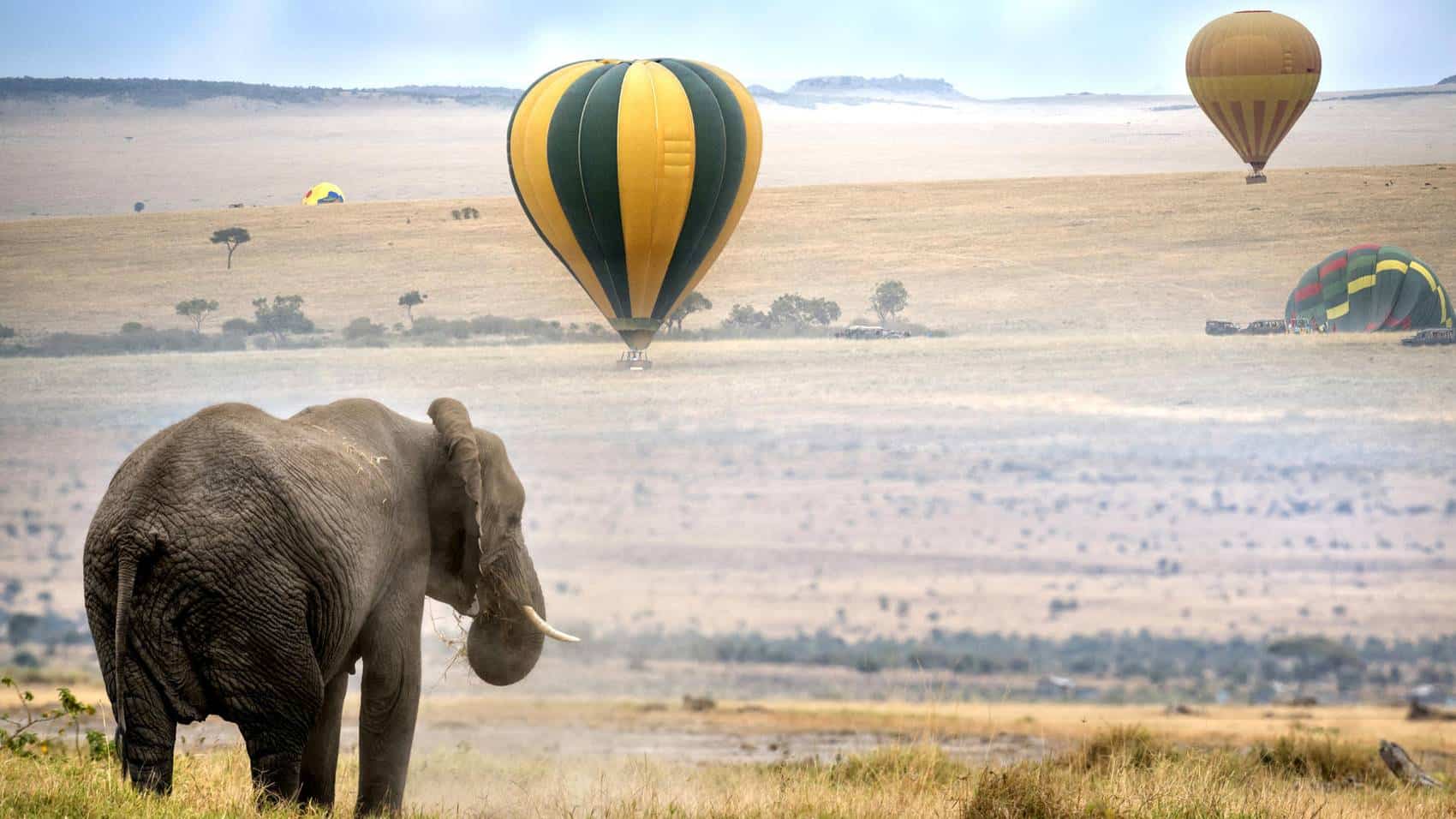
The Masai Mara in Kenya is the northern extension of the Serengeti ecosystem, separated by the international border but ecologically continuous. During July and August, the wildebeest migration crosses into Kenya and the Mara River crossings — thousands of wildebeest launching themselves into crocodile-filled water in terrified and spectacular herds — occur predominantly on the Kenyan side. For grand safari travellers visiting during migration season, including a Masai Mara component of three to four nights means experiencing both the Tanzanian and Kenyan dimensions of the same migration event. The crossing spectacles in Kenya’s more compact vehicle environment are if anything more accessible than their Tanzania counterparts.
Amboseli National Park in southern Kenya, near the Tanzania border, adds the specific visual drama of massive elephant herds under the backdrop of Kilimanjaro’s snow-capped summit — a composition that has defined the aesthetic of East African wildlife photography for decades. Amboseli is not part of the Serengeti ecosystem and contributes a different visual vocabulary to the grand safari: open plains, swampy papyrus wetlands, and the largest elephant gatherings in Kenya, all framed by Africa’s highest mountain. A two-night Amboseli addition between Tanzania and the Masai Mara creates a logical geographic progression northward through the Kenya leg of the itinerary.
Kenya Practical Logistics for Grand Safari Travellers
Moving between Tanzania and Kenya on a grand safari is straightforward. Direct charter flights between Serengeti airstrips and the Masai Mara are available from several Kenya and Tanzania aviation providers, making the crossing a 90-minute flight rather than a road border crossing. Road travel between Arusha and Nairobi is an alternative for budget-conscious travellers, taking approximately eight hours by comfortable shuttle, but the time cost outweighs the savings for most grand safari itineraries where days are the most precious resource. Most nationalities require a separate Kenya tourist visa in addition to the Tanzania visa. Confirm costs and application procedures before travel, as Kenya has updated its visa system to an e-visa platform with specific requirements.
Kenya’s Masai Mara accommodation ranges from simple public campsites to some of the most celebrated luxury camps in Africa, including properties in the private conservancies surrounding the official reserve that offer activities — night drives, walking safaris, bush breakfasts — not available in the main reserve itself. Grand safari travellers typically allocate budget for mid-range to upscale Mara accommodation, as the conservancy camps provide the best wildlife access. The experience quality gap between budget and upscale accommodation in the Mara is among the widest in East Africa.
Rwanda: Mountain Gorillas in the Virunga Volcanoes
The Most Emotionally Powerful Wildlife Encounter in East Africa
Why Gorilla Trekking Completes the Grand Safari
Mountain gorilla trekking in Rwanda’s Volcanoes National Park is categorically different from any other wildlife experience in the East Africa grand safari. The Serengeti and Mara deliver vast open savannah drama where the scale and abundance of wildlife creates its impact. Gorilla trekking works on an entirely different emotional register: you walk for one to several hours through dense Afromontane forest at altitude, following guides who track a specific gorilla family by calls and trail signs, until you find the group — and then you spend a maximum one hour in their presence at close range. The gorillas are habituated to human presence but entirely wild, and their similarity to humans in body language, family dynamics, and facial expression creates an encounter that most visitors describe as the most profound wildlife experience of their lives.
Rwanda’s mountain gorilla population divides between several habituated family groups, each visited by a small number of trekkers per day under strict permit allocation. The limited permit supply is the primary logistical constraint for the grand safari — Rwanda gorilla permits cost USD 1,500 per person per trek as of 2026 and must be booked months in advance for peak season dates. For most grand safari travellers, the permit cost is the single largest expense after international airfares, but no traveller who has completed a gorilla trek reports feeling the cost was disproportionate to the experience. Bwindi Impenetrable Forest in Uganda, which borders Rwanda and holds the world’s largest mountain gorilla population, can substitute for or complement the Rwanda experience in a more extended itinerary.
Rwanda Beyond Gorillas: What Else to Include
Rwanda is a small country with excellent infrastructure for tourism, and a gorilla trekking permit does not need to be the only Rwanda experience on the grand safari. The country offers chimpanzee trekking in Nyungwe Forest National Park, golden monkey trekking in Volcanoes National Park alongside the main gorilla trek, a compelling and sobering Kigali Genocide Memorial that provides important historical context, and hilly green countryside that is visually stunning. Kigali international airport is the most practical entry and exit point for the Rwanda leg, with well-established flight connections to Nairobi and Entebbe for onward travel to Tanzania or Kenya to join or conclude the broader grand safari circuit.
Most travellers allocate three to four days in Rwanda — one travel day, one gorilla trek day, one recovery or additional activity day, and one departure day. This minimum provides the essential gorilla experience without diverting too much time from the Tanzania and Kenya legs. For travellers specifically interested in primate conservation or East African biodiversity more broadly, a longer Rwanda stay that adds Nyungwe chimpanzee trekking and golden monkeys creates a primate-focused counterpart to the savannah wildlife of Tanzania and Kenya that is genuinely extraordinary in its own right.
Grand Safari Logistics: Three Countries, One Itinerary
How to Structure and Book the Complete Journey
Ideal Duration and Sequence for the Grand Safari
A three-country East Africa grand safari requires a minimum of three weeks and ideally four weeks to do justice to all three destinations without feeling rushed. A four-week structure might allocate seven days to Tanzania’s northern circuit (including Tarangire, Serengeti, and Ngorongoro), two days transit and Amboseli in southern Kenya, four days Masai Mara, two days Nairobi connecting through to Rwanda, three days Rwanda including one gorilla trek, and two buffer days for flight connections, delays, and transitions between countries. This structure leaves most travellers satisfied with the depth of experience at each destination while maintaining logistical feasibility within a four-week annual leave period.
Booking the grand safari as an integrated itinerary through a Tanzania-based operator with established Kenya and Rwanda partnerships is significantly more manageable than attempting to coordinate three separate country bookings independently. The interdependencies between legs — flight timing, visa requirements, accommodation availability at peak dates, and permit booking windows in Rwanda — require coordination that a single experienced operator handles more efficiently than a traveller self-booking across three different national tourism systems. African Wild Trekkers manages the full three-country coordination including Kenya and Rwanda components for grand safari guests, providing a single itinerary document, single point of contact, and end-to-end logistical management across all three destinations.
Plan Your Safari
The East Africa grand safari across Tanzania, Kenya, and Rwanda requires planning twelve to eighteen months before your intended travel dates for peak season departures. Rwanda gorilla permits, Serengeti and Mara accommodation for July and August, and Kenya conservancy camps all book out well in advance, and securing all three simultaneously requires prompt action once your dates are confirmed. Budget planning should include international airfares, Rwanda gorilla permits at USD 1,500 per person, all park fees across three countries, domestic and regional charter flights, accommodation at the level you require, and a contingency for flight delays or weather-related disruptions.
African Wild Trekkers coordinates complete three-country East Africa grand safari itineraries, managing Tanzania, Kenya, and Rwanda components through a single integrated booking. The team handles all permit applications, domestic flight bookings, accommodation blocks, and cross-border logistics so that you arrive in Arusha and follow a seamless itinerary through to your Rwanda departure. All reservations are confirmed in writing before any deposit is requested.
Contact African Wild Trekkers at africanwildtrekkers.com/contact with your preferred grand safari dates and party size and we will design your complete three-country itinerary and confirm availability within 24 hours.