Tsavo West Mzima Springs: Crystal Water, Hippos, and Volcanic Wonders
Tsavo West Mzima Springs is one of the most remarkable natural phenomena in all of East Africa. This set of four springs in the arid Tsavo West landscape produces 225 million litres of crystal-clear water every day. Tsavo West Mzima Springs water originates from Chyulu Hills rainfall percolating through porous lava rock before emerging 50 kilometres away at the springs. The extraordinary clarity of Tsavo West Mzima Springs water allows visitors at the underwater observation chamber to watch hippos swimming from below the surface. Tsavo West Mzima Springs also supports a rich biodiversity community including crocodile, barbel catfish, and abundant waterbirds in the surrounding riparian forest. Tsavo West Mzima Springs is the most unique single wildlife site in the entire Tsavo ecosystem.
Tsavo West Mzima Springs was documented by Joseph Thomsom in 1883 during his Kenya exploration journey. The springs were immediately recognised as extraordinary for the abundance of water they produced in the surrounding arid landscape. Tsavo West Mzima Springs was the site of David Attenborough’s famous BBC film of underwater hippo behaviour in the 1950s. This Tsavo West Mzima Springs film was the first time hippo underwater swimming had been filmed anywhere in the world. The springs supply part of Mombasa’s municipal water requirement through a pipeline constructed in 1966.
Tsavo West Mzima Springs Wildlife
Hippos at Tsavo West Mzima Springs
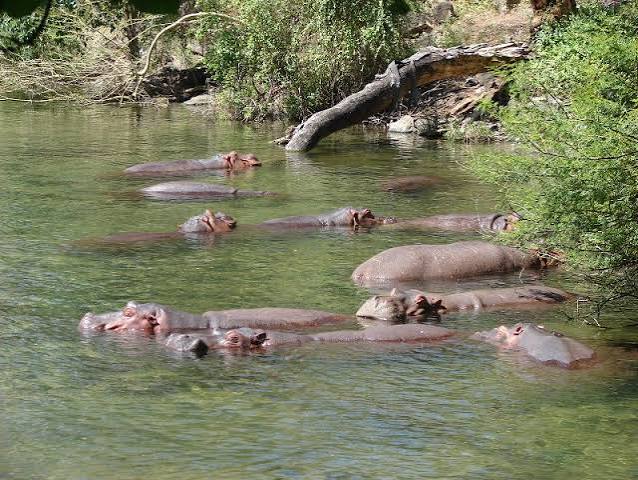
Tsavo West Mzima Springs holds a permanent hippo population of 50 to 80 animals. These hippos spend the daylight hours in the main spring pool where the water depth reaches three to six metres. The Tsavo West Mzima Springs hippos are visible from the surface viewing platform at the pool edge. A raised wooden walkway leads from the spring entrance to the Tsavo West Mzima Springs underwater chamber. This concrete observation chamber allows visitors to stand below water level and watch the hippos through a reinforced glass window. The Tsavo West Mzima Springs underwater hippo view shows the animals walking on the spring bottom, swimming with surprisingly graceful movements, and resting on submerged rocks. This Tsavo West Mzima Springs underwater perspective is completely unique in Kenya and one of the most extraordinary wildlife encounters in Africa.
Tsavo West Mzima Springs hippos are most active in the early morning before the temperature rises. The morning Tsavo West Mzima Springs hippo session from 07:00 to 09:00 shows the animals entering the pool from their overnight grazing areas. The surface arrival of multiple Tsavo West Mzima Springs hippos produces dramatic spray and vocalisation. Hippo birth occasionally occurs in the Tsavo West Mzima Springs pool. KWS rangers at the springs maintain hippo individual identification and can indicate current calf and juvenile positions to visitors. The Tsavo West Mzima Springs hippo population is considered the most accessible and reliably viewable in Kenya due to the clear water conditions.
Fish and Crocodile at Tsavo West Mzima Springs
Tsavo West Mzima Springs holds Kenya’s finest population of barbel catfish accessible to surface observers. These large fish are clearly visible in the spring water from the viewing platform. Barbel catfish at Tsavo West Mzima Springs grow to 60 centimetres in length in the highly oxygenated spring water. The catfish share the Tsavo West Mzima Springs pool with Nile tilapia and two endemic spring fish species found nowhere else in Kenya. Nile crocodile inhabits the lower sections of the Tsavo West Mzima Springs outflow channel where the water deepens. These Tsavo West Mzima Springs crocodiles of three to four metres are visible from the raised wooden walkway above the channel. The Tsavo West Mzima Springs crocodile and hippo cohabitation creates one of the most concentrated large reptile and mammal per square metre ratios of any Kenya water body.
The Tsavo West Mzima Springs fish population supports a rich waterbird community above the pool. Malachite kingfisher perches on overhanging branches above the Tsavo West Mzima Springs pool edge. Giant kingfisher hunts the catfish from the same branches. Grey heron and goliath heron stand at the Tsavo West Mzima Springs channel margins. African fish eagle perches in the riparian forest trees above the springs. The concentration of bird life at Tsavo West Mzima Springs makes the visit productive for birders alongside the underwater hippo experience.
Tsavo West Mzima Springs Visit
Visiting the Tsavo West Mzima Springs Site
Tsavo West Mzima Springs is accessible by vehicle from Kilaguni Lodge within the national park. The Tsavo West Mzima Springs walkway circuit takes 30 to 60 minutes to complete at a leisurely pace. Visitors must park at the designated Tsavo West Mzima Springs car park and walk the circuit on foot. Walking is permitted only at Tsavo West Mzima Springs and Rhino Valley within the otherwise vehicle-only Tsavo West National Park. The Tsavo West Mzima Springs visit therefore provides a rare walking experience within the larger Tsavo ecosystem. The footpath winds through riparian doum palm and fig forest that creates an enclosed green environment entirely different from the open Tsavo West savanna surrounding it.
The Tsavo West Mzima Springs underground chamber viewing quality depends on the hippo positioning in the pool. On some Tsavo West Mzima Springs visits the hippos rest close to the window providing extraordinary close-range underwater views. On other visits the Tsavo West Mzima Springs hippos rest at the pool far end leaving the window view empty. This variability is part of the Tsavo West Mzima Springs experience rather than a disappointment. The surface platform view is productive regardless of the chamber view quality. A 45-minute Tsavo West Mzima Springs visit covering both the surface platform and the underground chamber provides the complete experience. Arriving at Tsavo West Mzima Springs at 07:00 catches the morning hippo pool activity at its most energetic.
Tsavo West and Mzima Springs Circuit
Tsavo West Mzima Springs sits within the broader Tsavo West safari circuit. Kilaguni Lodge is the closest accommodation to Tsavo West Mzima Springs at two kilometres distance. A full Tsavo West day programme combines a morning Tsavo West Mzima Springs visit, a midday Kilaguni Lodge waterhole observation session, and an afternoon Rhino Valley game drive. Tsavo West also holds the Shetani lava flows near the Chyulu Hills boundary. These remarkable Tsavo West black lava formations are the most visually dramatic geological landscape in the Tsavo ecosystem. Combining the Tsavo West Mzima Springs crystal water experience with the Shetani black lava landscape in a single day produces extraordinary geological and biological contrasts.
Tsavo West Mzima Springs is accessible from Mombasa in three hours via Mombasa Road and the Tsavo Gate entrance. Nairobi visitors reach Tsavo West Mzima Springs in approximately four hours via the A109 highway. The springs are best combined with a two to three night Tsavo West park stay including Kilaguni Lodge accommodation. This Tsavo West Mzima Springs circuit programme produces the full range of Tsavo West wildlife experiences alongside the extraordinary springs visit in a productive mid-length Kenya safari.
Plan Your Safari
Visit Tsavo West Mzima Springs at 07:00 for the most active hippo morning session at the pool. Allow 60 minutes at the springs for both the surface platform and the underground viewing chamber experience. Combine Tsavo West Mzima Springs with a Kilaguni Lodge waterhole evening for the complete Tsavo West wildlife day.
African Wild Trekkers designs Tsavo West safari programmes with Tsavo West Mzima Springs as a core element. We book Kilaguni Lodge, design morning springs visits, and create southern Kenya circuit itineraries combining Tsavo West, Tsavo East, and Amboseli in the most efficient programme.
Contact African Wild Trekkers to visit Tsavo West Mzima Springs. We respond within 24 hours and design Tsavo safari programmes combining the underwater hippos with the finest wildlife and landscapes in southern Kenya.