Chimpanzee Facts: Intelligence, Behavior & How They Compare to Gorillas
Our Closest Living Relative
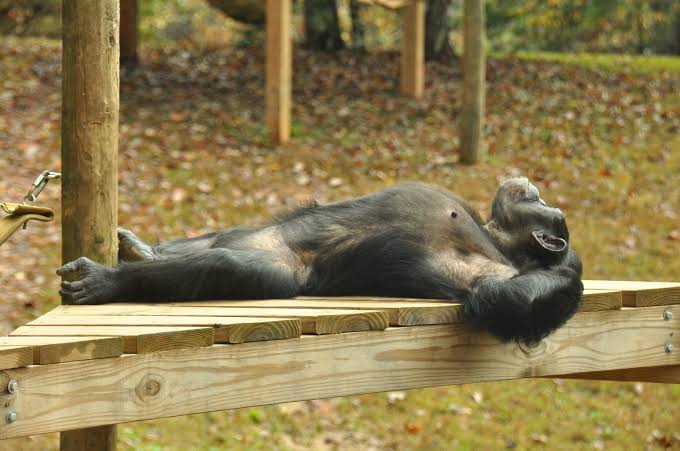
Chimpanzees share approximately 98.7 percent of their DNA with humans. A closer genetic relationship than either species has with gorillas. The behavioral, cognitive, and social parallels between chimpanzees and humans are profound. They have reshaped our understanding of what it means to be human since Jane Goodall first described tool use and complex social behavior in the chimpanzees of Gombe Stream in the 1960s. Before Goodall’s discoveries, scientists partly defined humanity by the ability to make and use tools. When Goodall reported that chimpanzees fashioned grass stalks into probes to extract termites from mounds, the definition had to change. The implications of that single observation extended far beyond the academic journals it generated. It contributed to a fundamental reassessment of the cognitive boundary between human and non-human primates.
For safari travelers, chimpanzees represent one of the two great primate encounters available in Africa. The other being mountain gorilla trekking. The chimpanzee experience is more energetic, less predictable, and in many ways more viscerally intense than gorilla trekking. Chimps are fast, loud, and volatile. A morning spent tracking a community through Kibale Forest or Gombe’s riverine woodland produces a quality of encounter that nothing in a vehicle-based safari can replicate. Understanding what chimpanzees are — their intelligence, their social complexity, their similarities to and differences from gorillas — is the foundation of appreciating what the encounter actually represents.
Chimpanzee Intelligence and Tool Use
What Chimps Can Do That Most Animals Cannot
Tool Use and Problem Solving
Chimpanzees demonstrate the most sophisticated tool use of any non-human species. Different chimpanzee communities have developed distinct tool traditions. In some areas, chimps use stone hammers and wooden anvils to crack open oil palm nuts. In others, they use leaf sponges to extract water from tree cavities. In others still, they fashion hunting spears from branches to probe tree cavities for small primates. Young chimps learn these traditions by watching older community members rather than inheriting them genetically. This makes them the clearest demonstration of non-human culture in the animal kingdom. The geographic variation in tool traditions across chimpanzee communities in West and Central Africa. And East Africa is the subject of ongoing comparative research that continues to produce new findings about the extent and limits of chimpanzee cultural capacity.
Problem-solving abilities in captive chimpanzees have been tested extensively, and the results consistently exceed what most people expect of non-human primates. Chimpanzees plan for the future. Carrying tools to locations where researchers will place food rather than improvising at the point of use. They understand causal relationships between objects and outcomes in ways that most other animals do not. Short-term memory tests for number sequences have shown that young chimps outperform human adults in rapid numerical memory tasks in some studies. These cognitive findings do not make chimpanzees equivalent to humans. But they challenge the assumption of a clean cognitive divide between human and non-human minds that persisted in scientific thinking until relatively recently.
Social Intelligence and Communication
Chimpanzees live in complex multi-male, multi-female communities of 20 to 150 individuals. They navigate extraordinarily sophisticated social environments that require continuous assessment of relationships, alliances, power hierarchies, and individual motivations. Male chimpanzees compete intensely for dominance rank, and high-ranking males gain preferential access to food and mating opportunities. Alliance-building and political maneuvering are documented extensively in wild populations. Lower-ranking males form coalitions to defeat dominant individuals and cultivate relationships with potential allies over periods of months or years. The complexity of chimpanzee social politics is one of the primary reasons researchers like Frans de Waal have used the term “chimpanzee politics” without irony as a description of what they observe.
Chimpanzee communication includes gestural, facial, and vocal components that show structural similarities to human language in ways that no other animal’s communication does. Specific gestures carry consistent meaning across populations. A leaf-clipping display signals sexual interest in some communities; a wrist-flexing gesture solicits grooming. Some gestures are produced intentionally to influence another individual’s behavior, a level of communicative intentionality shared only with humans and great apes. Sign language research with captive chimpanzees in the 1960s and 1970s demonstrated that chimps could learn and productively use hundreds of human symbolic signs, generating novel combinations that appeared to express new meanings. These studies remain controversial in their interpretation but established definitively that the cognitive requirements for symbolic communication are not uniquely human.
Chimpanzee vs Gorilla: Key Differences
Size, Habitat, Diet, and Behavior
Physical and Ecological Differences
The physical differences between chimpanzees and gorillas are substantial. Male gorillas weigh 140 to 200 kilograms. The largest primates on Earth. While male chimpanzees weigh 40 to 60 kilograms. Gorillas move more slowly and deliberately, spending most of their time on the ground. Chimpanzees are highly agile climbers that move rapidly between the forest canopy and the ground depending on food availability. Gorillas eat primarily leaves, fruit, and stems — vegetation that requires little processing but enormous quantities to meet caloric needs. Chimpanzees are opportunistic omnivores that eat fruit, leaves, insects, eggs, and meat. They hunt other primates such as red colobus monkeys using coordinated strategies that resemble human cooperative hunting in their sophistication.
Temperamentally, gorillas and chimpanzees are almost polar opposites in terms of the quality of encounter they produce. Gorillas are calm, largely non-aggressive animals that tolerate human presence with remarkable equanimity. They produce a quiet, intimate encounter characterized by close observation of family behavior. Nursing, grooming, play, the silverback’s authoritative management of group movements. Chimpanzees are intense, volatile, loud, and fast. A chimpanzee encounter involves cacophonous calling and rapid movement through the canopy. And the constant sense that the community might explode into dominance-display charging at any moment. Both encounters are extraordinary for different reasons. Travelers who have experienced both consistently say they are incomparable rather than one being better than the other.
Where to Trek Chimpanzees vs Where to Trek Gorillas
Mountain gorilla trekking takes place exclusively in three countries: Rwanda, Uganda, and the DRC. Chimpanzee trekking is available across a much wider range of African countries, including Uganda, Tanzania, Rwanda, Guinea, and Gabon. And several other West and Central African nations. Uganda’s Kibale Forest National Park stands as the premier chimpanzee trekking destination in Africa. The largest concentration of chimpanzees in East Africa has a high number of habituated communities. And excellent forest trails that make the tracking experience more manageable than in some West African forests. Tanzania’s Gombe and Mahale are more remote and adventurous alternatives with smaller community sizes and more demanding access logistics. Rwanda’s Nyungwe Forest combines chimpanzee trekking with exceptional birding and primate diversity in a single accessible destination.
The combination safari that most effectively delivers both great ape experiences is Uganda: gorilla trekking in Bwindi or Mgahinga followed by chimpanzee tracking in Kibale, separated by a game drive circuit through Queen Elizabeth or Murchison Falls national parks. This itinerary, typically structured over eight to twelve days, gives travelers the full spectrum of the Ugandan primate experience. Mountain gorillas, chimpanzees, black-and-white colobus, red-tailed monkeys, L’Hoest’s monkeys, and grey-cheeked mangabeys. Alongside savanna game drives, boat cruises on the Kazinga Channel. And the dramatic waterfall spectacle at Murchison Falls. There, the entire Nile forces itself through a seven-meter gap in the rock. Uganda’s combination of accessibility, primate diversity, and exceptional value relative to Rwanda makes it the ideal destination for first-time great ape travelers.
Conservation Status and Population
The IUCN classifies chimpanzees as Endangered, with an estimated 170,000 to 300,000 individuals remaining across Central and West Africa. Populations have declined significantly from historical levels due to habitat loss, bushmeat hunting, and disease. Outbreaks of Ebola virus disease in Central African populations have killed entire communities in some forest areas. East African populations—smaller in total number than Central and West Africa’s—are generally better protected by national park infrastructure. They benefit from ecotourism revenue that provides both funding for protection and economic incentive for surrounding communities to conserve forest habitat rather than convert it to agricultural land.
The chimpanzee habituation process—the years-long work of gradually acclimatizing a wild community to human presence at close range—is the most investment-intensive element of chimpanzee ecotourism development. It requires daily ranger presence over two to four years before a community becomes safe for tourist visits. The communities available for tourism represent a tiny fraction of the total chimpanzee population. Managing tourist group sizes, visit duration, and health protocols. To prevent disease transmission between humans and chimpanzees. Is an ongoing challenge in all chimpanzee trekking destinations. Travelers who visit habituated chimpanzee communities contribute directly to the financial case for forest conservation in ways that have measurable effects on national park budgets and community benefit programs.
Plan Your Safari
Chimpanzee tracking permits in Uganda’s Kibale Forest sell out during peak season months and require advance booking, particularly if you want to combine chimpanzee trekking with gorilla permits in Bwindi on a tight itinerary. Getting both permit types booked simultaneously. Through a specialist operator who handles Ugandan primates. Prevents the scheduling conflicts that arise from booking independently.
African Wild Trekkers designs Uganda primate safari itineraries that combine chimpanzee trekking in Kibale with gorilla trekking in Bwindi and game drives in Queen Elizabeth. And boat cruises on the Kazinga Channel, handling all permits and lodge bookings. And transfers in a seamless circuit that maximizes every day in the country.
Contact African Wild Trekkers at africanwildtrekkers.com/contact with your Uganda travel dates, and we will design a chimpanzee and gorilla trekking itinerary that secures your permits and delivers both great ape encounters within 24 hours.