Hyena Facts: The Truth About Africa’s Most Misunderstood Animal
The Most Misunderstood Animal in Africa
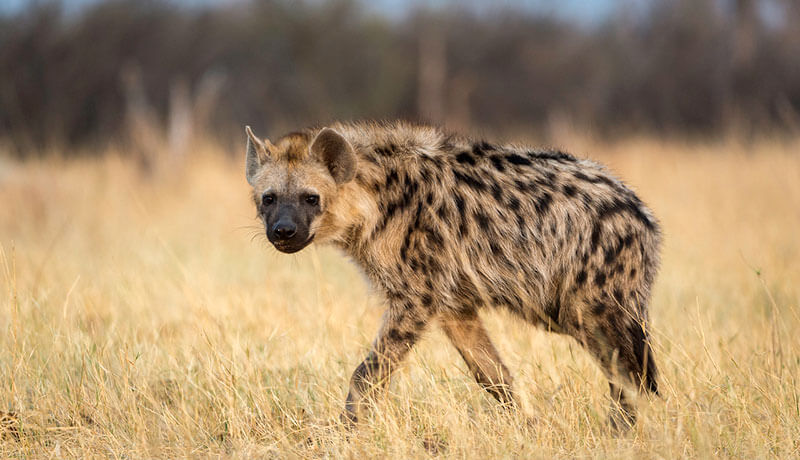
The spotted hyena suffers from one of the most persistent and damaging reputations in the animal kingdom. Popular culture portrays it as a skulking scavenger. Cowardly, ugly. And opportunistic to the point of moral failing. And the hyena arrives in most people’s imaginations thoroughly pre-judged. The reality is almost entirely the reverse of this caricature. The spotted hyena is one of the most successful and ecologically important predators in Africa, responsible for more kills annually than lions in most ecosystems where the two species coexist. It has a more complex and cognitively sophisticated social structure than most big cats, a matriarchal society that is unique among large carnivores. And problem-solving abilities that have astonished researchers who test them systematically. The gap between the hyena’s cultural reputation and its biological reality is among the widest of any well-known African animal.
There are four hyena species in Africa: the spotted hyena, the brown hyena, the striped hyena, and the aardwolf. Of these, the spotted hyena is by far the most numerous, most widely distributed. And most ecologically significant. And the one most people mean when they say “hyena.” The spotted hyena is also the most socially complex, living in large matriarchal clans with sophisticated dominance hierarchies, territorial behaviors, and communication systems. Understanding the spotted hyena as it actually is. Not as cultural mythology presents it. Is one of the most satisfying intellectual experiences that African wildlife engagement offers to curious travelers.
Spotted Hyena Biology and Social Structure
The Matriarchal Clan
Female Dominance and Clan Structure
Spotted hyena society is matriarchal in a way that has no parallel among large carnivores. Adult females dominate all adult males. The lowest-ranking female outranks the highest-ranking male in the clan’s hierarchy. And females enforce this dominance through both direct physical aggression and the support of female coalition allies. The ecological explanation for female dominance is the subject of ongoing debate among behavioral ecologists. But the consequence is clear: females get priority access to food, determine which males the clan tolerates within its territory. And make all significant social and spatial decisions for the group. Daughters inherit their mother’s social rank immediately below her in the hierarchy, creating lineages of high-ranking females that persist across generations and give certain family lines consistent reproductive advantages.
Spotted hyena clans can number up to 80 individuals, though most consist of 10 to 25 animals operating across a shared territory of 40 to 1,000 square kilometres. Clan members recognize each other through a sophisticated greeting ceremony involving mutual sniffing and genital inspection. An unusually intimate greeting that allows rapid assessment of each individual’s identity, hormonal state, and social status. The “laugh” that hyenas are famous for. A series of rising, falling. And undulating vocalizations that have unsettled human listeners throughout history. Is a social call with specific communicative content that researchers have partially decoded. Different call types signal submission to a dominant individual, request assistance from nearby clan members, and advertise location to distant clan mates. The “laugh” is not, in any behavioral sense, an expression of amusement.
Hunting vs Scavenging: The Real Picture
The image of the hyena as a cowardly scavenger feeding on lion leftovers is almost completely reversed by the data. Studies across multiple African ecosystems. The Serengeti, the Ngorongoro Crater, the Kruger, the Masai Mara. Consistently find that spotted hyenas kill the majority of the meat they consume. Scavenging contributes less than 30 percent of their diet in most habitats. In the Ngorongoro Crater, where one of the most detailed long-term studies of hyena ecology has been conducted, hyenas kill over 70 percent of the carcasses that lions also feed on. This means lions are scavenging from hyenas — not the reverse — for the majority of shared carcasses. Lions, in these studies, are the more frequent scavengers of the two species.
Spotted hyenas are highly efficient group hunters that cooperate in ways that regularly allow them to take prey the size of adult wildebeest and zebra. A hunting group coordinates through vocalizations, spreads out to cut off escape routes. And rotates lead-chasing positions to exhaust prey without exhausting themselves. A strategy with structural similarities to wild dog hunting. Their hunting success rate in cooperative hunts rivals that of wild dogs and significantly exceeds that of lions. The physical adaptations that make hyenas such effective hunters. Powerful jaws capable of crushing bone, a digestive system that can process and utilize parts of a carcass that other predators discard, exceptional stamina in pursuit. Evolved for predation rather than scavenging. The scavenging capacity those same adaptations provide is an opportunistic bonus that hyenas exploit wherever it presents itself.
Hyena Intelligence
Cognitive testing of spotted hyenas has consistently produced results that challenge their cultural status as dimwitted scavengers. In standard problem-solving paradigms — multi-step box-opening sequences, causality inference tasks, numerical discrimination — spotted hyenas perform comparably to chimpanzees and significantly above the level of most other carnivores tested, including domestic dogs. A 2009 study comparing spotted hyenas and chimpanzees on a cooperative problem-solving task found that the hyenas outperformed the chimpanzees. They communicated more effectively with their partner and solved the task more quickly. The researchers attributed the difference partly to the hyenas’ complex social life. Managing relationships within a large, hierarchical clan requires and develops cognitive flexibility that animals with simpler social lives do not need to the same degree.
The social intelligence that hyena clan life demands is perhaps the most intellectually interesting aspect of hyena cognition. Tracking the relationships and rank positions of 30 to 80 individuals, assessing coalition possibilities and threats. And making strategic social decisions about when to challenge a higher-ranked individual and when to defer all require working memory and social modeling capacities that go beyond simple associative learning. Long-term hyena research in the Masai Mara and the Serengeti has documented individual hyenas making strategic social decisions. Aligning with specific coalition partners before contests, modifying behavior based on the recent rank changes of third parties. These decisions require theory of mind capacities: an ability to model the mental states of other individuals and predict their behavior accordingly. This level of social sophistication places spotted hyenas in the same cognitive category as great apes and elephants, far above the cultural stereotype of the scavenging fool.
Best Places to See Hyenas
Spotted hyenas live across sub-Saharan Africa and are among the most commonly encountered large carnivores in most East and Southern African parks. The Masai Mara and Serengeti support some of the largest clan populations in Africa. Nighttime game drives in these ecosystems produce regular hyena encounters at much higher frequency than daytime drives because hyenas are primarily nocturnal hunters. Ngorongoro Crater, with its closed ecosystem and extraordinarily high prey density, supports one of the highest-density spotted hyena populations in the world and delivers reliable hyena sightings throughout the day as well as at night. Watching a hyena clan’s greeting ceremony at a communal latrine or den site in the early morning is one of the most behaviourally rich wildlife observations available in Africa.
For the best hyena watching, camps with night drive programs. In Sabi Sand and private Kruger reserves in South Africa, in South Luangwa in Zambia, in Mana Pools in Zimbabwe. And in the Masai Mara and Serengeti. Give access to the nocturnal hunting behavior that defines hyena ecology and is invisible to daytime-only game drive visitors. Brown hyenas, found in drier southern African habitats including the Kalahari and Namibian desert margins, are far shyer and harder to see than spotted hyenas. They are occasionally encountered on nighttime drives in Kgalagadi Transfrontier Park and Namibia’s desert parks. The aardwolf — the smallest and most insectivorous of Africa’s hyenas, feeding almost exclusively on termites — is occasionally seen at night in open grassland habitats across East and Southern Africa, though it is rarely a primary safari target.
Plan Your Safari
The full hyena experience — clan interactions, cooperative hunting, the greeting ceremony, nocturnal foraging — requires a camp with night drive access and a guide with enough behavioral knowledge to interpret what the animals are actually doing rather than simply driving past them. Ngorongoro, the Masai Mara, South Luangwa, and Sabi Sand all deliver this combination.
African Wild Trekkers selects camps specifically for night drive quality and guide behavioral knowledge, building itineraries that give travelers genuine time with predators after dark alongside the standard daytime game drive experience that most camps offer.
Contact African Wild Trekkers at africanwildtrekkers.com/contact with your travel dates and we will design a safari itinerary that delivers the real spotted hyena. Intelligent, matriarchal. And Africa’s most successful large predator — within 24 hours.