Zebra Facts: The Difference Between Plains, Grevy’s, & Mountain Zebra
Three Species, One Iconic Pattern
The zebra’s black and white stripe pattern is one of the most recognized images in the animal kingdom, yet most people are unaware that Africa has three distinct zebra species. The plains zebra and the Grevy’s zebra. And the mountain zebra. With meaningful differences in size, social structure, habitat, stripe pattern, and conservation status. The plains zebra is by far the most numerous and widely distributed, accounting for the vast majority of zebra sightings across East and Southern Africa. The Grevy’s zebra is one of Africa’s most endangered large mammals, with fewer than 2,500 individuals remaining in northern Kenya and southern Ethiopia. The mountain zebra lives only in South Africa and Namibia and has two subspecies with different distributions and conservation needs. Understanding which zebra you are looking at. And what distinguishes it from its relatives. Is one of the field identification skills that experienced African safari travelers develop over successive trips.
The stripe pattern itself is the subject of one of evolutionary biology’s longest-running debates. Theories proposed to explain why zebras are striped include camouflage (effective in grassland light conditions despite appearing conspicuous in other contexts), predator confusion when zebras flee in a herd (the “motion dazzle” hypothesis), heat management through the thermal properties of adjacent black and white surfaces, insect deterrence (black and white surfaces attract blood-sucking flies less than uniformly colored surfaces), and social recognition. Recent experimental evidence has provided the strongest support for the insect deterrence hypothesis. Flies land significantly less often on black-and-white striped surfaces than on grey, brown, or black surfaces. But no single explanation has definitively excluded all others, and the stripe pattern’s functions may be multiple rather than singular.
Plains Zebra: The Great Migration Animal
Biology and Social Structure
Family Units and Harem Structure
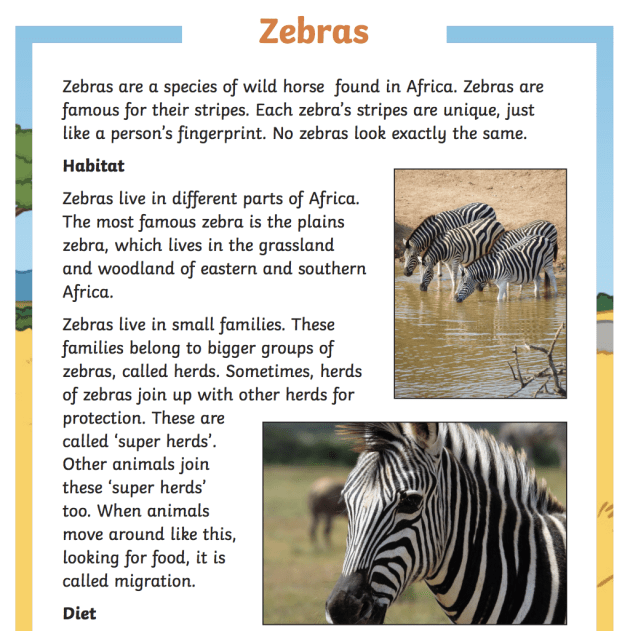
Plains zebras—also called common zebras or Burchell’s zebras—live in stable family units of one stallion, one to six mares, and their offspring. These family units form the core social unit of plains zebra society and persist for years, with the stallion defending his mares against rival males through display and occasional combat. Family units associate with other families to form herds that can number in the thousands during migration. But within these large aggregations each family maintains its internal cohesion. The mares and foals of a single family staying together even as the larger herd shifts around them. The stability of the family unit, compared to the more fluid social arrangements of wildebeest, allows plains zebras to maintain their association with the Great Migration while retaining a social structure more stable than their wildebeest companions.
Plains zebras stand as the classic companion species of wildebeest in the Serengeti-Mara migration. The two species have a facilitative ecological relationship: zebras graze the coarser, taller grass that wildebeest avoid, opening up the shorter, more nutritious grass that wildebeest prefer. This complementary grazing allows both species to exploit the same landscape more efficiently than either could alone. It also explains why the migration moves as a mixed-species movement rather than separate species waves. The zebra contingent of the migration numbers approximately 300,000 animals. About 15 percent of the total migratory herd by number but representing a disproportionate biomass given that zebras are considerably larger than wildebeest. Plains zebra stripes vary between populations. The six recognized subspecies differ in stripe pattern, stripe width, and shadow stripe development. Identifying subspecies in the field requires attention to the degree of striping on the legs and the presence or absence of “shadow stripes” between the main black stripes.
Grevy’s Zebra and Mountain Zebra
Africa’s Rarer Zebra Species
Grevy’s Zebra: Kenya’s Endangered Giant
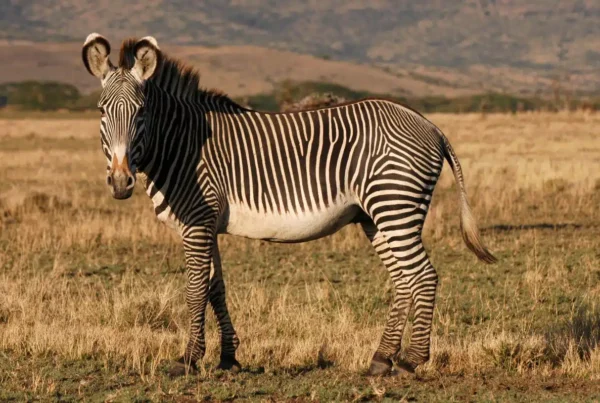
The Grevy’s zebra is the largest wild equid in the world and the most visually distinctive of the three African species. Its stripes are much narrower than those of the plains zebra and more numerous. And stop at the belly. Leaving a broad white underside without stripes. The ears are large and rounded. Almost mule-like. And the overall impression is of a more elegant and slightly more donkey-like animal than the compact, stocky plains zebra. Grevy’s zebras primarily inhabit arid and semi-arid grassland and scrubland in northern Kenya and southern Ethiopia, occupying a habitat zone quite different from the moister savanna grasslands that plains zebras dominate. The combination of habitat restriction and low reproductive rate. Females reproduce significantly less frequently than plains zebras. Makes the Grevy’s zebra population particularly vulnerable to habitat change and human pressure.
Grevy’s zebra social structure differs strikingly from the plains zebra’s family unit system. Males hold large water-adjacent territories against rival males, but females with foals are not permanently associated with any single male. They move freely between male territories, following food and water availability rather than the social attachment that maintains plains zebra harem groups. This fluid female arrangement means that Grevy’s zebra social organization more closely resembles a lek system than the harem structure of the plains zebra. Males compete for territory while females choose territories to visit based on resource quality rather than male identity. The best places to see Grevy’s zebras are Kenya’s Samburu National Reserve and Buffalo Springs. And Shaba National Reserve in northern Kenya. Where the species is a flagship attraction. Rangers monitor individual animals across the community conservancy network that has proven central to Grevy’s conservation in recent years.
Mountain Zebra Conservation
The mountain zebra occurs in two subspecies: the Cape mountain zebra of South Africa’s Western and Eastern Capes. And the Hartmann’s mountain zebra of Namibia and southwestern Angola. The Cape mountain zebra came extremely close to extinction by the mid-twentieth century, with the population falling below 100 individuals before intensive protection and the establishment of Mountain Zebra National Park in the Karoo brought the subspecies back from the brink. Today the Cape mountain zebra population exceeds 4,700 animals. A remarkable recovery driven primarily by strict protection in national parks and private reserves that have accepted translocated animals. The Hartmann’s mountain zebra is more numerous but faces increasing pressure from livestock farming expanding into its arid mountain range habitat in Namibia.
Mountain zebras adapt to rocky, steep terrain. They have harder hooves than plains zebras, a more mule-like build. And a dewlap (a fold of skin under the neck) found in no other zebra species. The stripe pattern is distinctive: unlike the Grevy’s, mountain zebra stripes extend to the legs and are bold and clearly defined. Unlike the plains zebra, there are no shadow stripes, and the stripes on the haunches form a distinctive “gridiron” pattern of parallel horizontal lines.
Seeing a mountain zebra in its natural habitat. Typically mountain fynbos or rocky Karoo scrubland in the case of the Cape subspecies. Is an experience available only in southern South Africa and Namibia. This makes them a specialist destination species rather than a standard safari encounter. Mountain Zebra National Park near Cradock in the Eastern Cape is the primary destination for Cape mountain zebra viewing and offers an accessible day-trip or short-stay option for travelers spending time in South Africa’s southern regions.
Best Places to See Zebras
Plains zebras are reliably visible across virtually all of East and Southern Africa’s major safari destinations. The Masai Mara and Serengeti during the migration season offer the most spectacular zebra viewing. Vast herds are moving across the plains, family groups are interacting at waterholes, and foals are nursing within minutes of birth on the open savanna. Amboseli, Ngorongoro, Kruger, Hwange, Chobe, and Etosha all support abundant resident plains zebra populations that are reliably visible year-round without the seasonal variation that migration-dependent viewing produces. South Africa’s Kruger and associated private reserves have large plains zebra populations. And zebra sightings are among the most common large-mammal encounters on any Kruger game drive.
For Grevy’s zebra viewing, Kenya’s Samburu-Buffalo Springs ecosystem is the single most reliable destination. The Grevy’s Zebra Trust runs community conservancy programs that have stabilized the Samburu population and made individual animal tracking possible for researchers and informed guides. Lewa Wildlife Conservancy and Ol Pejeta Conservancy in the Laikipia region also host Grevy’s zebras and combine them with rhinos, lions, and cheetahs. And a wild dog in one of Kenya’s most productive wildlife areas outside the main migration circuit. For mountain zebra, Mountain Zebra National Park and Karoo National Park in South Africa’s southern interior offer the best Cape subspecies viewing. Namibia’s Etosha National Park hosts Hartmann’s mountain zebra alongside the country’s excellent plains zebra population.
Plan Your Safari
Seeing all three zebra species requires a multi-country itinerary covering northern Kenya for Grevy’s and East or Southern Africa for plains zebras. And South Africa or Namibia for mountain zebras. Most East Africa safaris deliver plains zebras in extraordinary numbers without any special planning. The challenge is building in the Grévy’s and mountain zebra components.
African Wild Trekkers designs Kenya itineraries that combine Samburu for Grevy’s zebra viewing with Masai Mara and Amboseli for the full migration and plains zebra experience. And Southern Africa circuits that incorporate mountain zebra viewing alongside the Kruger and Namibia game drive circuits.
Contact African Wild Trekkers at africanwildtrekkers.com/contact with your travel dates, and we will design a safari itinerary that delivers the full range of Africa’s zebra diversity alongside the continent’s broader wildlife spectacle within 24 hours.