Night Safari Africa: Which Parks Allow After-Dark Game Drives?
Why Night Safaris Reveal a Completely Different Africa
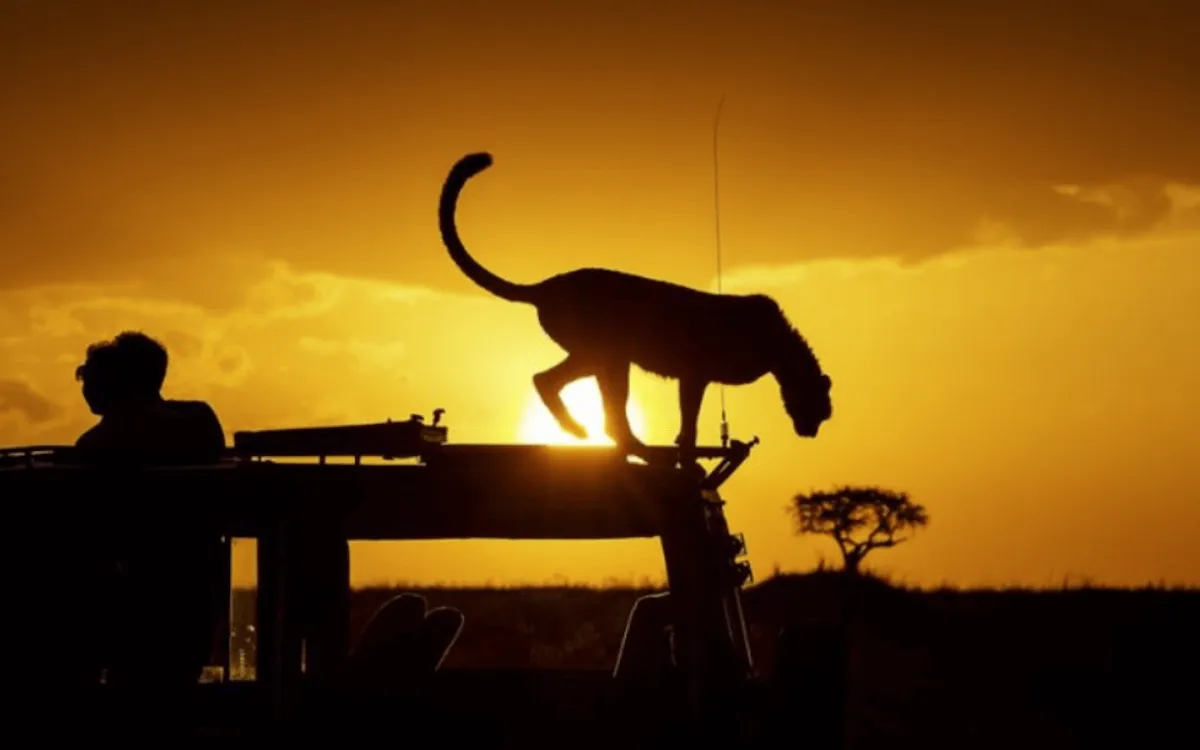
The African bush undergoes a profound transformation at dusk that most safari visitors who restrict their game drives to daylight hours never fully experience. As the sun drops below the horizon and the ambient light fails, the entire cast of characters changes: the diurnal species. Impala, zebra, giraffe, warthog. Retreat to their resting areas or compress into tighter, more vigilant groups. While a wholly different community of nocturnal and crepuscular wildlife emerges from the dense vegetation, tree hollows, and subsurface burrows that shelter them through the heat and brightness of the day. The leopard that spent twelve hours motionless in a marula tree drops silently to the ground and begins its hunting circuit. The aardvark reverses out of its burrow, tests the air with its long pig-like snout. And begins the night’s work of dismantling termite mounds. The African civet pads methodically along its scent-marked trail through the riverine forest. The genet flows along a fallen log hunting sleeping birds. This is an entirely separate Africa from the one that morning and afternoon game drives access. And the travelers who choose to pursue it on a dedicated night drive consistently describe it as among the most affecting wildlife experiences available anywhere on the continent.
Night drives operate using powerful handheld spotlights. Typically 100,000 to 300,000 candlepower halogen or LED units. That a spotter or tracker positioned beside or ahead of the guide sweeps slowly along the bush edges and tree lines. The eyes of nocturnal animals reflect spotlight beams with distinctive colors that change with species and give them away before their body becomes visible: the vivid orange-red shine of a leopard or lion at distance, the brilliant blue-white of a spring hare, the large circular amber of a bushbaby clinging to a branch, the dozens of tiny green pinpricks scattered across a grass clearing that reveal a colony of resting spiders. Learning to read these eyeshine signatures in the few seconds before the spotlight beam falls fully on the animal and reveals its body is a skill that guides teach guests from the first night drive. And the detective quality of the exercise. Scanning dark grass for the telltale glow, calling the color and estimated position, watching the form emerge from darkness. Adds an intellectual engagement layer to the nocturnal experience that daylight drives at full visibility cannot replicate.
Which Parks and Reserves Allow Night Drives
Night Drive Access in East Africa
Zambia: South Luangwa and Ruaha
South Luangwa National Park in Zambia. Widely regarded as the finest night safari destination in Africa. Is where the night game drive as a dedicated safari activity was pioneered in the 1950s by Norman Carr, one of Africa’s greatest conservation figures. South Luangwa’s private operators hold night drive concession permits that allow vehicles to operate in specific areas of the park after dark. And the nocturnal wildlife diversity and density in this ecosystem is extraordinary even by African standards. The park holds one of Africa’s highest leopard concentrations and these animals regularly appear hunting at close range on night drives. Sitting motionless in the grass watching an approaching impala herd, stalking through scrub with absolute fluid silence, or carrying a freshly killed impala toward a tree cache with effortless power. Honey badger, porcupine, large-spotted genet, African civet, spring hare, scrub hare, African wildcat, aardvark. And multiple species of owl all feature reliably on South Luangwa night drives across most seasons, making a three-night stay that includes two or three night drives one of the most species-diverse nocturnal wildlife experiences available anywhere.
Ruaha National Park in Tanzania’s Southern Highlands region similarly permits night drives through private lodge concessions. And the park’s relatively low visitor numbers. Far fewer vehicles than the Serengeti or the Mara. Mean that nocturnal encounters happen in near-total quiet without the competing spotlight beams from multiple vehicles that reduce the atmosphere of a night drive in more crowded parks. Ruaha’s baobab-studded landscape takes on an extraordinary quality under the spotlight and in the half-light of a full moon, with these ancient giants casting complex shadows across red laterite soil in patterns that create a theatrical setting for every wildlife encounter. The park holds excellent populations of lion, African wild dog, cheetah, hyena. And leopard that are all potentially active at night. And the rocky outcrops and dry river systems that characterize Ruaha’s landscape support a wide range of nocturnal invertebrate and reptile life that adds further dimension to the after-dark experience.
Kenya: Laikipia and Private Conservancies
Kenya’s national parks — the Masai Mara, Tsavo, Amboseli, and Samburu — prohibit night game drives entirely, a restriction that applies to all vehicles within the gazetted park boundaries after the official closing time of 7 PM. The rule reflects Kenya Wildlife Service policy designed to reduce vehicle disturbance to nocturnal wildlife and to manage the security challenges of operating vehicles across large unfenced landscapes after dark. However, Kenya’s extensive private conservancy system. Which sits adjacent to or surrounding several national parks and operates on private land under conservation leases rather than KWS jurisdiction. Permits night drives as a standard offering for lodge guests. The Masai Mara’s Ol Kinyei, Mara North, Naboisho, and Olare Motorogi conservancies all permit night drives through their private land, and the nocturnal wildlife in these areas is identical to that found within the Mara reserve itself since the conservancy boundaries are unfenced and animals move freely between them. A safari combining three nights in a Mara conservancy lodge with access to both day and night drives therefore delivers the full spectrum of Mara wildlife across all activity periods rather than the daylight-only access available to guests staying within the national reserve boundary.
Laikipia’s private conservancies — Ol Pejeta, Lewa, Borana, and Ol Malo — all offer night drives as part of their standard safari programming, and the high-altitude plateau ecosystem here produces a different but equally rewarding nocturnal cast from the Mara. Aardvark and pangolin sightings — two of Africa’s most elusive and sought-after nocturnal mammals — appear with meaningful regularity on Laikipia night drives, partly because the grassy highland habitat suits both species and partly because the plateau’s relatively small area means that guides who patrol the same roads nightly build up detailed knowledge of individual animals’ circuits that allows them to position vehicles in advance of likely sightings. A night drive that begins with a serval cat hunting in the headlight beam, pauses at a porcupine family investigating a termite mound. And ends with an aardvark snuffling methodically across a moonlit clearing represents the kind of five-star nocturnal experience that Laikipia consistently delivers and that Kenya’s gazetted park night drive restrictions make impossible to replicate within the national park system.
Night Drives in Southern Africa
Kruger’s Private Concessions and Sabi Sand
South Africa’s Kruger National Park prohibits night drives within its public areas, but the private concessions that operate within the park’s unfenced boundaries. Singita Lebombo, Singita Sweni, Imbali Safari Lodge, Hamiltons Tented Camp. And a handful of others. Hold exclusive night drive permits that allow their guests to operate after dark in the surrounding landscape. These private concession lodges offer a full day-and-night safari programme that their public rest camp counterparts within the same park boundary cannot. The nocturnal wildlife in the Kruger ecosystem is rich enough to justify the premium that private concession stays command over rest camp accommodation. The Sabi Sand Game Reserve, which shares an unfenced western boundary with Kruger and divides between private game reserves including the MalaMala, Londolozi, Lion Sands. And Singita Sabi Sand properties, has no night drive restrictions on its private land and offers after-dark game viewing that capitalizes on the reserve’s extraordinary leopard density. The Sabi Sand holds one of the world’s highest concentrations of individually known, habituated leopards. And night drives regularly encounter these animals hunting, feeding, and moving between territories at distances of 10 to 20 meters from the vehicle.
Botswana’s Okavango Delta camp network operates night drives on private concession land across the delta system, with water-level night activities including motorboat spotlighting along papyrus channels providing an additional nocturnal dimension unavailable in land-based safari destinations. A spotlight-guided boat drift along the Okavango’s maze of night channels. With African wood owls calling from overhanging fig trees, Pel’s fishing owls illuminated on a riverside branch, hippos surfacing silently in mid-channel. And the occasional sitatunga antelope standing knee-deep in the hyacinth-covered shallows. Delivers a completely unique nocturnal experience that no vehicle-based night drive can approximate. The combination of land vehicle and water-based night activities available to guests at Okavango Delta camps makes this one of the most comprehensive after-dark safari environments in Africa, with a biodiversity of nocturnal encounters across both terrestrial and aquatic habitats that rewards multi-night stays with increasing species lists through each successive night activity.
What to Expect and How to Prepare
Practical Preparation for Night Drives
What to Wear and Bring on a Night Drive
Night drives require significantly warmer clothing than afternoon game drives even in tropical destinations. Because the combination of vehicle movement speed and rapidly falling post-sunset temperatures creates a wind chill effect that catches many first-time guests unprepared. At elevation in South Luangwa or on the Laikipia Plateau, temperatures can drop from 28°C at the start of the afternoon drive to 12°C or below within an hour of sundown. And the open-sided safari vehicle provides no wind protection that a closed vehicle would offer. Layering a fleece or thin down jacket over your safari shirt and keeping a heavier jacket accessible on the seat beside you allows you to add warmth progressively as temperatures drop without stopping the drive for a clothing change. A warm beanie or safari hat with ear coverage is disproportionately effective at retaining body heat on cold night drives. And a pair of lightweight gloves allows you to hold binoculars and camera without the finger stiffness that cold metal produces in cooling evening air.
Camera preparation for night drives deserves specific attention before departure because the photographic challenges of after-dark wildlife shooting require settings and equipment choices that differ significantly from daytime safari photography. Modern mirrorless cameras perform impressively at high ISO sensitivities. ISO 6400 to 25600. That allow meaningful images in spotlight-lit conditions. And a fast prime lens of 85mm to 135mm focal length at f/1.4 to f/2.8 combines sufficient telephoto reach with adequate light-gathering capacity for handheld spotlight photography from a moving vehicle. Flash photography is universally prohibited on African night drives, and guests who arrive with flash-dependent compact cameras or smartphones as their primary photographic tool will find night drive photography genuinely challenging. The alternative approach — accepting the photographic limitations and focusing instead on the observational experience of the encounter — produces memories that are as vivid and lasting as any photograph and represents the correct priority for first-time night drive participants who are still building their basic wildlife photography skills in daylight conditions.
Plan Your Safari
African Wild Trekkers builds night drive access into every multi-night safari itinerary where the destination and operator permit it. Because we know from years of guest feedback that nocturnal experiences consistently rank among the most memorable highlights of any Africa trip. We select lodges specifically for their night drive access permissions, the quality of their spotters and tracking equipment. And the nocturnal wildlife diversity of their specific concession areas.
We advise every guest on what to wear, how to prepare their camera equipment. And what species are most likely to appear on night drives in each specific destination on their itinerary. This preparation ensures that the first night drive meets you with full orientation rather than surprised discomfort. That the cold is anticipated, the darkness is embraced rather than feared. And the spotlight technique is understood well enough to participate actively in the wildlife search rather than simply reacting to what the guide finds.
Contact African Wild Trekkers at africanwildtrekkers.com/contact with your destination interests and we will design an itinerary that includes the best available night drive access for your specific safari route within 24 hours.