Anti-Poaching Units Africa: How Rangers Are Fighting the Illegal Wildlife Trade
The Frontline of Wildlife Protection in Africa
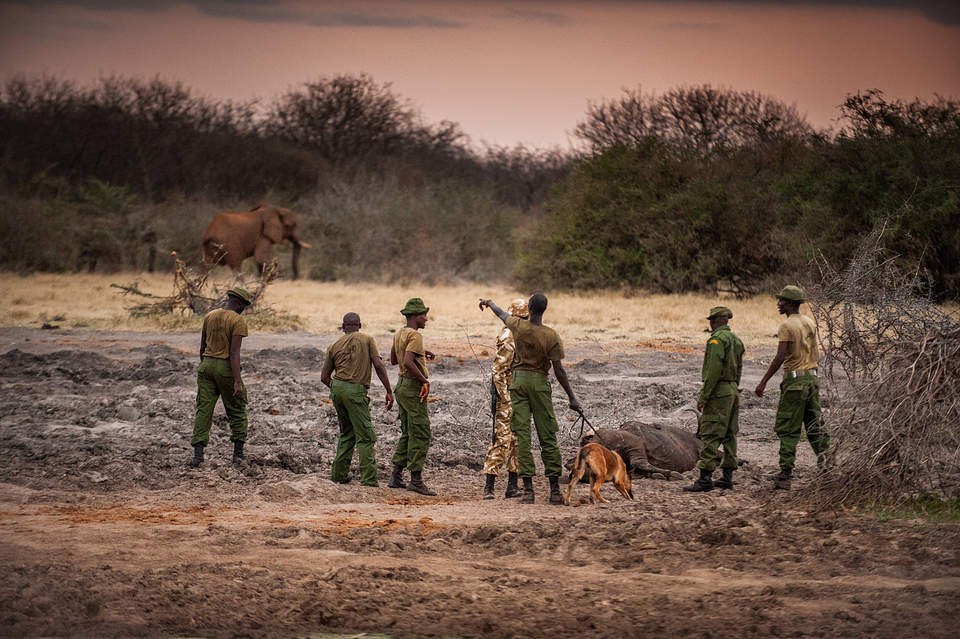
Anti-poaching units across Africa represent one of the most underfunded yet consequential conservation forces on the planet. These rangers operate in some of the continent’s most remote terrain. They face armed criminal networks that are better equipped, better financed, and operating across international borders with near impunity. Between 2016 and 2024, more than 1,000 rangers died in the line of duty across Africa and Asia, according to the Thin Green Line Foundation. This death toll rarely makes international headlines. Yet it represents a genuine armed conflict over the fate of wild species. Understanding who these rangers are, how they operate, and what they protect provides essential context for every safari traveller who cares about the wildlife they come to see.
The illegal wildlife trade generates approximately $23 billion per year. That makes it the fourth largest criminal enterprise on earth after drugs, arms, and human trafficking. Poaching networks exploit weak governance, porous borders, and corrupt supply chains. They funnel ivory, rhino horn, lion bones, pangolin scales, and live animals into black markets across Asia and the Middle East. The end buyers are often thousands of kilometres removed from the African rangers who stand in the way. This asymmetry — local rangers with limited resources versus internationally financed criminal cartels — defines the challenge that anti-poaching units face every single day.
How Anti-Poaching Operations Work on the Ground
Ranger Training and Deployment
The Making of a Wildlife Ranger
Becoming an anti-poaching ranger in Africa requires significantly more than physical fitness. Recruits undergo weapons training, wildlife crime law, tracking, first aid, community relations, and environmental monitoring. Programmes typically last three to six months. Organisations like the International Anti-Poaching Foundation (IAPF), founded by Damien Mander, run elite ranger academies in Zimbabwe. These academies have trained more than 200 rangers using a military-style curriculum adapted for conservation enforcement. The Peace Parks Foundation and African Wildlife Foundation operate parallel programmes across southern and eastern Africa. These organisations train hundreds of rangers per year in parks ranging from Kruger in South Africa to Niassa Reserve in Mozambique. Niassa covers over 42,000 square kilometres — one of Africa’s largest conservation areas.
Rangers in major reserves increasingly train in intelligence-led anti-poaching. This methodology is borrowed from law enforcement. It focuses on disrupting supply chains before poachers enter protected areas. That is more effective than simply responding to incidents after they occur. The approach involves informant networks within local communities. It also uses analysis of historical poaching hotspots mapped through Geographic Information Systems. Coordinated deployments are timed around known risk periods. New moon nights, when darkness provides cover, are prime poaching windows. So are dry season months, when animals concentrate around water sources. The shift from reactive to proactive ranger work has proven measurably effective. Kruger National Park reduced rhino poaching by over 50 percent between 2018 and 2022. This came partly through intelligence-led operations that arrested trafficking network leaders rather than just ground-level poachers.
Technology Transforming Ranger Operations
Modern anti-poaching operations rely heavily on technology that would have seemed impossible a decade ago. EarthRanger, a software platform developed by Vulcan Inc., aggregates real-time data from GPS collars on wildlife, ranger patrol positions, camera trap alerts, and acoustic sensors into a single dashboard. Control room operators use this dashboard to dispatch rangers rapidly to emerging threats. The system has dramatically improved response times in reserves including Ol Pejeta Conservancy in Kenya and Liwonde National Park in Malawi. In Liwonde, where African Parks took over management in 2015, rhino poaching dropped to near zero within three years. This followed the implementation of integrated surveillance systems combined with reformed ranger operations.
Thermal imaging drones have transformed night patrol capabilities in reserves that can afford them. The Air Shepherd program, operated by the non-profit Lindbergh Foundation, uses predictive algorithms to calculate where poachers are likely to enter a reserve on any given night. The algorithm draws on historical data, moon phase, and proximity to exit routes. It then flies thermal drones ahead of ranger teams to intercept threats before they reach animals. Trials in South Africa and Zimbabwe showed a 96 percent reduction in poaching incidents in monitored zones during active drone operations. This demonstrates the potential of aerial surveillance to multiply the effective reach of limited ranger forces. Acoustic monitoring systems from organisations like Rainforest Connection detect gunshots and chainsaw noise in real time. They alert rangers within minutes rather than hours when illegal activity occurs deep in dense woodland.
Community Rangers and Local Buy-In
Hiring From Within the Communities
Conservation organisations have learned through decades of failure that top-down enforcement without community buy-in does not work. The most successful anti-poaching programmes today deliberately recruit rangers from the same villages that border protected areas. This approach transforms former poachers — or the sons of poachers — into the park’s most committed defenders. Big Life Foundation protects wildlife across 1.6 million acres of the greater Amboseli ecosystem in Kenya and Tanzania. It employs more than 400 community rangers drawn from Maasai communities. These communities previously had complex and sometimes adversarial relationships with wildlife authorities. The rangers earn stable salaries, receive healthcare, and gain community status. This makes wildlife alive worth more to their families than wildlife dead through poaching payments.
The Akashinga all-female ranger unit in Zimbabwe launched in 2017 under Damien Mander and the IAPF. It represents the most striking example of community transformation through ranger employment. Akashinga recruits women who have experienced domestic violence, been widowed, or survived extreme poverty. They come from the Zambezi Valley, where poaching was historically widespread because few legal economic alternatives existed. By 2024 the unit had expanded to over 200 rangers. They protect more than 2,000 square kilometres across multiple wildlife areas. The unit achieved local poaching reduction rates comparable to armed male ranger units at a fraction of the operational cost. The programme demonstrated conclusively that social investment and economic opportunity within communities can be as powerful an anti-poaching tool as surveillance technology or armed enforcement.
Ranger Welfare and Retention Challenges
Despite their critical role, rangers across much of Africa remain severely underpaid, underequipped, and psychologically unsupported. A 2019 survey by the Ranger Federation of Africa found that the average ranger salary across sub-Saharan Africa was less than $150 per month. Below national minimum wages in most countries. Rangers regularly confront armed poachers carrying AK-47s. They operate in extreme heat without adequate boots, rain gear, or communication equipment. Ranger PTSD rates are alarmingly high in areas with frequent armed encounters. Yet formal mental health support is almost non-existent in park management budgets. The Wildlife Conservation Society’s Ranger Support program and the Thin Green Line Foundation have worked to establish ranger welfare funds. These funds provide life insurance, emergency medical coverage, and survivor support for rangers who die in the line of duty. Coverage remains patchy across the continent.
High ranger turnover undermines anti-poaching effectiveness. Experienced rangers who know every trail, waterhole, and seasonal animal movement in their area are irreplaceable assets. Reserves that invest in ranger welfare. Decent pay, equipment, housing near the park. And clear promotion pathways. Consistently report lower turnover and higher operational effectiveness. Reserves that treat rangers as interchangeable low-cost labour do not. Phinda Private Game Reserve in KwaZulu-Natal and Lewa Wildlife Conservancy in Kenya are frequently cited as models of good ranger management. They offer structured career development, community integration programmes, and recognition systems that create lifelong rangers rather than short-term contract workers.
The Scale of What Rangers Protect
Which Species Are Under the Most Pressure
Elephants, Rhinos, and Pangolins
African elephants lost approximately 30 percent of their population to poaching between 2007 and 2014. This was the worst decade for elephant slaughter since the ivory trade of the 1970s and 1980s. The 2016 CITES ivory trade ban helped reduce demand in some markets. Yet underground ivory networks remained active through Southeast Asian intermediaries. Forest elephant populations in Central Africa continued declining through the early 2020s. This happened even as savanna elephant numbers stabilised in protected southern African reserves. White rhino numbers recovered from near-extinction in the 1960s to approximately 17,000 animals by 2012. But poaching intensity in South Africa from 2010 to 2018 erased a decade of recovery gains. It reduced Kruger’s rhino population by more than half. Black rhino populations, never fully recovered, remain critically endangered at approximately 6,500 individuals. Every one of them is under active protection by a named ranger working a patrol route right now.
Pangolins have become the world’s most trafficked mammal. Most consumers in destination markets have never seen a living one. All four African pangolin species face increased poaching pressure. Asian pangolin species are approaching commercial extinction, driving traffickers to source ever-larger volumes from Africa. The Tikki Hywood Foundation in Zimbabwe and the Pangolin Crisis Fund have documented pangolin trafficking networks that span multiple African countries. These networks connect directly to Vietnamese and Chinese smuggling operations via courier airports in Addis Ababa, Nairobi, and Johannesburg. Rangers protecting pangolins rarely see the animals they guard, because pangolins are nocturnal, secretive, and scale-armoured. Population monitoring is nearly impossible. Poaching detection depends on confiscating animals mid-transit rather than catching poachers in the act.
The Role of Safari Tourism in Funding Protection
Safari tourism is the single most important economic mechanism making anti-poaching units financially viable across much of Africa. In Kenya, tourism revenues fund approximately 65 percent of Kenya Wildlife Service’s operating budget. The COVID-19 pandemic’s near-total elimination of tourist arrivals in 2020 created immediate budget crises in parks. Those parks had to reduce ranger patrols precisely when poaching pressure increased due to reduced surveillance. Conservancies like Ol Pejeta in Kenya make the connection explicit. Every safari guest staying in their lodges directly funds ranger salaries, vehicle maintenance, veterinary care for wildlife, and community outreach programmes. The conservancy employs over 400 full-time staff. The majority are rangers and community liaison officers. Tourism revenues cover the full operational budget.
Private game reserves in southern Africa demonstrate that high-end tourism can fund world-class protection even without government support. Singita’s reserves in Tanzania, South Africa, Rwanda, and Zimbabwe each maintain ranger-to-area ratios that government parks cannot afford. This enables intensive surveillance across every kilometre of their territory. The Singita Grumeti Fund in Tanzania’s western Serengeti has transformed what was once a heavily poached buffer zone into a thriving wildlife corridor. It did so by hiring and training over 600 rangers and community members, investing in canine units, deploying camera trap networks. And building collaborative relationships with 23 surrounding villages. The result has been a dramatic increase in wildlife density — lion and elephant populations measurably higher than pre-programme baselines. This was achieved not through exclusion of local people but through integrating them as the primary beneficiaries and protectors of wildlife recovery.
Plan Your Safari
Safari tourism is the most direct way you can contribute to anti-poaching operations. The revenues from your stay fund the rangers, technology, and community programmes that make wildlife protection possible. Choosing conservancies and operators that are transparent about where their conservation fees go. Ol Pejeta, Lewa, Singita, African Parks-managed reserves. Ensures your travel budget actively supports frontline ranger work. It prevents your money from simply passing through opaque booking chains.
African Wild Trekkers partners exclusively with operators whose conservation credentials are verifiable. Your safari package will include detailed information about which ranger units and community programmes your fees support. We can arrange visits to ranger training facilities, anti-poaching operations briefings, and community ranger engagement sessions. These are available in reserves including Ol Pejeta Conservancy and Uganda Wildlife Authority parks. Where ranger transparency programmes run openly for conservation-conscious guests.
Contact African Wild Trekkers at africanwildtrekkers.com/contact with your travel dates and preferred conservation focus. We will build you a safari itinerary where every night’s accommodation directly funds the rangers protecting the wildlife you have come to see.