Cheetah Population Africa 2026: How Many Are Left and Can We Save Them?
The Fastest Animal on Earth, Racing Against Extinction
The cheetah population across Africa in 2026 tells the story of a species that has survived longer than almost any wildlife conservation crisis should allow, yet continues declining toward a threshold that may become irreversible within the next two decades without significant intervention. Approximately 7,000 cheetahs remain in the wild across Africa.
Down from an estimated 14,000 in 1975 and an unimaginable historical population in the hundreds of thousands that ranged from sub-Saharan Africa across the Middle East to India before human expansion eliminated them from most of their former range. Speed makes cheetahs the most extraordinary predators on the planet.
Capable of accelerating from zero to 112 kilometres per hour in under three seconds. But that speed is no defence against the compound threats of habitat loss, human-wildlife conflict, illegal pet trade, disease. And competition with larger carnivores that push cheetah populations steadily downward across the continent.
Unlike lions, leopards, and other large African carnivores that have maintained substantial populations across multiple countries, cheetahs concentrate in surprisingly few strongholds. Approximately 4,000 of the world’s remaining cheetahs. Over half the entire global population.
Live in Zimbabwe and the southern Kalahari region spanning Botswana and Namibia, with Namibia hosting the largest single-country cheetah population at an estimated 1,200 to 1,500 individuals. East Africa’s populations, which include the famous cheetahs of the Masai Mara, Serengeti.
And Amboseli ecosystems, are far smaller than popular perception suggests. Researchers estimate the entire Serengeti-Mara cheetah population at fewer than 1,000 animals, spread across an ecosystem the size of Denmark. Understanding this geographical concentration helps explain both the specific conservation challenges cheetahs face and the interventions that have the best chance of stabilising populations before another decade of decline removes any remaining buffer above the threshold of functional extinction.
Why Cheetahs Are Declining: The Specific Threats
Habitat and Human Conflict
Living Outside Protected Areas
The most distinctive feature of cheetah ecology that shapes every aspect of their conservation challenge is that 77 percent of Africa’s remaining cheetahs live outside formally protected areas. On communal land, private farmland. And ranching properties where their survival depends entirely on tolerance from landowners who may regard them as threats to livestock.
This is not a new development: cheetahs have always used large home ranges that extended beyond park boundaries, with male coalitions in the Serengeti ecosystem tracked by researchers at the Serengeti Cheetah Project using areas of up to 1,500 square kilometres that inevitably include farmland and human settlement.
But as Africa’s human population has grown and agricultural expansion has converted savanna grassland to cropland at a rate of approximately 100,000 square kilometres per year across sub-Saharan Africa since 2000, the proportion of former cheetah range that remains accessible without entering into conflict with human land use has shrunk dramatically.
Livestock predation is the immediate trigger for most cheetah killings on private land. But the actual predation rate farmers attribute to cheetahs is substantially lower than they typically report. Research by Cheetah Conservation Fund Namibia.
Which has operated the most comprehensive cheetah research and conservation programme on the continent since Laurie Marker founded the organisation in 1990. Found that farmers correctly identified cheetahs as responsible for livestock losses in only about 20 percent of cases where they blamed cheetahs, with dogs, jackals.
And caracals responsible for the majority of remaining losses. This systematic misattribution of livestock losses to cheetahs drives killing rates that are disproportionate to actual predation costs. And correcting the misattribution through livestock guardian programmes and kill-site investigation training for farmers has reduced cheetah persecution significantly in areas where it has been implemented.
Competition With Other Large Carnivores
Within protected areas, cheetahs face a different threat that receives less public attention but substantially limits their population density: competitive exclusion by larger carnivores, particularly lions and spotted hyenas. Cheetahs are physiologically optimised for speed at the expense of strength. Which means they cannot defend kills against larger competitors and regularly lose between 10 and 50 percent of their prey to kleptoparasitism.
The theft of prey by stronger predators. Depending on local carnivore community composition. Female cheetahs with cubs are particularly vulnerable because they cannot move cubs quickly to avoid competing predators. And lion predation is a significant cause of cheetah cub mortality in areas with high lion density, with cubs in the Serengeti facing up to 90 percent mortality before reaching independence primarily from lion predation.
This competitive pressure means that the protected areas with the densest wildlife populations. The areas most attractive to safari tourists and receiving the most conservation investment. Are often not the areas where cheetahs can maintain viable populations.
The Masai Mara, despite its enormous appeal as a cheetah safari destination, has lower cheetah densities than the much less-visited conservancies on its eastern boundary where lion pressure is lower. The Serengeti’s famous cheetah population concentrates in the open short-grass plains of the southern ecosystem precisely because these areas have lower vegetation cover that reduces ambush predation risk from lions and leopards. A habitat specialisation that makes cheetahs unusually sensitive to vegetation changes driven by bush encroachment and reduced fire management.
The Illegal Pet Trade
Cubs Smuggled Into the Middle East
The illegal trade in live cheetah cubs for the luxury pet market in Gulf states. Particularly Saudi Arabia, UAE. And Kuwait. Has become one of the most significant threats to East African cheetah populations in the past decade. Cheetahs are status symbols in these markets, with adult animals selling for prices between $10,000 and $15,000 and demand significantly exceeding legal supply given that CITES regulations prohibit commercial breeding of cheetahs for trade.
Traffickers capture cubs wild in Ethiopia, Somalia, and northern Kenya, transport them overland through Yemen or fly them in cargo through Djibouti, and sell them through social media platforms. Primarily Instagram and Snapchat. To buyers who have no understanding that their pet represents an animal stolen from a wild population that cannot afford the loss.
The Cheetah Conservation Fund estimates that for every cub that survives the journey and reaches a buyer, approximately three to four cubs die in transit from stress, dehydration, disease. And inadequate care. Meaning the effective mortality from illegal trade is four to five times higher than the number of animals that actually enter the pet market.
Crucially, the cubs in this supply chain come predominantly from Ethiopia and the Horn of Africa. Where a small cheetah population estimated at only 200 to 300 individuals faces systematic depletion from cub capture at a rate that threatens local extinction within this decade if enforcement does not improve.
Unlike the better-monitored East African national park populations, these Horn of Africa cheetahs inhabit remote areas with minimal conservation presence and cross international boundaries regularly, making systematic monitoring and anti-trafficking enforcement extremely difficult. TRAFFIC has documented the trade through social media investigations and works with customs authorities in Yemen, Djibouti. And the UAE to intercept shipments. But the volume intercepted remains a small fraction of total trade flow.
Genetic Diversity and Disease Vulnerability
All living cheetahs are remarkably similar genetically. More similar than inbred laboratory mice. Due to a severe population bottleneck approximately 10,000 years ago that reduced the global cheetah population to a very small number of surviving individuals from which all modern cheetahs descend. This extreme genetic homogeneity means cheetahs are highly susceptible to viral diseases that might kill a fraction of a genetically diverse population.
Because every individual has essentially the same immune system repertoire. The feline infectious peritonitis virus, for example, has caused severe mortality events in captive cheetah populations in North America where normally only a small percentage of exposed cats would be expected to die.
Researchers at the Smithsonian Conservation Biology Institute, who have studied cheetah genetics since the 1980s, consider the species’ genetic uniformity a background vulnerability that makes every other threat more dangerous. A population already weakened by habitat loss and human conflict has no genetic variation buffer to draw on when novel pathogens emerge.
Despite this genetic constraint, wild cheetah populations in Namibia and Botswana have maintained reasonable reproductive rates, suggesting that genetic bottleneck effects have not yet crossed a threshold of reproductive failure.
The cheetah’s extreme speed and hunting specialisation appears to have remained intact despite genetic uniformity. And researchers have found no evidence of reduced immune function in wild populations compared to historical baselines. The genetic concern is therefore more a background risk factor than an immediate crisis driver.
But it means that population reductions below certain thresholds may trigger inbreeding depression effects that create a feedback loop of reduced fitness and further population decline that would be extremely difficult to reverse.
Conservation Programmes Making a Difference
Cheetah Conservation Fund’s Livestock Guardian Programme
The Cheetah Conservation Fund’s livestock guarding dog programme in Namibia has produced the most consistently documented success in reducing cheetah persecution through non-lethal conflict prevention methods.
Anatolian Shepherd and Kangal dogs. Breeds developed in Turkey over centuries for exactly this purpose. Live with farming families on commercial and communal farmland. Where they guard livestock herds and actively deter cheetah approaches through their size, noise, and territorial behaviour. CCF has placed over 700 guarding dogs with Namibian farmers since the programme began in 1994.
And independent assessments of farms with guarding dogs have consistently found 80 to 100 percent reductions in cheetah-livestock conflicts compared to control farms without dogs. More importantly, conflict reduction directly translates to cheetah survival: farmers who report no livestock losses to cheetahs have no economic incentive to kill cheetahs.
And the cultural shift from viewing cheetahs as pests to viewing them as tolerable neighbours is a prerequisite for the large-scale human-wildlife coexistence that sustaining cheetah populations across their range outside protected areas requires.
CCF’s Model Farm programme trains Namibian farmers in a holistic rangeland management approach that improves cattle productivity while reducing vegetation encroachment. The same bush encroachment that reduces cheetah habitat quality and grazing carrying capacity simultaneously.
By demonstrating that good land management practices benefit both livestock productivity and wildlife coexistence, the programme creates economic incentives for cheetah conservation that go beyond pure altruism. Farmers who participate in holistic grazing management courses run by CCF consistently report improved cattle weight gains and reduced veterinary costs alongside reduced livestock losses. Making cheetah tolerance a rational economic choice rather than a sacrifice.
Rewilding and Range Expansion Efforts
Several major rewilding initiatives are attempting to re-establish cheetahs in ecosystems from which they have been locally extirpated over the past century. Malawi’s Majete Wildlife Reserve, managed by African Parks, received cheetahs in a translocation from South Africa in 2017. The first cheetahs in Malawi for over a century. And the population had grown to 14 individuals by 2022 through natural reproduction.
Rwanda’s Akagera National Park received six cheetahs from South Africa in 2019, establishing another new population in Central Africa. India’s Kuno National Park received African cheetahs from Namibia and South Africa in 2022 and 2023 under a controversial reintroduction programme attempting to re-establish cheetahs on the Indian subcontinent for the first time since the subspecies went extinct there in the 1950s, though the early mortality rate among translocated individuals has raised significant concerns among wildlife ecologists about the programme’s biological viability.
Within Africa, the creation of large connected wildlife areas through transfrontier conservation initiatives offers the most promising landscape-scale solution for cheetah population viability. Because the animals’ vast range requirements mean that no single protected area can support a genetically viable population independently.
The Kavango-Zambezi Transfrontier Conservation Area, which links national parks and wildlife management areas across Angola, Botswana, Namibia, Zambia. And Zimbabwe in a wildlife corridor covering over 500,000 square kilometres, contains some of the most important remaining cheetah habitat on the continent and enables the free movement of individuals between countries in a way that maintains population connectivity essential for long-term genetic health.
Plan Your Safari
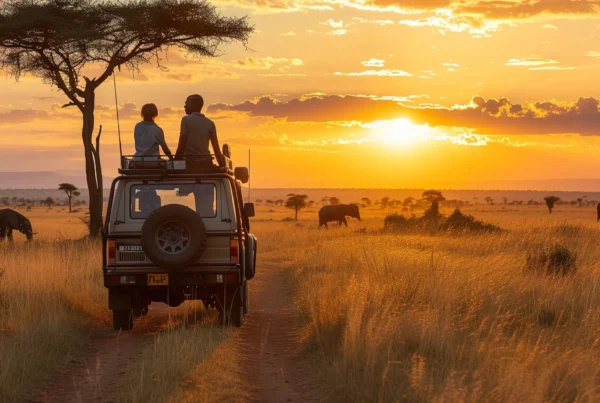
Seeing a cheetah hunt in the wild is among the most extraordinary experiences Africa’s wildlife offers. But finding cheetahs reliably requires choosing the right ecosystem and working with guides who know individual animals’ territories and daily patterns. The open grasslands of the southern Serengeti, the Ndutu plains during calving season, the Masai Mara conservancies east of the main reserve. And the Kalahari regions of Namibia and Botswana consistently offer the best cheetah encounters.
African Wild Trekkers works with field guides across East and southern Africa who have spent years tracking specific cheetah coalitions and mother-cub groups, giving you the best realistic chance of observing a hunt or a mother teaching cubs to stalk rather than simply spotting a cheetah resting under a tree. We can build dedicated cheetah-focused itineraries or integrate cheetah-priority ecosystems into broader safari plans.
Contact African Wild Trekkers at africanwildtrekkers.com/contact with your travel dates and we will design a safari that gives you the best possible chance of witnessing the world’s fastest land animal doing what evolution perfected it for.