info@africanwildtrekkers.com

Bwindi Impenetrable National Park: The Complete Guide to Uganda’s Gorilla Forest
Bwindi Impenetrable National Park sits in southwestern Uganda, tucked against the edge of the Albertine Rift Valley. Its name comes honestly. Ancient rainforest here grows so dense in places that sunlight barely reaches the forest floor, and the terrain rolls in steep, muddy ridges that have earned the park its reputation as one of the more physically demanding gorilla trekking destinations in Africa.
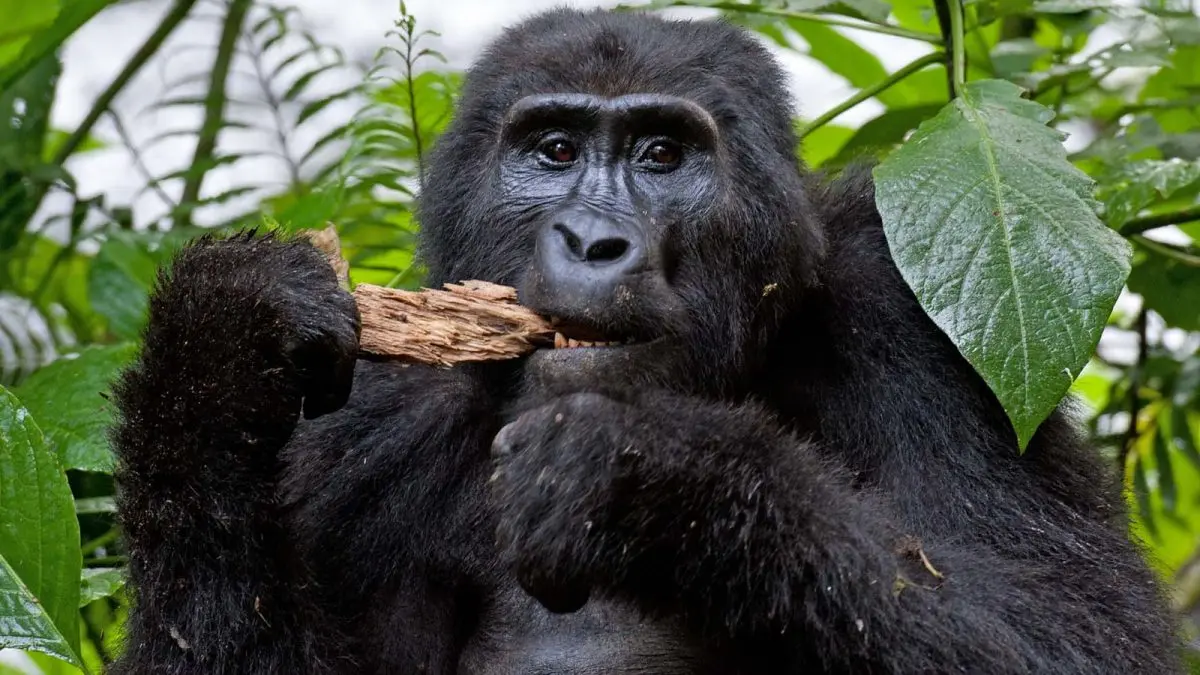
None of that difficulty puts visitors off. Bwindi holds roughly half of the world’s remaining mountain gorilla population, spread across four separate trekking sectors. For most travelers, a morning spent here with a wild gorilla family stands as the single most memorable moment of an entire East Africa trip.
This guide covers everything needed to plan a Bwindi visit. It walks through the park’s four sectors, permit details, what a trekking day actually looks like, timing, and where to stay.
Why Bwindi Matters
Bwindi earned UNESCO World Heritage status for good reason. The forest here is one of the oldest and most biologically diverse in Africa, home to over 400 plant species, more than 350 bird species, and a long list of primates beyond the gorillas themselves. Few forests on the continent pack this much ecological richness into so compact an area.
The park’s gorilla population sets it apart from anywhere else in the world. Bwindi alone shelters close to half of all mountain gorillas left on the planet, a species that came dangerously close to extinction in the twentieth century. Careful conservation work, funded in large part by trekking permits, has helped that population slowly recover over the past few decades.
For most visitors, though, the draw is simpler than any of these facts. Spending an hour within a few meters of a wild gorilla family, watching a silverback move calmly through his own territory, tends to leave a lasting impression that statistics alone can’t capture.
The Four Trekking Sectors
Buhoma
Buhoma sits in the northern part of the park and was Bwindi’s original trekking base, making it the most established and accessible of the four sectors. Several gorilla families are habituated here, and the sector offers a good mix of easier and more demanding trek options depending on which family a permit is assigned to. Buhoma also has the widest range of accommodation choices, from budget guesthouses to high-end lodges.
Ruhija
Ruhija sits at a higher elevation in the eastern part of the park, which makes for cooler temperatures and, at times, more strenuous terrain. This sector tends to see fewer visitors than Buhoma, giving treks here a quieter feel. Ruhija is also a strong base for birdwatchers, given its elevation and proximity to some of the park’s richest birding trails.
Rushaga
Rushaga sits in the south and holds the largest number of habituated gorilla families of any sector in Bwindi. This makes it the most likely place to secure a permit on short notice during busy periods. Rushaga is also where Bwindi’s gorilla habituation experience takes place, a longer permit option for travelers wanting extended time with a gorilla family still being acclimated to human presence.
Nkuringo
Nkuringo sits in the far south and has a reputation as the most physically demanding of the four sectors, with steep terrain both on the way in and the way out. The reward for that effort is a sense of remoteness that the busier sectors don’t quite match. Nkuringo also offers striking views across the forest canopy toward the Virunga volcanoes on a clear day.
What a Trekking Day Looks Like
Trekking days begin early, with a briefing at the sector’s park headquarters around seven or eight in the morning. Rangers assign each group of up to eight visitors to a specific gorilla family, often based on fitness level and the family’s last known location. This briefing also covers the rules every group follows once the gorillas are found.
From there, the hike itself can run anywhere from one to several hours in each direction, depending entirely on where the assigned family has moved since it was last tracked. Trackers set out ahead of the main group each morning, following signs left by the gorillas the previous evening, and radio updates guide visitors toward wherever contact is eventually made.
Once the group reaches the gorillas, a strict one-hour limit begins. Visitors stay a respectful distance away, speak quietly, and simply watch as the family goes about its normal routine, whether that means feeding, resting, or juveniles play-wrestling nearby. Photography is welcome, though flash is not permitted, since it can startle the animals.
The hike back out often feels different from the hike in. Many trekkers describe this return walk as quieter and more reflective, the physical effort of the morning giving way to something closer to disbelief at what just happened. Porters remain available throughout to help carry bags or offer a steadying hand on the steeper sections.
Gorilla Permits for Bwindi
A Bwindi gorilla permit is booked through the Uganda Wildlife Authority, either directly or through a licensed tour operator, and covers park entry, the guided trek, and the hour spent with the gorillas once found. It does not cover porter fees, tipping, transport, or accommodation, all of which need to be budgeted separately.
Permits are capped daily across all four sectors to limit stress on the gorilla population, which makes early booking important, particularly for June through September and the December to February window. Three to six months ahead is a reasonable target for anyone with fixed travel dates, and popular sectors like Rushaga can sell out even further in advance during peak season.
Permit prices are set by the Uganda Wildlife Authority and can shift from year to year, so checking current rates directly or through an operator is the only reliable way to get an accurate figure. Bwindi’s permits generally cost less than Rwanda’s equivalent in Volcanoes National Park, which is part of why Uganda remains a popular choice for budget-conscious trekkers.
Best Time to Trek in Bwindi
Bwindi’s trails are steep and often muddy, so timing matters more here than in flatter parks. The main dry season runs from June to September, offering firmer footing and the most comfortable trekking conditions of the year. A second, shorter dry spell falls between December and February, drawing a smaller but still noticeable crowd.
The wetter months, running roughly from March to May and October to November, bring heavier rain and more physically demanding trails. Fewer visitors trek during this period, and permit availability tends to open up as a result. Gorilla trekking itself runs year-round regardless of season, since the gorillas live in the forest permanently rather than migrating.
Fitness and What to Expect Physically
Bwindi’s terrain is genuinely more demanding than a standard game drive, and trekkers should go in with realistic expectations. Trails climb and descend steep, sometimes muddy slopes, and thick vegetation can slow progress considerably in places. A reasonable, everyday level of fitness is enough for most healthy adults, but this is not a casual stroll.
Porters are available for hire at every sector’s starting point and are worth considering even for fit trekkers, both for the practical help and because the fee directly supports the local community. Trekking poles help considerably on the steeper sections.
Anyone with mobility concerns should raise this with their operator well before the trip, since some sectors can arrange a sedan-chair option carried by a small team of porters.
Accommodation Near the Park
Lodges cluster around each of the four sectors. Staying close to the right one saves real time on trekking morning. Booking the wrong sector can add an hour or more of driving before a hike even starts, so most visitors wait until their permit is confirmed before choosing a lodge.
Buhoma has the widest range of options. It was Bwindi’s original trekking base, so the lodge scene here is the most developed. Buhoma Lodge sits just minutes from park headquarters. Mahogany Springs Lodge and Bwindi Lodge sit nearby too, both luxury tier, with Bwindi Lodge known for gorillas sometimes wandering close to the grounds.
Buhoma Community Rest Camp offers a simpler, community-run budget option in the same area.
Ruhija has a smaller selection, matching its quieter feel. Gorilla Mist Camp and Ruhija Gorilla Safari Lodge both offer solid mid-range comfort near the trailhead. Bakiga Lodge suits birders well, given its forest views and closeness to the Mubwindi Swamp trail.
Rushaga holds the most habituated gorilla families, and its lodge scene reflects that. Four Gorillas Lodge sits at the luxury end, close to the trekking center. Ichumbi Gorilla Lodge and Gorilla Valley Lodge both offer strong mid-range stays nearby, popular with travelers booking the gorilla habituation experience.
Nkuringo is the most remote sector, with fewer lodges but a few standout ones. Clouds Mountain Gorilla Lodge sits high on a forested ridge, with volcano views on a clear day. Nkuringo Bwindi Gorilla Lodge offers a similar hillside setting at a more moderate price.
Chameleon Hill Lodge sits about forty-five minutes away on Lake Mutanda, a good base for travelers continuing on to Mgahinga Gorilla National Park.
Combining Bwindi With the Rest of Uganda
Bwindi pairs naturally with Uganda’s savanna parks for travelers wanting both gorillas and classic game viewing in one trip. Queen Elizabeth National Park sits within a reasonable drive and adds tree-climbing lions and a boat cruise along the Kazinga Channel.
Mgahinga Gorilla National Park, further south near the Rwanda and DR Congo borders, offers an alternative or additional gorilla trek along with golden monkey tracking and volcano hikes.
A Batwa cultural visit is a common add-on near several of Bwindi’s sectors, offering insight into the forest life of the Batwa people before conservation policy moved them out of the park. Many trekkers build a rest day into their itinerary immediately after the trek itself, given how physically demanding the hike can be. Kibale National Park, home to Uganda’s best chimpanzee trekking, also sits within reach for travelers wanting a second primate encounter.
Frequently Asked Questions
Which Bwindi sector is best for a first-time trekker?
Buhoma is generally considered the most accessible sector, with a good mix of trek difficulty levels and the widest range of accommodation, though Rushaga often has the best permit availability on shorter notice.
How much does a Bwindi gorilla permit cost?
Permit prices are set by the Uganda Wildlife Authority and change periodically, so checking current rates directly or through a licensed operator is the most reliable way to get an accurate figure before booking.
How long does a Bwindi gorilla trek take?
Treks can take anywhere from one to six hours round trip, depending entirely on where the assigned gorilla family happens to be on that particular day.
Can I trek gorillas in Bwindi more than once?
Yes, and some visitors do trek in two different sectors on the same trip, since each houses different habituated families with their own dynamics and personalities.
Is Bwindi safe for gorilla trekking?
Bwindi maintains a well-established, well-regulated trekking program with a strong safety record, and following ranger instructions throughout the day keeps both visitors and gorillas safe.