info@africanwildtrekkers.com

Gorilla Trekking Experience: A Journey into the Heart of Africa’s Rainforests
Gorilla trekking stands among Africa’s most extraordinary wildlife experiences. It takes travelers deep into ancient rainforests where they come face to face with endangered mountain gorillas in their natural habitat. Unlike traditional wildlife viewing from a safari vehicle, gorilla trekking creates a rare connection between humans and one of the world’s closest relatives.
The experience combines adventure, conservation, and discovery. Trekkers hike through dense forests, follow expert trackers, and spend a precious hour observing gorillas as they feed, play, rest, and interact with one another. Every encounter feels unique because each gorilla family has its own personality, social structure, and daily routine.
Uganda, Rwanda, and the Democratic Republic of Congo protect the remaining mountain gorilla populations. These destinations offer travelers the opportunity to witness these gentle giants while contributing directly to their conservation and the protection of their fragile forest ecosystems.
Entering the World of Mountain Gorillas
The journey begins long before visitors see a gorilla. It starts with a walk into mist-covered forests filled with towering trees, thick vegetation, bird calls, and the sounds of the wild. The forest itself becomes part of the adventure as trekkers move through one of Africa’s most biologically rich environments.
Mountain gorillas live in high-altitude forests, often between 2,200 and 4,300 meters above sea level. Their habitats include steep slopes, bamboo zones, and dense tropical vegetation. Reaching them requires patience, determination, and a willingness to explore challenging terrain.
Rangers lead every trek because they understand gorilla behavior and know the daily movements of each habituated family. They track the gorillas every morning and communicate their location with trekking teams. Their knowledge increases the chances of a successful encounter while ensuring that visitors follow conservation guidelines.
The Trek Through the Forest
The trekking experience varies from day to day because gorillas move freely through their habitat. Some groups remain close to the starting point, while others move deeper into the forest in search of food.
The hike can last from a few hours to most of the day depending on the gorilla family’s location. Trekkers walk through muddy trails, thick vegetation, and sometimes steep mountain terrain. The physical challenge forms part of what makes the experience so rewarding.
Along the way, the forest reveals many hidden treasures. Trekkers may encounter colorful birds, butterflies, unique plants, and signs of other forest animals. The journey becomes more than a search for gorillas; it becomes an exploration of a living ecosystem.
The excitement builds as rangers discover fresh signs of gorilla activity. Broken branches, footprints, and nesting sites indicate that the gorillas are nearby. The final moments before reaching the family often create unforgettable anticipation.
The First Encounter with a Gorilla Family
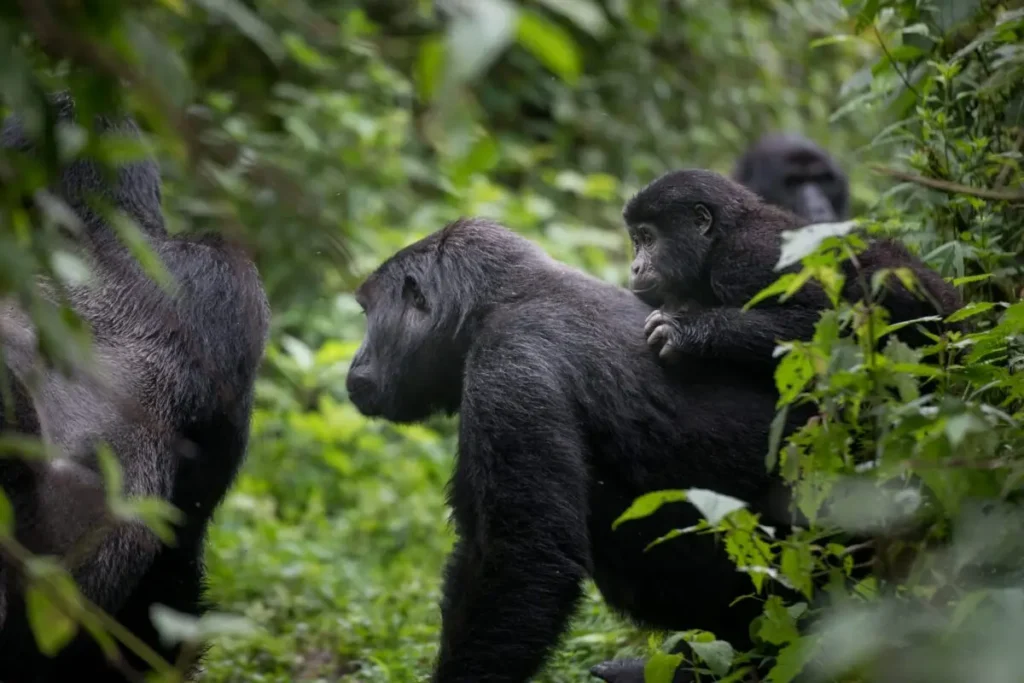
Seeing a mountain gorilla for the first time creates a powerful emotional experience. After hours of trekking, the forest suddenly reveals a family resting, feeding, or moving through the vegetation.
The presence of a silverback often captures immediate attention. These large males protect and guide their families with impressive strength and calm authority. Despite their size, they often display gentle and thoughtful behavior around other members of the group.
Females usually remain focused on feeding, grooming, and caring for their young. Mothers carry infants close to their bodies while juveniles explore their surroundings through play and curiosity.
The experience feels different from ordinary wildlife viewing because gorillas often acknowledge human presence. They may look directly at visitors, move nearby, or continue their daily activities while trekkers quietly observe.
Spending Time with Mountain Gorillas
Once visitors locate a gorilla family, they spend one unforgettable hour with them. This limited time protects the animals while allowing trekkers to experience their natural behavior.
During this hour, visitors may watch gorillas feeding on leaves, climbing through vegetation, resting, grooming each other, or playing. Each moment provides insight into their intelligence and complex social relationships.
The calm nature of gorillas often surprises first-time trekkers. Many people expect a powerful and intimidating animal, but they discover a species that shows curiosity, emotion, and remarkable social connection.
Photography becomes an important part of the experience, but many trekkers also choose to simply observe. Watching a gorilla family interact without a camera creates memories that remain vivid long after the trek ends.
Meeting the Silverback
The silverback represents the heart of every gorilla family. These mature males lead their groups, protect members from threats, and make important decisions about movement and safety.
A close encounter with a silverback creates one of the most memorable moments of gorilla trekking. Their size, presence, and calm confidence leave a lasting impression on visitors.
Silverbacks often appear serious because of their protective role, but they also display gentle behavior. They play with young gorillas, communicate through vocal sounds, and maintain strong bonds within the family.
Observing a silverback in the wild offers a deeper understanding of gorilla society and highlights the importance of protecting these incredible animals.
Gorilla Trekking Destinations in Africa
Uganda offers some of the most rewarding gorilla trekking experiences in Bwindi Impenetrable National Park and Mgahinga National Park. Bwindi hosts numerous habituated gorilla families spread across sectors such as Buhoma, Ruhija, Rushaga, and Nkuringo. This variety gives travelers different trekking options and experiences.
Rwanda’s Volcanoes National Park provides a premium gorilla trekking experience with excellent infrastructure and easy access from Kigali. The park protects gorilla families living among the Virunga volcanoes and offers spectacular mountain scenery.
The Democratic Republic of Congo provides a more adventurous experience in Virunga National Park. The park combines gorilla trekking with dramatic volcanic landscapes and a strong conservation story.
Each destination offers something unique, but all provide the same unforgettable opportunity to spend time with mountain gorillas.
The Importance of Gorilla Conservation
Gorilla trekking plays a major role in protecting endangered mountain gorillas. Tourism revenue supports conservation programs, ranger teams, veterinary care, and community development projects.
Decades ago, mountain gorillas faced severe threats from habitat loss, poaching, and human pressure. Conservation efforts have helped increase their population, making them one of the few endangered species showing signs of recovery.
Every trekking permit contributes to these protection efforts. Visitors become part of a conservation model that allows communities, governments, and wildlife organizations to work together.
Protecting gorillas also means protecting their forests. These ecosystems support countless plant and animal species while providing important benefits to surrounding communities.
Preparing for a Gorilla Trek
Gorilla trekking requires preparation because the experience takes place in challenging forest environments. Comfortable hiking boots, waterproof clothing, gardening gloves, and a good level of fitness improve the trekking experience.
Trekkers should prepare for changing weather conditions because rainforest environments can experience sudden rainfall. Long trousers and long-sleeved shirts provide protection from vegetation and insects.
Hiring a porter is also highly recommended. Porters carry bags, provide support on difficult sections, and help visitors complete the trek comfortably. Choosing a porter also directly supports local communities.
The minimum age for gorilla trekking is 15 years in Uganda and Rwanda. This regulation helps protect both young travelers and the gorillas.
The Best Time for Gorilla Trekking
Gorilla trekking takes place throughout the year because mountain gorillas live in these forests permanently. However, some seasons offer different advantages.
The dry seasons from June to September and December to February often provide easier hiking conditions. Trails become less slippery, and trekking can feel more comfortable.
The rainy seasons create lush forest scenery and fewer visitors. Although trails become muddier, many travelers enjoy the quieter experience and dramatic green landscapes.
Since gorilla encounters depend on daily movements rather than seasons, visitors can enjoy successful treks throughout the year with proper planning.
Why Gorilla Trekking Creates Lifelong Memories
Gorilla trekking offers something rare in modern travel: a genuine connection with wild nature. It combines physical adventure, emotional discovery, and conservation in a single experience.
Standing near a mountain gorilla and watching its family interact creates a powerful reminder of the similarities between humans and wildlife. Their expressions, behaviors, and social bonds reveal a species that feels remarkably familiar.
For many travelers, gorilla trekking becomes the highlight of their African journey. It is not only about seeing an animal. It is about entering their world, understanding their story, and supporting their future.
Plan Your Safari
A gorilla trekking experience offers a once-in-a-lifetime adventure into Africa’s most beautiful forests. Whether you choose Uganda’s Bwindi Impenetrable Forest, Rwanda’s Volcanoes National Park, or Congo’s Virunga National Park, the encounter creates memories that last forever.
The journey requires effort, but the reward is extraordinary. Few wildlife experiences allow travelers to look into the eyes of an animal so closely related to humans while standing in the heart of its natural home.