Canoe Game Viewing Africa: Silent Wildlife Observation from the Water in East Africa
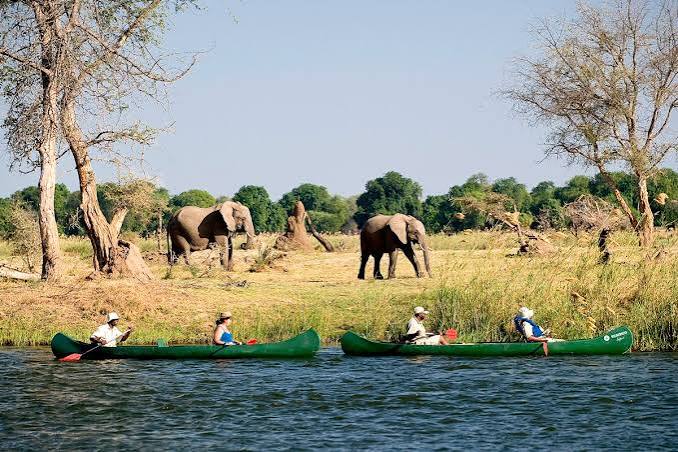
A canoe moves through the African bush differently from any other safari vehicle. It produces no engine noise, no fuel smell, and no mechanical vibration. The only sounds are the soft draw and drip of the paddle and the water currents against the hull. Animals that flush from approaching vehicles hold their ground at a canoe passing 10 metres away. They process the narrow, low-profile watercraft as a different kind of threat and many process it as no threat at all. As a result, a canoe allows genuine closeness with waterbird colonies, hippo pods at leisure, basking crocodiles, and elephant families drinking at the bank.
Wildlife Encountered on Canoe Safaris
Hippos are the dominant wildlife encounter on any East Africa canoe route. Hippos rest in water during the day and graze on land at night. A canoe threading through a hippo-dense waterway passes within 20 to 30 metres of submerged pods the hippos visible as ear tips, nostril bumps, and eye ridges above the surface. The guide reads the pod’s body language continuously, identifying irritated animals by ear position and eye width. A well-guided canoe passes within close range of relaxed pods without incident. Crocodiles on sand banks, however, allow approach to only 5 to 8 metres before sliding silently into the water.
Waterbirds breed in dense colonies on islands and riverbank trees inaccessible to vehicles. A canoe approaches these colonies from the water side. The birds often continue breeding behaviour at close range rather than flushing. Goliath herons stand motionless in shallows at 5-metre distances. African fish eagles perch on snags 10 metres from a passing canoe without departing. The access that water provides to undisturbed wildlife at close range is the fundamental advantage of canoe-based observation over any land-based method.
Safety on Canoe Safaris
Hippos represent the primary risk on canoe safaris. However, experienced guides manage this risk effectively through waterway knowledge. The guide reads hippo behaviour accurately — identifying which pods hold position and which react to approach. Routes avoid pod areas where territorial bulls are present. The canoe’s silent movement reduces the surprise-encounter risk that motor boats produce. A professional canoe safari guide carries a lifetime of waterway knowledge, including specific channel sections to avoid, time-of-day factors that affect hippo distribution, and the immediate response to an escalating hippo situation.
Best East Africa Canoe Locations
Uganda’s Kazinga Channel between Queen Elizabeth National Park’s Lakes George and Edward provides the finest canoe game viewing in East Africa. High hippo and crocodile densities, elephant frequently at the bank, and abundant waterbirds make the channel the most wildlife-productive canoe environment in the region. Tanzania’s Selous-Nyerere Game Reserve on the Rufiji River offers comparable wildlife density in a wilder setting. Additionally, Zimbabwe’s Lower Zambezi is accessible via extended cross-border itineraries for guests combining East and Southern Africa.
Plan Your Safari
Canoe safaris operate from camps positioned directly on suitable waterways. Uganda’s canoe camps on the Kazinga Channel take bookings for guided morning canoe circuits of 2 to 3 hours. Tanzania’s Selous-Nyerere river camps run guided canoe day trips along designated river sections. Canoe safaris suit active guests comfortable on water. No paddling experience is necessary, as the guide sets pace and direction. However, comfort in a low-profile watercraft in the presence of large animals is essential.
African Wild Trekkers designs Uganda and Tanzania safari itineraries with canoe game viewing as a core activity. Contact us to plan a safari that combines the best water-based wildlife encounters with East Africa’s finest land wildlife.