Milky Way Safari Africa: Photography and Stargazing in East Africa’s Darkest Skies
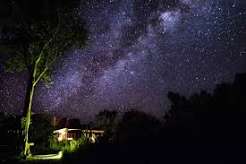
The Milky Way is visible in East Africa exactly as ancient humans saw it — a dense, structured band of light arching across the full sky. Detail within it shows the dark nebula lanes that divide the galactic arms from each other. No light pollution dilutes it. No urban glow washes the horizon. The galactic core rises in the south-east from March onward, climbing higher each month through April, May, and June. By July it stands nearly overhead from equatorial latitudes. A camera on a tripod in any East Africa wilderness area with a 20-second exposure captures the galactic core in full detail. This photography requires no expensive equipment, no remote observatory, and no advanced technique only a dark sky. East Africa delivers those reliably for nine months of the year.
Best Months for Milky Way Photography
The galactic core the brightest and most photographed section of the Milky Way is visible from East Africa between March and October. March delivers the core rising low in the south-east after midnight. April and May push it higher earlier in the evening. June and July position the core near the zenith for equatorial locations directly overhead around midnight. As a result, these two months produce the full-arch Milky Way photograph that extends horizon to horizon. August and September keep the core well-placed through mid-evening. October delivers the last good core positions before it sinks below the western horizon after sunset.
November through February represent the galactic centre’s absence from the night sky. The core is either below the horizon or too close to the sun’s position to photograph. However, the winter Milky Way visible during these months still shows the outer galactic arm with notable star fields — extraordinary by any non-Africa standard.
Photography Settings and Equipment
A full-frame mirrorless or DSLR camera with a wide-angle lens between 14mm and 24mm produces the best Milky Way results. A lens aperture of f/2.8 or wider gathers enough light in a 20 to 25 second exposure to capture significant galactic detail without star trailing from Earth’s rotation. ISO settings between 3200 and 6400 balance light sensitivity against noise at these exposure lengths. Additionally, a sturdy tripod eliminates camera shake entirely. A remote shutter release or 2-second timer eliminates vibration from pressing the shutter button manually. No other equipment is necessary — the sky does the rest.
Dark Sky Locations
East Africa’s national parks and private conservancies represent some of the world’s lowest light pollution environments. The Maasai Mara and its surrounding conservancies, Samburu, Amboseli, Tsavo, Laikipia, the Serengeti, Ngorongoro, Ruaha, Selous-Nyerere, and Uganda’s western national parks all qualify as exceptional dark sky locations by global standards. Furthermore, bush camps deep within these areas, away from lodge generator lighting, provide the darkest conditions within an already dark region.
Plan Your Safari
Milky Way photography safaris peak between May and August when the galactic core reaches maximum height from East Africa’s latitudes. New moon periods — the five nights centred on new moon each month — produce the darkest skies and the best core photography conditions. A camp stay in Kenya’s Laikipia or Tanzania’s Ruaha during a new moon week in June or July delivers the finest Milky Way photography of any accessible location on earth.
African Wild Trekkers designs East Africa photography safaris timed around dark sky conditions at the continent’s finest wilderness camps. Contact us to plan a safari combining exceptional wildlife photography with the world’s most accessible dark sky stargazing experience.