Big Five vs Little Five: Africa’s Most Surprising Wildlife Guide
Africa’s Most Surprising Wildlife Quiz
Every safari traveler knows the Big Five: lion, leopard, elephant, buffalo, and rhinoceros. Far fewer know the Little Five. This is a group of five small African animals whose names echo those of the famous five larger ones. They were chosen as a playful counterpoint to the large animal focus that dominates most safari conversations.
The Little Five are the elephant shrew, the ant lion, the rhinoceros beetle, the leopard tortoise, and the buffalo weaver. None of them has the dramatic visual impact of its larger namesake. Each one is a genuinely remarkable animal in its own right.
The challenge of finding all five on a single game drive has become a popular activity at South African game reserves. It has introduced generations of safari travelers to the extraordinary diversity of small life in the African bush.
Safari operators and educators developed the Little Five concept partly as an educational initiative. Its goal was to broaden travelers’ engagement with the full ecological community of the African bush beyond the handful of large mammals that dominate most visitors’ attention.
The African bush is extraordinarily rich at every scale. From the elephant visible from two kilometres to the ant lion that constructs its conical trap in the sand beneath your feet. The Little Five provides a framework for exploring that richness with a sense of game and discovery. Finding all five in a single day is a satisfying challenge that most experienced guides in South African bushveld relish.
The Little Five: Each Species Explained
From Elephant Shrew to Buffalo Weaver
Elephant Shrew and Ant Lion
The elephant shrew also called the sengis is a small insectivore with a distinctive long, mobile, trunk-like snout that gives it its common name. Elephant shrews are fast-moving, diurnal animals that live in monogamous pairs within well-defended territories.
They maintain a network of cleared pathways through their territory that they sprint along at high speed to escape predators. Despite the common name, elephant shrews are not true shrews and are not closely related to elephants. DNA analysis has revealed that their closest relatives are actually tenrecs, golden moles, and aardvarks.
The round-eared elephant shrew is the species most commonly seen in South African bushveld. Its rapid darting movement through the leaf litter makes it a challenging but rewarding find for travelers paying attention to the ground layer during game drives and walks.
The ant lion is the larval stage of a neuropteran insect whose adult form resembles a damselfly. The larva constructs a conical pit trap in fine, dry sand. Typically in shaded spots under overhangs, tree bases, or building eaves. It buries itself at the base with only its mandibles exposed, waiting for ants and small insects to slip over the edge of the pit and tumble down to the waiting jaws.
The construction of the pit is achieved by the larva walking backward in decreasing circles while flipping sand outward with its head, creating the smooth, steep-sided cone in minutes. The pits are easily found by looking for cone-shaped depressions in dry, fine-grained sand at ground level. Observing an ant slip over the rim and watching the sand-flicking countermeasure the ant lion uses to prevent escape is one of the most accessible micro-wildlife observations available in any South African game reserve.
Rhinoceros Beetle, Leopard Tortoise, and Buffalo Weaver
The rhinoceros beetle is one of Africa’s largest beetle species and among the strongest animals on Earth relative to its body size. Rhinoceros beetles can support loads of over 800 times their own body weight. A strength ratio that no vertebrate animal approaches.
The male’s prominent forward-projecting horn serves in combat with rival males for mating access to females. This behavioral parallel to the rhinoceros’s horn use goes beyond the name to genuine functional similarity. Rhinoceros beetles are most active at night and often rest under bark or in decaying wood during the day.
They are nocturnal finds on night drives or careful bark-searching during walking safaris. Several species occur in East and Southern Africa, varying in size and horn development. Their armored, prehistoric appearance makes them one of the more dramatic mini-wildlife encounters available in African bush habitats.
The leopard tortoise is Africa’s largest terrestrial tortoise and one of the most commonly seen reptiles on game drives across East and Southern Africa. Its high-domed shell, marked with black and yellow geometric patterning, can reach 70 centimetres in length.
The animal can weigh up to 54 kilograms in the largest individuals. Leopard tortoises are surprisingly mobile they can travel several kilometres per day during their active season. They appear crossing roads, feeding on succulents and thistles, or resting under acacia scrub across virtually every savanna habitat where they occur.
They are entirely harmless, completely unafraid of vehicles, and produce reliably rewarding close-range observation when encountered. The buffalo weaver a colonial, nest-building bird that constructs large messy stick nests in thorn trees completes the Little Five set. The red-billed buffalo weaver is particularly distinctive, with the male’s scarlet bill providing easy identification against the black-and-white body.
How to Find All Little Five in One Day
Habitat Clues and Timing
Where to Look for Each Species
Finding all five Little Five animals in a single day is achievable at the right South African reserve with an experienced guide who knows where to look for each species. The leopard tortoise, buffalo weaver, and elephant shrew are the easiest of the five to find.
The tortoise appears on most game drives in suitable habitat. The weaver’s nest colonies are impossible to miss in woodland. The elephant shrew’s active daytime runs across open ground can be spotted with attention during walking activities. The rhinoceros beetle and ant lion are harder. The beetle requires night drive access or careful log-searching during walking safaris. The ant lion pits require knowing where to look in dry, shaded, fine-grained sand deposits that are not always obvious without a guide’s direction.
The best South African reserves for Little Five completion attempts are those in the bushveld biome. These include the Kruger and its associated private reserves, Madikwe Game Reserve, Pilanesberg, and Nambiti Private Game Reserve in KwaZulu-Natal.
All five species coexist in these reserves and experienced guides know the specific locations and timing requirements for each. The activity is particularly popular with families because children engage with the challenge format enthusiastically. The attention it focuses on small animals, insects, and ground-level habitat tends to broaden wildlife observation skills in lasting ways. Adults who have spent previous safaris looking exclusively at large mammals often find that the Little Five challenge reveals an entirely different layer of the bush they had been passing through without noticing.
Big Five and Little Five on the Same Safari
The most rewarding approach to the Big Five versus Little Five dynamic is not choosing between them but integrating both within a single safari experience. South Africa’s Kruger National Park and the surrounding private reserves are the ideal destination for this integration.
They hold all five Big Five species and all five Little Five animals within the same accessible, well-guided game drive environment. A guide who knows both lists and has the knowledge to navigate between large predator following and ground-level insect hunting creates a game drive experience that communicates the full ecological scale of the bush. This runs from the six-tonne elephant at the waterhole to the ant lion’s sand cone beneath a shade tree thirty metres away.
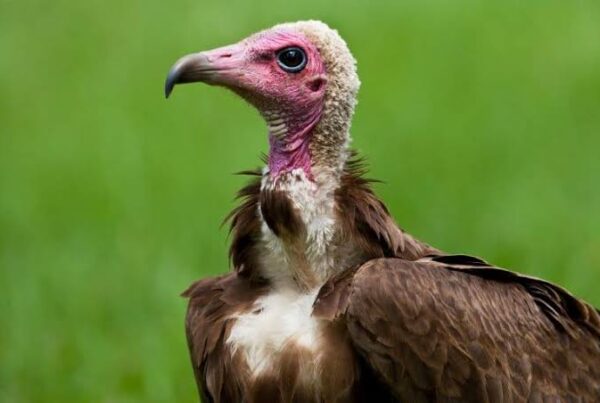
Beyond the formal Little Five, South Africa’s game reserves also support the concept of the “Ugly Five.” This is a tongue-in-cheek list of Africa’s least photogenic but most ecologically important animals. It includes the warthog, wildebeest, marabou stork, vulture, and hyena. There are also the “Secret Seven” and other informal lists that specific reserves have developed to broaden visitor engagement with the full range of biodiversity their ecosystems contain.
Each of these lists represents an attempt to move safari traveler attention beyond the iconic few and toward the genuinely comprehensive ecological community that sustains them. The Little Five remains the most successful and widely adopted framework for achieving that broadening of perspective across age groups and experience levels.
Plan Your Safari
A Little Five completion challenge fits best into a South African safari at reserves in the bushveld biome. Experienced naturalist guides at these reserves can locate all five species within a single day or across a two-to-three-day visit. Family safaris particularly benefit from the challenge format. Which keeps children engaged with the full range of wildlife rather than waiting for the next lion sighting.
African Wild Trekkers designs South Africa family safari itineraries that incorporate both Big Five and Little Five activities. We select guides at reserves known for exceptional small-wildlife knowledge and naturalist interpretation alongside the standard game drive predator tracking that most South African safari packages offer.
Contact African Wild Trekkers at africanwildtrekkers.com/contact with your South Africa travel dates and we will design a safari itinerary that delivers both the Big Five encounters and the Little Five challenge within 24 hours.