Female Porters of Kilimanjaro: The Women Carrying Africa’s Highest Mountain
Women on the Mountain: Kilimanjaro’s Female Porter Revolution
For most of Kilimanjaro’s mountaineering history, the porter workforce was almost exclusively male. The cultural and economic forces that kept women out of mountain work were deeply embedded in the communities around Kilimanjaro. The physical demands and overnight logistics of the multi-day climb were used to justify an exclusion that was fundamentally about social convention rather than physical capability. In recent years, a small but growing cohort of female porters has begun to change this picture. They carry loads, cook at altitude, and work as assistant guides. In doing so, they demonstrate both the practical viability of women in these roles and the limitations of the assumptions that kept them out. Their story is one of the most interesting social and professional developments on Kilimanjaro in the past decade.
The Historical Context
Understanding why female porters were rare on Kilimanjaro for so long requires understanding the economic and social structure of the communities that supply the mountain’s labor force.
Traditional Gender Roles in Kilimanjaro Communities
The Chagga people who inhabit the slopes of Kilimanjaro have historically maintained strongly defined gender roles. Agricultural and domestic labor was assigned to women. The more mobile, physically demanding, and cash-generating work—including mountain labor—went to men. The mountain porter workforce developed from this social context. As the tourism industry grew through the latter half of the 20th century, the employment opportunities it created flowed disproportionately to men. Women in these communities provided essential domestic support to male porters. Preparing their food and maintaining their households during the multi-day absences that mountain work requires. They did so without access to the income that mountain employment generated.
The practical barriers that male porter culture added to the social ones were significant. Multi-day overnight work in remote mountain environments, shared camping with male colleagues. And physical culture that celebrated masculine endurance created an environment unwelcoming to women. This was true even when formal exclusions did not exist. Female mountaineers climbing Kilimanjaro encountered all-male porter and guide teams for decades. This was not because of formal policy but because the informal culture of the mountain workforce had never adapted to accommodate women in these roles.
The Emergence of Female Porters
The first female porters on Kilimanjaro emerged from a combination of economic necessity, individual determination, and support from specific operators and NGOs. These organizations recognized both the injustice of exclusion and the practical benefits of a more diverse porter workforce. The Kilimanjaro Porters Assistance Project (KPAP), instrumental in improving porter welfare standards across the mountain, has also supported female porter inclusion. It is part of its broader mission to professionalize and protect the mountain’s workforce. Female porters who successfully worked on the mountain demonstrated their physical capability through performance rather than argument. Their presence normalized the idea of women in these roles for subsequent hires and for the climbing groups who encountered them.
The number of female porters on Kilimanjaro remains small relative to the total porter workforce. Estimates suggest women represent between three and ten percent of active porters and assistant guides depending on the season and operator. But the trajectory is clearly upward. Specialist organizations have run programs that train women for mountain work and provide mentoring from experienced female guides. They also work with operators to create the policies and workplace cultures that make it possible for women to work on the mountain. Without these supports, informal resistance to their presence has sometimes produced harassment and exclusion.
The Experience of Female Porters on the Mountain
Female porters face challenges on Kilimanjaro that go beyond the physical demands of the job. Understanding their experience provides context for the significance of their presence on the mountain.
Physical Capability and Performance
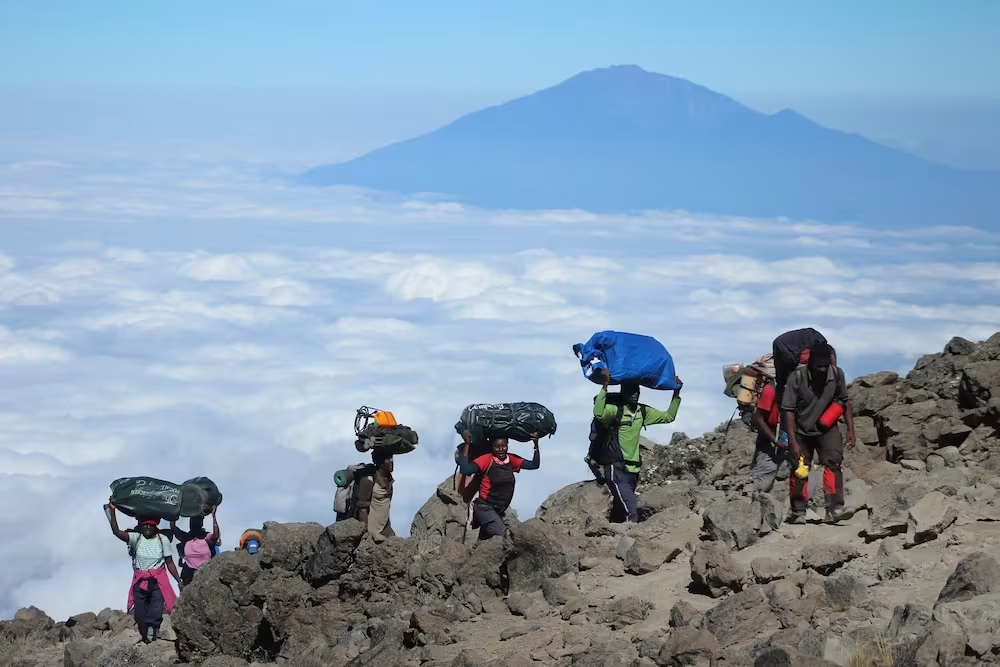
The physical demands of Kilimanjaro porter work are the same regardless of gender. Carrying loads of up to 20 kilograms for six to eight hours per day at altitude for seven consecutive days is the standard expectation. Female porters who perform this work do so to the same standard as their male colleagues. The assumption that women cannot perform physically demanding mountain labor at the level required is contradicted directly by the performance record of the women who have done this work. Female porters and assistant guides who have worked multiple seasons on Kilimanjaro have established track records of performance that make the capability question obsolete for anyone who has worked with them.
The overnight logistics of multi-day mountain work remain practical challenges for female workers that male counterparts do not face in the same way. These include shared sleeping arrangements in crowded camps and lack of private facilities. And the general physical roughness of the porter work environment. Forward-thinking operators who employ female porters have made adaptations: separate sleeping arrangements where possible and clearer codes of conduct for camp behavior. And female leadership in kitchen and domestic roles. These adaptations provide natural mentoring and community support structures for women working in what remains a male-dominated environment. They are not complex or expensive. But they require deliberate operator commitment rather than passive acceptance of the status quo.
Career Progression and Leadership
Female porters who establish their reliability and competence on the mountain face the same certification and career progression pathway as male colleagues. The pathway runs from porter to cook to assistant guide to senior guide. The KINAPA certification system that governs Kilimanjaro guiding is open to women. A small number of female lead guides are now licensed and working on the mountain. This is a significant symbolic and practical milestone in a profession effectively closed to women for the first century of Kilimanjaro’s mountaineering history. Female guides bring perspectives and capabilities to the role that complement rather than duplicate male guiding approaches. Climbing groups who have experienced female-led Kilimanjaro treks consistently report the quality of guidance as exceptional.
The economic impact of mountain employment on individual women’s lives is substantial and well-documented. Kilimanjaro porter and guide income is among the highest available to rural Tanzanian women without formal higher education. The financial independence that consistent mountain work provides enables women to invest in their children’s education and start small businesses. It also allows them to contribute to household and community economies in ways that create multiplier effects well beyond the individual wages earned. Supporting operators who actively hire and support female porters and guides is one of the most direct ways for international travelers to contribute to gender equity outcomes in the Kilimanjaro region through their tourism spending decisions.
How Climbers Can Support Female Porters
Climbers who want to support the growth of female porter and guide presence on Kilimanjaro have several practical options that go beyond passive appreciation of the issue. Ask operators during the booking process whether they actively employ female porters and what percentage of their current mountain staff are women. This signals that gender diversity is a consideration in the booking decision. It creates market incentive for operators to improve their practices. Tip female porters and guides equitably. At the same rate as male colleagues. To ensure that the women doing mountain work receive the full economic benefit of their labor. Do not apply informal reductions in tips based on gendered assumptions about performance.
Review operators who employ female staff positively on TripAdvisor and travel forums. Specifically mention the presence and quality of female guides in these reviews. This creates information that helps subsequent travelers identify operators with strong gender equity practices. It also provides social proof that female guides are valued rather than merely tolerated by the climbing community. These individual actions aggregate into market signals that operators respond to over time. The tourism industry becomes an active participant in the social change that female porter and guide inclusion represents on Kilimanjaro.
Plan Your Safari
African Wild Trekkers supports female employment on Kilimanjaro as part of our commitment to equitable labor practices across all our East Africa operations. We work with guides and porter teams that include women in both porter and leadership roles. We provide the workplace policies and physical accommodations that make female mountain work sustainable rather than merely nominal.
Kilimanjaro packages across all routes include the KPAP-compliant porter welfare standards and transparent wage payment. And fair tipping guidance that supports all mountain workers equitably. Tanzania safari extensions to the Serengeti, Ngorongoro Crater, and Zanzibar are available for any Kilimanjaro package.
Contact African Wild Trekkers at africanwildtrekkers.com/contact with your preferred Kilimanjaro dates, and we will provide full details on our team composition and complete itinerary options within 24 hours.