Camera Trap Viewing Africa: Seeing East Africa’s Shyest Wildlife Through Remote Cameras
Camera traps see what human observers cannot. They operate in complete darkness with no human presence to disturb the animals they photograph. They record everything that passes at any hour of the night without fatigue, distraction, or the visual limitations of human night vision. As a result, camera traps reveal the parallel nocturnal world of East Africa’s wildlife with a completeness and consistency impossible from any human observation platform. A morning camera trap check in good habitat — reviewing the previous night’s images while still in the bush — delivers visual encounters with pangolins, aardvarks, servals, porcupines, and honey badgers that months of night driving might never produce. The images arrive on the screen with the animals centred, lit by the trap’s infrared flash, doing exactly what they do when no human is watching.
How Camera Traps Work
A camera trap combines a digital camera with a passive infrared motion sensor. The sensor detects the heat differential between a moving warm-blooded animal and the cooler background, triggering the camera shutter. The camera fires a burst of 1 to 5 images within 0.5 to 1.5 seconds of the trigger event. At night, an infrared flash illuminates the scene without producing the white light that startles or disturbs animals. The camera then resets to standby mode — ready for the next trigger event within seconds. Modern camera trap units operate on standard AA batteries for 3 to 6 months between changes and store thousands of images on an SD card removable for review without disturbing the camera position. Furthermore, the placement of the trap — height, angle, trail location, and surrounding vegetation — critically determines the quality and variety of images it produces.
What Camera Traps Reveal in East Africa
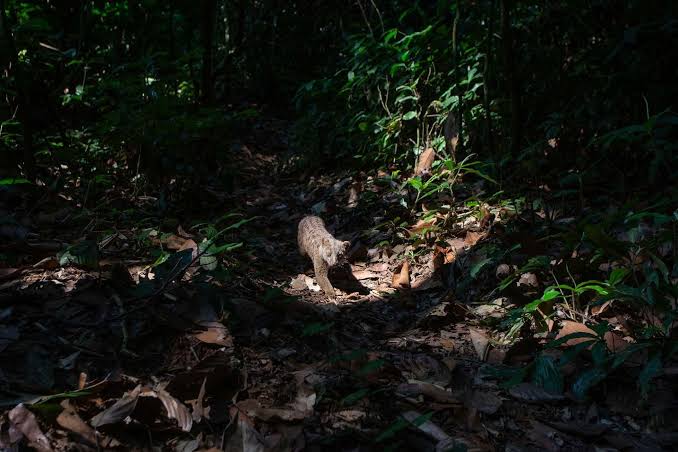
Camera trap surveys across East Africa consistently document species that game drives never produce. The aardvark — East Africa’s most widely distributed large mammal and the one least often seen — appears regularly on camera traps positioned on sandy trails near termite mounds. The African wild cat, almost indistinguishable from a domestic cat in normal observation, appears at specific trails far from human habitation. The pangolin — the world’s most trafficked mammal and among the rarest safari sightings in East Africa — crosses camera trap trails at night with striking regularity in well-protected habitat. Additionally, leopard movement patterns at specific water sources, honey badger foraging circuits, and porcupine feeding locations all emerge from systematic camera trap surveys in ways that transform understanding of how these species use their habitats.
Research Applications
Camera trap networks in East Africa’s major conservation areas generate population estimates, occupancy models, and movement data for dozens of species. The Serengeti Snapshot programme, operated by the Serengeti Lion Project, has deployed thousands of camera traps across the Serengeti ecosystem and uses citizen science image classification to process millions of images annually. Kenya’s Snapshot Masai Mara programme deploys 200 camera traps across the Maasai Mara ecosystem. The data from these programmes inform management decisions, measure tourism impact, and track population trends in species that standard observer surveys undercount. Several camps in these areas now include camera trap data review — checking recent images from nearby traps — as a morning activity option for interested guests.
Plan Your Safari
Camera trap viewing is available at camps participating in research programmes in the Maasai Mara ecosystem, the Serengeti, and several Kenya conservancies including Ol Pejeta and Lewa. The morning image review session typically runs 30 to 45 minutes before or after breakfast. The session discusses the species recorded, the behaviour observed in the images, and the data analysis process. Additionally, guests at research-focused camps can sometimes accompany researchers on camera trap deployment or SD card retrieval visits in the field. Requesting conservation-focused programming when booking ensures these activities are included in the camp’s activity schedule.
African Wild Trekkers places guests in research-active East Africa camps that provide camera trap viewing and conservation programme access. Contact us to plan a safari that reveals the full nocturnal wildlife community hidden from standard game drive observation.