Fiery-necked Nightjar: The Iconic Nocturnal Voice of East Africa’s Woodlands
The fiery-necked nightjar produces one of East Africa’s most recognisable nocturnal sounds. The call a series of clear, purring notes that English speakers describe as “Good Lord deliver us” is one of the most characteristic sounds of an East African woodland night. Any evening spent at a bush camp in the right woodland habitat will be accompanied by this call from dusk until after midnight. The call has been a cultural landmark in rural southern and eastern Africa for generations of people who live within the species’ range.
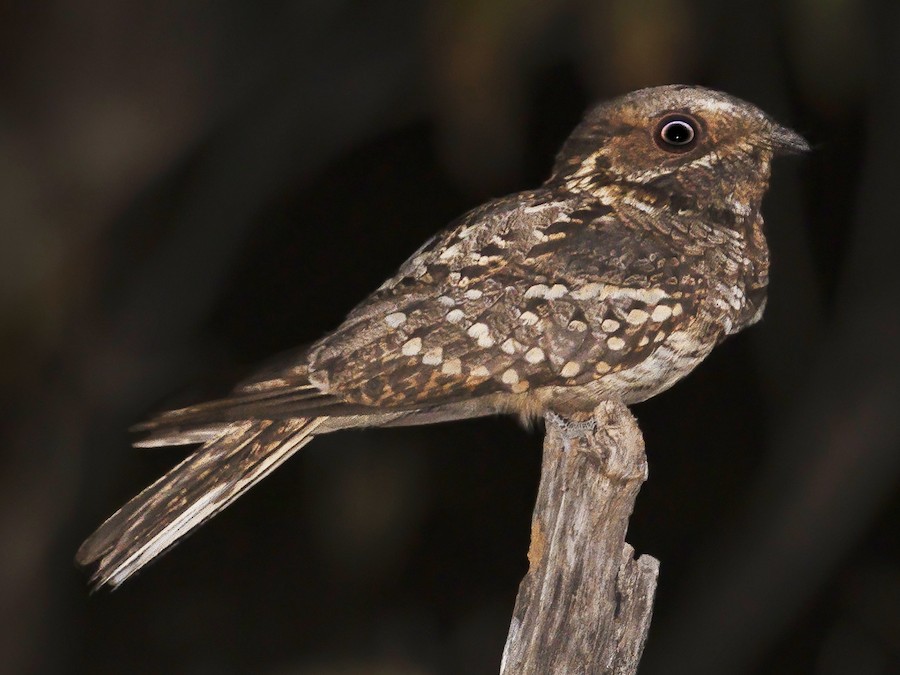
Like all nightjars, the fiery-necked nightjar is virtually invisible during the day. Its intricate brown, buff, grey, and black plumage provides extraordinary camouflage against the leaf litter and bark surfaces on which it roosts. The species relies entirely on its cryptic colouration rather than flight for daytime protection. Finding a roosting nightjar is a skill that rewards patient, careful searching with exceptional close-range views of a bird that otherwise remains completely hidden from casual observation.
Identification
The fiery-necked nightjar measures approximately 24 centimetres. The plumage is a complex pattern of brown, rufous, grey, and black that mimics dry bark and leaf litter with extraordinary precision. The male shows white patches at the corners of the tail and white spots on the outer wing feathers visible in flight. The throat shows a rufous-orange patch that gives the species its name the “fiery neck” that is visible at close range under torch or spotlight illumination.
In the beam of a spotlight at night, the fiery-necked nightjar shows the characteristic bright red eyeshine of the nightjar family two points of intense red light set close together. This eyeshine is the most reliable detection method for nightjars on night game drives. The eyeshine appears suddenly in the torch beam as the light sweeps across open ground or low vegetation, before the bird is fully visible as a bird rather than as a pair of red points.
The female is similar to the male but shows buff spots in the tail corners rather than the white spots of the male. This difference requires direct comparison under good light conditions to assess reliably. In most field conditions, the call and the rufous neck patch are sufficient to identify the species without assessing the precise tail spot colour.
The Call
The fiery-necked nightjar’s call is purring, musical, and carried over considerable distances across open woodland on still evenings. The sequence of repeated notes descends slightly in pitch through each phrase. The call begins at dusk and continues throughout the night with periods of silence between calling bouts.
Calling males are territorial and respond strongly to playback or imitation of the call. This response brings the bird into flight and occasionally into very close range of the observer. The calling male’s flight reveals the white tail patches in the torch beam as he circles the calling position and lands close by.
Furthermore, the call serves both territorial and mate attraction functions. Multiple males calling simultaneously from adjacent territories on a warm woodland night create one of East Africa’s most evocative ambient nocturnal soundscapes. This soundscape defines the atmosphere of a night spent in the woodland bush in a way that no daytime experience replicates.
Where to Find Fiery-necked Nightjars
The fiery-necked nightjar inhabits open woodland and savanna with short ground vegetation, scrub clearings, and the edges of forest where open areas provide hunting ground. The species is present across a broad range of East Africa’s woodland and savanna zones from Tanzania’s southern circuit through Kenya’s woodland areas and into Uganda’s woodland environments.
Tanzania’s Selous-Nyerere ecosystem, Ruaha National Park, and Mikumi National Park all provide excellent nightjar habitat in their miombo woodland sections. Night drives in these parks produce regular fiery-necked nightjar encounters with spotlights and the characteristic eyeshine detection method.
Kenya’s dry woodland areas in Tsavo, Samburu, and the Laikipia Plateau carry fiery-necked nightjars in open acacia and bush habitats. Uganda’s Kidepo Valley and the Murchison Falls savanna woodland both hold the species in accessible habitat within night drive routes from the main camp locations.
Plan Your Birding Safari
Fiery-necked nightjar encounters are most reliable on night game drives at woodland destinations where the species is resident. Most East Africa camps and lodges in woodland environments offer optional night drives that produce nightjar sightings as a standard component of the nocturnal wildlife experience.
Evening walks around camp perimeters after dinner at woodland camps also produce nightjar encounters. The calling males are easy to locate by sound and approach slowly for eyeshine detection with a handheld torch.
African Wild Trekkers includes night drive options at East Africa’s woodland destinations where nightjar diversity adds an important dimension to the nocturnal wildlife experience. Contact us to plan a safari that explores East Africa’s extraordinary nocturnal bird community alongside the main daytime wildlife highlights.