info@africanwildtrekkers.com

DR Congo Travel Guide: The Complete Destination Hub for Africa’s Wildest Frontier
The Democratic Republic of Congo holds some of the most untouched wilderness left on the continent. Virunga National Park, Africa’s oldest, sits at its eastern edge, home to mountain gorillas, active volcanoes, and forest few outsiders ever see. This is not a polished, easy safari circuit. It is raw, remote, and rewarding for travelers who go in with open eyes.
DR Congo is a different kind of destination from its neighbors. Tourism infrastructure is thinner here than in Uganda, Rwanda, or Kenya. Security conditions in the east shift often, and any visit needs careful, current research before booking.
This guide covers what a visitor needs to know. It walks through entry requirements, regional highlights, activities, safety realities, and practical planning advice.
A Note on Safety Before Anything Else
Eastern DR Congo, including the region around Virunga National Park, has faced armed conflict on and off for decades. Rebel groups, including M23, have at times controlled territory near the park and around the city of Goma. This has led to repeated, sometimes lengthy closures of gorilla trekking and other tourist activities.
The situation changes often and does not move in one steady direction. Some periods bring reopenings and renewed tourism. Other periods bring fresh fighting and fresh closures, sometimes with little warning.
Anyone considering a trip should check current government travel advisories before booking anything. The websites of Virunga National Park and the Congolese Institute for Nature Conservation, known as ICCN, also carry the most current operational status. A licensed tour operator with active local contacts is the safest way to get real-time information rather than relying on older articles or general impressions.
Given this volatility, some travelers choose to pair a DR Congo attempt with a flexible Rwanda or Uganda itinerary. That way, if Virunga is closed on short notice, the trip can shift toward Volcanoes National Park or Bwindi instead. Building this kind of flexibility into a booking is a sensible precaution rather than an overreaction.
Why Visit DR Congo
DR Congo offers a version of Central Africa that few travelers experience firsthand. Virunga National Park alone holds three types of great apes: mountain gorillas, eastern lowland gorillas, and chimpanzees. No other park on earth hosts all three species together.
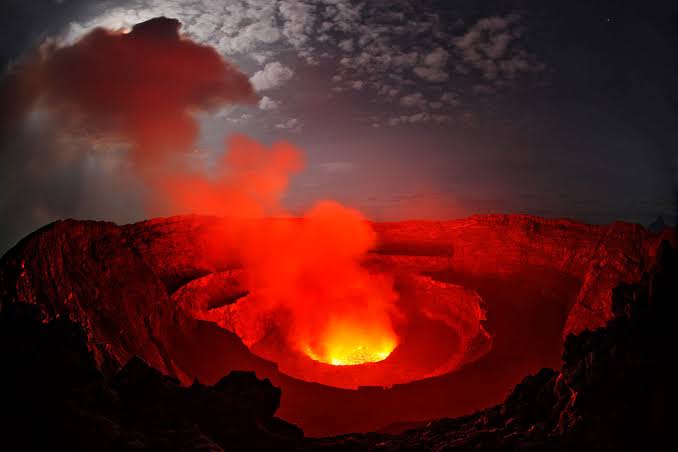
The country’s volcanic landscape adds a dramatic backdrop to any visit. Mount Nyiragongo holds one of the world’s largest lava lakes, visible from its crater rim on a clear night. Few volcano treks anywhere offer a sight quite like it.
Beyond Virunga, DR Congo’s sheer size holds enormous untapped potential. The Congo Basin rainforest, the second largest tropical forest on earth, stretches across much of the country. Most of it remains far outside any organized tourist circuit, appealing mainly to travelers seeking genuine frontier territory.
Best Time to Visit
DR Congo sits on the equator, so temperatures stay warm and fairly steady throughout the year. Rainfall, more than heat, shapes the best time to plan a trip. The eastern highlands around Virunga run cooler than the lowland rainforest further west.
The dry season runs roughly from June to September, and a second shorter dry spell falls between December and February. Trails around Virunga are firmer during these windows, and volcano hikes up Nyiragongo are more comfortable. These months also tend to see the steadiest tourism operations, when the park is open.
The wetter months bring heavier rain and muddier trails. Trekking becomes more physically demanding during these periods. Visitor numbers, already low by regional standards, drop even further outside the dry seasons.
Security conditions matter more than weather when timing a DR Congo trip. A dry-season window means little if the park is closed due to conflict. Checking current operational status should always come before checking a rainfall calendar.
Entry Requirements and Visas
Most nationalities need a visa to enter DR Congo, generally arranged in advance through a Congolese embassy or an approved online process. Processing can take longer and prove less predictable than in neighboring Rwanda or Uganda. Applying well ahead of a planned trip is important.
Many visitors traveling to Virunga cross overland from Rwanda, entering DR Congo at the Goma border post near Gisenyi. This route requires its own DR Congo visa in addition to any Rwanda entry requirements. Land border crossings can involve longer waits and more paperwork than flying directly into the country.
A passport needs at least six months of validity beyond the entry date, with at least one blank page. Proof of yellow fever vaccination is generally required, since DR Congo sits within the yellow fever endemic zone. Vaccination certificates are often checked closely at both air and land borders.
Gorilla trekking and volcano permits for Virunga are booked separately from the visa process, directly through the park or a licensed operator. Given the security situation, permits are often issued only once a specific trip date is confirmed as operationally safe. Full payment terms and refund policies are worth reviewing carefully before booking.
Getting There and Getting Around
Goma, in eastern DR Congo, is the main access point for Virunga National Park. Some travelers fly directly into Goma on the limited international routes available. Many others fly into Kigali International Airport in Rwanda and continue overland through Gisenyi to the Goma border crossing.
Kinshasa, the national capital, sits far to the west and serves as DR Congo’s main international gateway for the rest of the country. It has little direct connection to the eastern tourist circuit around Virunga. Most Virunga-focused visitors never pass through Kinshasa at all.
Road travel within eastern DR Congo can be slow and, depending on the security situation, restricted to specific approved routes. Virunga National Park typically arranges its own transport and security escort for visitors once they reach the park’s tourism office. Independent travel through the wider region without a park-arranged escort is generally discouraged.
Domestic flights connect Kinshasa to a handful of other cities, though schedules and reliability vary. For the Virunga circuit specifically, the Kigali-to-Goma overland route remains the most established and commonly used option. Confirming the current border and transport situation with a local operator before departure is essential.
Regions and Top Destinations
Virunga National Park
Virunga sits in the far east of DR Congo, part of the volcanic range shared with Rwanda and Uganda. It is Africa’s oldest national park and the only place on earth where mountain gorillas, eastern lowland gorillas, and chimpanzees all live within one protected area. When open, it offers gorilla trekking, chimpanzee tracking, and hikes up Mount Nyiragongo.
The park has weathered repeated periods of closure due to conflict in the surrounding North Kivu region. Its rangers have paid an especially heavy price defending the park over the decades. Visiting Virunga, when it is safely open, directly supports both conservation work and the communities living around its edges.
Mount Nyiragongo
Nyiragongo is one of the world’s most active volcanoes, rising above the city of Goma. Its crater holds one of the largest lava lakes on the planet, visible glowing at night from the rim. An overnight hike to the summit is one of DR Congo’s most sought-after experiences.
The hike typically takes most of a day to reach the crater rim, with camping available near the top. Weather and volcanic activity both affect whether the hike runs on any given day. As with the rest of Virunga, current safety status should be confirmed before planning around it.
Kahuzi-Biega National Park
Kahuzi-Biega sits further south in eastern DR Congo, near the city of Bukavu. It protects the world’s largest population of eastern lowland gorillas, also known as Grauer’s gorillas, a different species from the mountain gorillas found in Virunga. The park has generally maintained more consistent tourism access than Virunga in recent years.
Trekking here moves through dense montane forest rather than the volcanic slopes found further north. Fewer visitors make it to Kahuzi-Biega, giving trips here a quieter, more exclusive feel. It often serves as a fallback option for travelers unable to access Virunga due to closures.
Lake Kivu and Goma
Lake Kivu stretches along the border between DR Congo and Rwanda, with Goma sitting on its northern shore. The city serves as the practical base for most Virunga visits. Its position near an active volcano and a shifting security situation makes it a place where local guidance matters more than in most tourist towns.
Boat trips on the lake and views across the water toward Rwanda offer a calmer contrast to the intensity of a gorilla trek or volcano climb. Accommodation options in Goma range from basic to more comfortable, arranged mainly through operators tied to the Virunga tourism circuit. Independent exploration of Goma without local guidance is generally not advised.
Kinshasa
Kinshasa is DR Congo’s sprawling capital, sitting on the Congo River across from Brazzaville in the neighboring Republic of Congo. It functions as the country’s political and economic center rather than a tourism hub. Few travelers visiting Virunga combine their trip with a Kinshasa stop, given the distance and different logistics involved.
The city does hold its own attractions for travelers who do pass through, including river views and a growing arts and music scene. Infrastructure and safety considerations differ significantly from the eastern tourist circuit. Most operators treat a Kinshasa visit as a separate trip entirely rather than an extension of a Virunga itinerary.
The Congo Basin Rainforest
The Congo Basin stretches across much of the country’s interior, forming the second largest tropical rainforest on earth after the Amazon. Much of this vast forest sits well outside any developed tourism infrastructure. Access generally requires specialist operators and significant time and budget.
Wildlife here includes forest elephants, bonobos found nowhere else on earth, and okapi, a rare relative of the giraffe. Very few visitors attempt independent travel into this region. It remains a destination mainly for researchers, specialist expedition operators, and the most determined adventure travelers.
Wildlife and Signature Experiences
Gorilla trekking in Virunga, when open, offers access to mountain gorillas at generally lower permit costs than Rwanda or Uganda. Trekkers hike through forest guided by trackers who follow signs left by a habituated family group. A strict one-hour limit with the gorillas applies here as it does across the region.
Kahuzi-Biega offers a different primate encounter through its eastern lowland gorillas. These gorillas are larger than their mountain cousins and live in a different forest habitat. Treks here have generally run with fewer interruptions than those in Virunga in recent years.
Climbing Mount Nyiragongo stands as one of DR Congo’s most dramatic experiences. Reaching the crater rim rewards a demanding day hike with a view of a churning lava lake after dark. Few volcano treks anywhere in the world offer a comparable spectacle.
Chimpanzee tracking rounds out Virunga’s primate offerings, alongside its gorillas. The park’s forest also shelters okapi, forest elephants, and a wide range of birdlife rarely seen outside Central Africa. This combination of species is part of what makes Virunga scientifically significant, even during periods when tourism is limited.
Culture and People
DR Congo is home to more than two hundred ethnic groups, making it one of the most linguistically diverse countries on the continent. French serves as the official language, alongside widely spoken local languages including Lingala, Swahili, Kikongo, and Tshiluba. Swahili is the dominant local language in the eastern region around Virunga.
Music holds a central place in Congolese culture, with the country’s rumba and soukous styles influencing music across the African continent and beyond. Communities around Virunga have lived alongside the park for generations, and many now depend on tourism and conservation-linked jobs for their livelihoods. Visiting responsibly, through established operators, helps support these communities directly.
Where to Stay
Accommodation options around Virunga range from comfortable lodges to simpler tented camps, generally arranged through the park itself or an affiliated operator. Mikeno Lodge near the park headquarters offers a higher-end base for gorilla trekking. Simpler camps and guesthouses in Goma serve as alternatives for a shorter or lower-budget stay.
Independent hotel bookings outside these established, park-linked options are less common for the Virunga circuit. Most visitors let their tour operator arrange accommodation as part of a complete package. This also helps ensure lodging choices align with current security guidance for the area.
Food and Drink
Congolese cuisine centers on cassava, prepared in various forms including fufu, a dense starch that accompanies most meals. Grilled and stewed meat, along with fish from the country’s many rivers and lakes, feature heavily depending on the region. Plantains, beans, and leafy greens round out typical dishes.
Coffee grown in the eastern highlands near Virunga has begun attracting attention from specialty roasters internationally. Fresh produce is generally abundant given the country’s fertile volcanic soil. In tourist-facing lodges around Virunga, meals are typically prepared to suit international visitors alongside local staples.
Health, Safety, and Practical Tips
Malaria risk exists throughout DR Congo, and prophylaxis, repellent, and mosquito nets are all strongly advised. Routine vaccinations, along with hepatitis A and B and typhoid, are commonly recommended before travel. Yellow fever vaccination is generally required for entry.
Security considerations go well beyond standard travel precautions in eastern DR Congo. Following the guidance of the park, a licensed operator, and current government advisories matters more here than in most destinations. Independent travel without local logistical support is generally not advisable in this region.
Bottled or treated water is recommended throughout the country. Mobile connectivity in Goma and around Virunga is workable but less reliable than in neighboring Rwanda or Uganda. Travel insurance that explicitly covers medical evacuation is worth arranging given the country’s more limited emergency infrastructure.
Money, Costs, and Budgeting
The Congolese Franc is the local currency, though US dollars are widely used and often preferred for larger transactions, including permits and lodging. Smaller purchases are best handled in local currency where possible. Cash machines are limited outside major cities, so carrying sufficient cash is important.
Gorilla permits in Virunga have historically cost less than equivalent permits in Rwanda or Uganda, part of the appeal for budget-conscious trekkers. Prices and availability depend heavily on the park’s current operational status. Confirming current permit costs directly with the park or a trusted operator is essential given how often conditions change.
Tipping is customary for guides, drivers, and support staff, much as it is elsewhere in the region. Overall trip costs vary considerably depending on how a visit is arranged and how much specialist logistics support is required. Given the security considerations involved, budgeting for a well-established operator rather than the cheapest available option is generally the wiser choice.
Frequently Asked Questions
Is it safe to visit DR Congo right now?
Safety conditions in eastern DR Congo change often due to ongoing conflict, so checking current government travel advisories and the official status of Virunga National Park is essential before booking any trip.
Is Virunga National Park currently open for gorilla trekking?
Operational status shifts depending on the security situation in North Kivu, so confirming the current status directly with the park or a licensed operator is necessary rather than relying on older information.
What is the difference between DR Congo’s gorillas and those in Rwanda or Uganda?
Virunga is home to mountain gorillas, the same species found in Rwanda and Uganda, while Kahuzi-Biega further south protects eastern lowland gorillas, a larger, different species found only in eastern DR Congo.
Can I combine a DR Congo trip with Rwanda or Uganda?
Yes, and many travelers do, often entering DR Congo overland from Rwanda through the Goma border crossing, though this requires a separate DR Congo visa in addition to Rwanda’s entry requirements.
What happens if my trip to Virunga gets cancelled due to security concerns?
Policies vary by operator, but many allow postponement of paid permits to a later date once the park reopens, so reviewing an operator’s specific cancellation and rebooking terms before paying is important.