info@africanwildtrekkers.com

Uganda Travel Guide: The Complete Destination Hub for the Pearl of Africa
Uganda sits at the heart of East Africa. It straddles the equator. Within one compact country, it blends savannah, rainforest, lakes, and volcanic highlands.
Winston Churchill’s nickname for Uganda, “The Pearl of Africa,” still fits today. Travelers can track mountain gorillas in misty forest one morning. By the next afternoon, they can watch tree-climbing lions on open savannah.
This guide covers everything a first-time or returning visitor needs. It walks through entry requirements, regional breakdowns, activities, budgeting, and sample itineraries.
Why Visit Uganda
Uganda packs an outsized variety of landscapes and wildlife into a country roughly the size of the United Kingdom. It holds over half of the world’s remaining mountain gorillas. It also has ten national parks, the source of the River Nile, and the Rwenzori “Mountains of the Moon” glacier range.
Uganda’s parks are less crowded than Kenya’s or Tanzania’s. Permits are more accessible too. Landscapes also shift dramatically from one region to the next, so no two days on safari feel the same.
Most travelers come for gorilla and chimpanzee trekking. Many end up staying longer for other reasons. Boat cruises on the Kazinga Channel, whitewater rafting on the Nile, rich birdwatching, and warm local communities all add to the appeal.
Best Time to Visit
Uganda lies on the equator, so temperatures stay fairly constant all year. Rainfall is the real variable to plan around. The country has two dry seasons and two wet seasons, and the right time to visit often comes down to personal priorities.
The most popular dry season runs from June to September. Trails are firm for gorilla trekking in Bwindi Impenetrable National Park. Game drives are also easier in Queen Elizabeth and Murchison Falls during this window.
A second, shorter dry spell falls between December and February. It runs slightly warmer than the mid-year season. This period suits travelers who want to avoid the July and August crowds and the higher permit demand that comes with them.
The wetter months fall from March to May and October to November. Trails get muddier, and trekking becomes more strenuous. In exchange, travelers get lush scenery, thinner crowds, lower lodge rates, and strong birdwatching thanks to migratory species passing through.
Gorilla and chimpanzee permits can be trekked year-round. These primates live in forests rather than following seasonal migrations. Game viewing in the savannah parks also holds up well throughout the year, with dry months simply making animals easier to spot around shrinking waterholes.
Entry Requirements and Visas
Most nationalities need a visa to enter Uganda. The simplest route is applying online through the official Uganda e-visa portal. Approval usually takes a few business days, so it helps to apply two to three weeks before departure.
Travelers combining Uganda with Kenya and Rwanda have another option. The East Africa Tourist Visa covers all three countries with a single application. It suits anyone pairing Uganda’s gorilla trekking with Rwanda’s Volcanoes National Park or a Kenyan safari.
A passport needs at least six months of validity beyond the entry date. It should also have one blank page. Proof of yellow fever vaccination is mandatory too, since Uganda is a yellow fever endemic country, and officials often check this certificate on arrival.
Gorilla and chimpanzee trekking permits are separate from the visa process. They must be booked directly through the Uganda Wildlife Authority or a licensed tour operator. Booking three to six months ahead is wise for anyone hoping to secure a specific date during peak season.
Getting There and Getting Around
Entebbe International Airport sits on the shores of Lake Victoria and serves as Uganda’s main international gateway. Direct or one-stop flights arrive from major hubs across Europe, the Middle East, and other African cities. From there, most journeys continue by road.
Most travelers move between parks by four-wheel-drive safari vehicle with a driver-guide. Distances between parks range from three to eight hours. The exact time depends on road conditions and the specific route chosen.
Domestic flights offer a useful shortcut for travelers short on time. Small aircraft charters connect Entebbe to airstrips near Bwindi, Kihihi, Kasese for Queen Elizabeth National Park, and Murchison Falls. A flight can cut a multi-hour drive down to under an hour, freeing up more time for activities on the ground.
Self-driving is also possible with a four-wheel-drive vehicle and an international license. Most first-time visitors still prefer a guided vehicle. Rural roads can be rough, and a knowledgeable spotter adds real value during game drives.
Regions and Top Destinations
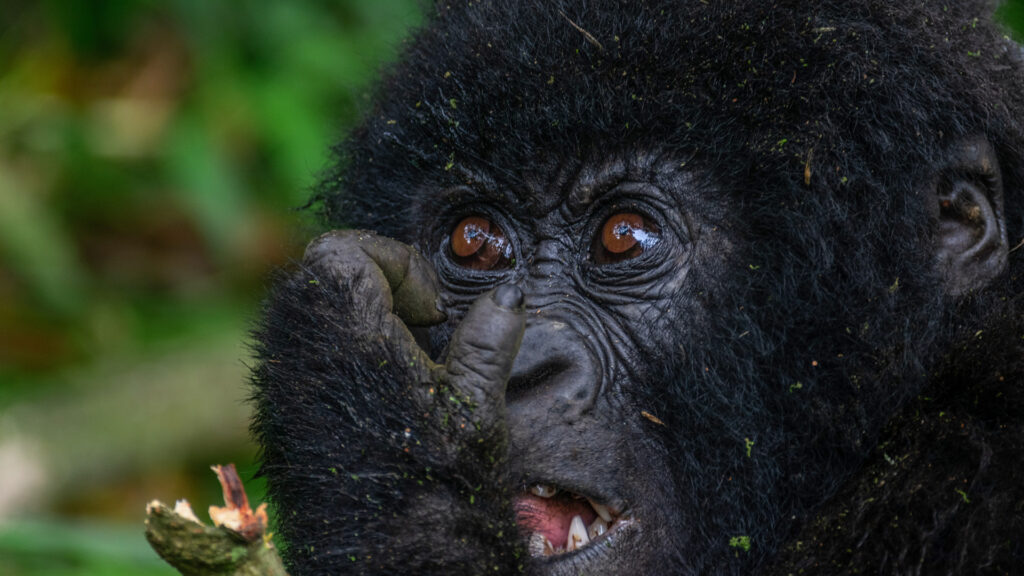
Bwindi Impenetrable National Park
Bwindi is a UNESCO World Heritage Site in southwestern Uganda. It stands as the country’s premier gorilla trekking destination. Ancient rainforest here holds over four hundred plant species.
The park shelters roughly half of the world’s mountain gorilla population. Trekking happens across four sectors: Buhoma, Ruhija, Rushaga, and Nkuringo. Treks range from short walks to full-day hikes, depending on where the assigned gorilla family has moved that morning.
Mgahinga Gorilla National Park
Mgahinga is Uganda’s smallest park. It forms part of the Virunga volcanic range shared with Rwanda and the Democratic Republic of Congo. A single habituated gorilla family lives here, alongside golden monkeys in the bamboo forest.
Volcano hikes add another dimension to a Mgahinga visit. Mount Muhabura, Mount Gahinga, and Mount Sabyinyo all offer routes to the summit. These make for a physically demanding but rewarding day beyond the primate trekking.
Queen Elizabeth National Park
Queen Elizabeth is Uganda’s most visited savannah park. It is famous for the tree-climbing lions of the Ishasha sector. A boat cruise along the Kazinga Channel is another highlight, with hippos, buffalo, and birdlife crowding its banks.
Crater lake scenery rounds out the park’s appeal. The Kasenyi and Katwe areas offer some of the best views. Many travelers combine a morning game drive here with an afternoon boat cruise.
Murchison Falls National Park
Murchison Falls is Uganda’s largest national park. It centers on the point where the Nile River forces itself through a narrow, seven-meter gorge. The river then plunges dramatically into a thunderous waterfall.
Game drives along the northern bank reveal lions, giraffes, and elephants. A boat trip to the base of the falls is the park’s signature experience. Many visitors rank it among the best moments of their entire trip.
Kibale National Park
Kibale is known as the primate capital of the world. It is home to thirteen primate species, including a large population of habituated chimpanzees. Trekking here often happens in the cool early morning hours.
The nearby Bigodi Wetland Sanctuary offers a gentler pace afterward. Community-led nature walks pass through wetland habitat rich in birdlife. It works well as a half-day add-on after a morning chimpanzee trek.
Lake Mburo National Park
Lake Mburo is Uganda’s smallest savannah park. It also sits closest to Kampala and Entebbe, making it a convenient stop. Many travelers visit on the way to or from Bwindi.
Zebra, eland, and impala are common sights here. The park also allows walking safaris and horseback riding. Both activities are rare in East African parks due to predator risk elsewhere.
Semuliki National Park
Semuliki is a lowland tropical rainforest, part of the wider Congo Basin. Hot springs at Sempaya are the park’s best-known feature. Unique birdlife here appears nowhere else in the country.
The park has a remote, off-the-beaten-path feel. Few tourists make it this far west. That makes it appealing for travelers who want a quieter, less-visited destination.
Rwenzori Mountains National Park
The Rwenzori range holds the legendary “Mountains of the Moon.” It ranks as Africa’s highest mountain chain after Kilimanjaro and Kenya. Glaciated peaks sit at the top, though they continue to shrink each year.
Multi-day trekking routes lead through montane forest and bamboo zones. Higher up, the terrain shifts to afro-alpine moorland. This is a destination for serious trekkers rather than casual day-hikers.
Kidepo Valley National Park
Kidepo sits in Uganda’s remote, rugged northeast. Seasoned safari-goers often call it one of Africa’s most dramatic and least-visited wildlife areas. Wide-open valleys stretch as far as the eye can see.
Ostrich and cheetah both live in the park, species less common elsewhere in Uganda. Cultural encounters with the Karamojong people add another layer to a visit. The distance from southern Uganda keeps visitor numbers low.
Jinja and the Source of the Nile
Jinja sits on the shores of Lake Victoria and marks the source of the Nile. It also serves as Uganda’s adventure sports hub. Whitewater rafting is the town’s biggest draw.
Kayaking, bungee jumping, and quad biking round out the activity list. Many travelers use Jinja as an adrenaline break between wildlife stops. A day or two here pairs well with a longer safari itinerary.
Kampala and Entebbe
Kampala is Uganda’s capital and largest city. It offers markets, craft centers, the Uganda Museum, and a lively nightlife scene. Most international trips begin or end here.
Entebbe sits nearby on the shores of Lake Victoria. Botanical gardens and a wildlife education center give it a calmer, greener feel. Its closeness to the airport makes it a popular first or last night stop.
Wildlife and Signature Experiences
Gorilla trekking remains the headline activity for most visitors to Uganda. Trekkers hike through Bwindi’s or Mgahinga’s forest with a team of trackers. The trackers follow signs left by a habituated gorilla family from the day before.
Once the group is found, visitors get a strictly limited hour with the gorillas. Permits are capped daily to protect the animals. This makes booking ahead essential rather than optional.
Chimpanzee trekking and habituation experiences round out Uganda’s primate offerings. Kibale and the Kyambura Gorge in Queen Elizabeth National Park both offer standard treks. A longer habituation experience permit is also available for those who want more time.
That extended permit lets visitors watch researchers at work. They observe as a new chimpanzee group becomes used to human presence. It offers a slower, more research-focused view of the animals.
Boat cruises rank among the best wildlife-viewing experiences in East Africa. The Kazinga Channel cruise in Queen Elizabeth is a firm favorite. The Nile launch to Murchison Falls offers a similar experience further north.
Both cruises bring visitors close to hippo pods, crocodiles, elephants, and waterbirds. No strenuous walking is required. This makes them a good option for travelers of any fitness level.
Birdwatchers will find Uganda holds one of the highest bird species counts on the continent. The prehistoric-looking shoebill stork is a particular highlight. It is best spotted in the Mabamba Swamp near Entebbe or the Murchison Falls delta.
Adventure travelers, meanwhile, gravitate toward Jinja. The Nile here offers world-class grade three to five rapids. Bungee jumping, kayaking, and stand-up paddleboarding are also on offer for those wanting more.
Cultural encounters add another layer to a Uganda itinerary. Visits to Batwa Pygmy communities near Bwindi offer insight into forest life before conservation changed it. The Karamojong in the northeast and the Buganda Kingdom’s Kasubi Tombs near Kampala offer further depth.
Culture and People
Uganda is home to more than fifty ethnic groups. The Baganda stand as the largest group. Others include the Banyankole, Basoga, Bakiga, Iteso, and Karamojong, among many more.
English and Swahili serve as official languages. Luganda is also widely spoken in and around Kampala. Visitors who pick up a few local greetings often find doors open more easily.
Ugandans are widely noted for warmth and hospitality. Taking time for greetings and showing patience goes a long way. An unhurried pace suits most social and market interactions.
Traditional kingdoms still play a cultural role today. Buganda, Bunyoro, Toro, and Busoga all retain cultural if not political authority. Many still host ceremonies and sites that are open to visitors.
Where to Stay
Uganda’s accommodation options span a wide spectrum. Luxury lodges cluster near Bwindi, Queen Elizabeth, and Murchison Falls. They offer high-end service, private verandas overlooking forest or savannah, and full-board packages.
Mid-range lodges and tented camps represent the most common choice for safari travelers. They strike a balance between comfort and an authentic bush setting. Prices here stay moderate compared to the luxury tier.
Budget guesthouses and community campsites sit near most park entrances. Backpackers and overland travelers make up much of their clientele. Kampala and Entebbe add another layer of choice, from international business hotels to boutique guesthouses, useful for arrival and departure nights.
Food and Drink
Ugandan cuisine centers on hearty, starchy staples paired with flavorful stews. Matoke, steamed green banana, is the national dish. It is often served with groundnut sauce, beans, or meat stew.
Other staples include posho, a maize meal, along with sweet potatoes, cassava, and rice. These often come with grilled meats known locally as nyama choma. Meals tend to be filling and simple rather than elaborate.
Fresh tropical fruit is abundant throughout the country. Pineapple, passion fruit, and jackfruit all show up in markets and at lodges. Uganda’s Robusta coffee, grown in the country’s volcanic highlands, is also gaining recognition among specialty roasters.
Rolex is a popular street food worth trying in Kampala. It consists of eggs rolled inside chapati. It makes for an easy, satisfying snack between sightseeing stops.
Health, Safety, and Practical Tips
Yellow fever vaccination is mandatory for entry into Uganda. Hepatitis A and B, typhoid, and routine vaccinations are also commonly recommended. A visit to a travel clinic well before departure covers most of these bases.
Malaria risk exists throughout the country. Prophylaxis, repellent, and mosquito nets are all worth using for the full trip. This applies even in higher-altitude areas where risk feels lower.
Gorilla trekking and Rwenzori hikes can involve significant elevation gain and uneven terrain. A reasonable fitness level helps on longer days. Trekking poles also make a noticeable difference on steep or muddy sections.
Bottled or treated water is recommended over tap water throughout the country. Standard precautions around belongings and night travel in cities apply, much as they would in most destinations. Uganda’s tourist areas and national parks are generally safe and well-patrolled.
Local SIM cards with data are inexpensive and widely available at the airport and in towns. Larger lodges typically offer Wi-Fi. Signal in remote parks, however, can be limited or unavailable altogether.
Money, Costs, and Budgeting
The Ugandan Shilling is the local currency. US dollars are widely accepted for park fees, permits, and lodges. Smaller purchases, though, are best made in shillings.
Gorilla permits represent the single largest line item for most itineraries. They are priced per person per trek and limited in daily availability. Booking early secures both a preferred date and a lower risk of the permit selling out.
Park entry fees are charged separately from permits. They are typically billed on a per person, per day basis for each national park visited. These fees add up quickly across a multi-park itinerary.
Tipping is customary for guides, drivers, and trekking staff. It often forms a meaningful part of local income. Porters on gorilla treks, in particular, rely heavily on tips and porter fees.
Overall trip costs in Uganda span a wide range. Backpacker-budget overland trips sit at one end, high-end luxury lodge circuits at the other. Gorilla trekking permits and domestic flights stand out as the main cost drivers regardless of travel style.
Sample Itineraries
A five-day gorilla and wildlife taster suits travelers short on time. After arriving in Entebbe, day one involves a transfer toward the southwest, often via Lake Mburo. Day two continues the drive to Bwindi.
Day three is reserved for gorilla trekking. On day four, travelers transfer to Queen Elizabeth National Park for an afternoon game drive. Day five closes with a Kazinga Channel boat cruise before the return to Entebbe by road or charter flight.
An eight-day classic Uganda safari allows for a fuller circuit. The first two days cover Kampala and Entebbe orientation, followed by a transfer to Kibale for chimpanzee trekking. Two more days follow in Queen Elizabeth National Park for game drives and the Kazinga Channel cruise.
Days five and six move on to Bwindi Impenetrable National Park for gorilla trekking. A spare day is available for a Batwa cultural visit. Days seven and eight return via Lake Mburo, or head directly to Entebbe for departure.
Travelers with more time can consider a twelve-day itinerary. It combines Murchison Falls, with its Nile boat trip and game drives, Kibale for chimpanzee trekking, Queen Elizabeth for tree-climbing lions and a boat cruise, and Bwindi for gorilla trekking. A day or two in Jinja for whitewater rafting fits in well before flying out of Entebbe.
This longer route suits travelers wanting the full breadth of Uganda’s parks. It avoids the rushed feeling that shorter trips sometimes bring. Most travelers who take this route call it the most complete way to see the country.
Packing List
Neutral-colored, lightweight, long-sleeved clothing works best for trekking. Bright colors and camouflage patterns are best avoided, with the latter restricted for civilian use in Uganda. Sturdy, broken-in hiking boots with ankle support matter most on forest trails.
Gardening-style gloves come in handy for gripping vegetation during gorilla treks. A rain jacket is worth packing even in dry season, given the rainforest’s own microclimate. Insect repellent and sun protection round out the trekking essentials.
Binoculars add real value during game drives and birdwatching sessions. A reasonable zoom camera lens is preferable to getting too close, since flash photography is prohibited around gorillas. Carrying cash in small denominations also makes tipping and incidental purchases far more convenient throughout the trip.
Frequently Asked Questions
Do I need a visa to visit Uganda?
Most travelers need a visa. It is best arranged online in advance through Uganda’s e-visa system, or through the East Africa Tourist Visa if combining Uganda with Kenya and Rwanda.
How fit do I need to be for gorilla trekking?
Treks can last anywhere from one to several hours through uneven, sometimes steep and muddy forest terrain. A moderate fitness level is recommended. Porters can be hired to carry bags and assist on difficult sections.
Can I see gorillas and chimpanzees in the same trip?
Yes. Kibale National Park for chimpanzees and Bwindi or Mgahinga for gorillas are commonly combined in a single southwestern Uganda circuit.
Is Uganda safe for tourists?
Uganda’s national parks and established tourist circuits see millions of visitor-days without major incident. Standard travel precautions are generally sufficient.
What is the best combination with Uganda for a longer trip?
Rwanda’s Volcanoes National Park and Kenya’s savannah parks are the most common pairings. These are often combined under the East Africa Tourist Visa.